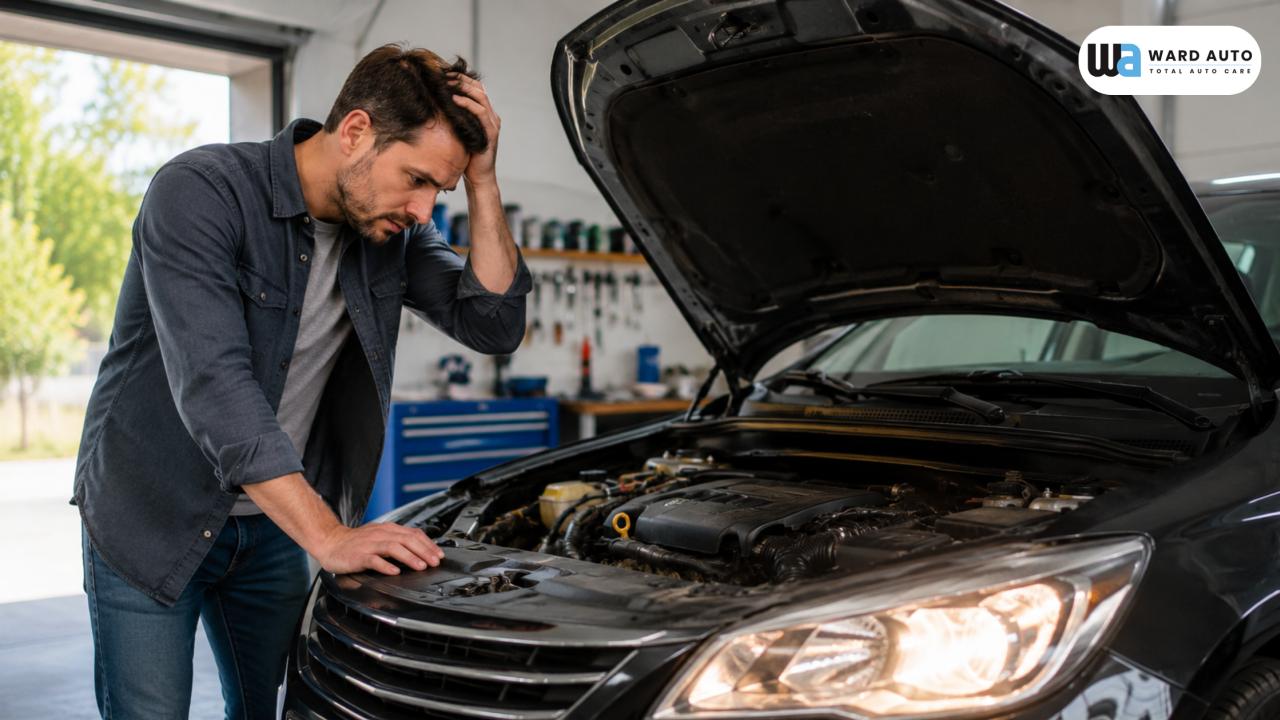
When you find your dashboard lights working but your engine will not turn over, it doesn't necessarily mean your battery has failed to provide any energy. There are other reasons why your engine may not start.
When faced with this situation, many drivers are quick to assume their car battery needs to be replaced by professional electrical repair services, but that is not always true. There is an issue with your car’s electrical system that is preventing it from starting.
But your car won’t start, while the lights work; the problem is primarily hidden and affecting the starting system rather than the lights themselves. This blog discusses why your car engine may not be working even though the light is in working condition.
Why Would A Car Have Power But No Spark?
It is common for drivers and individuals to ask why their car lights work, but the car won’t start. Starting the car requires more electricity than powering the accessories like the lights or radio. Although you may have enough battery power to ignite the dashboard lights, it may be too weak to power the engine starter.
Even a weak battery cable or blown starter fuse can stop the engine from cranking.
Difference Between Engine Starting and Accessory Power
Knowing the difference between these two forms of electrical supply will remarkably help you understand what is causing the problem with your vehicle and how to troubleshoot it.
Dead Car Battery
One of the primary reasons your car won’t start is a dead battery. Even though your battery doesn’t need to be completely dead to prevent your vehicle from starting, a low charge can also stop your engine.
Common symptoms of a dead car battery include:
- Corrosion of your battery posts.
- Slow engine cranking when you start it.
- A clicking sound when you turn the key.
- Constantly needing a jumpstart.
- Flickering dashboard lights and dim headlight.
Batteries can sometimes fail gradually, whereas others stop working out of nowhere. Harsh weather conditions and frequently taking brief journeys are often blamed for battery failure. Replacing the battery entirely after three to five years can save you trouble in the future.
Bad Starter Motor
If the starter motor fails, the engine may not crank at all, even though the lights and dashboard still work.
When you turn the key, the starter motor spins the engine to fire it up. If it fails, the engine may not crank.
Potential signs of a bad starter motor, including:
- Random ignition failure.
- A clicking sound occurs when you attempt to start the car.
- Your engine would not crank at all.
- Noise when you start the engine.
Troubles with a bad starter motor typically develop gradually. You may experience difficulties, but over time, your starter may fail. One click, but no engine movement? Your starter may be to blame.
Repairing a faulty starter motor is possible, but you may require professional starter services.
Alternator Problems Can Cause A Dead Battery
Although the battery and alternator work together, they fail in different ways and produce distinct symptoms. While your car battery starts your engine, the alternator keeps it charged during operation. A problem with the alternator causes your battery to slowly drain and eventually die.
Differences between a car battery and an alternator. Battery problems cause the following symptoms.
The engine stalls in the middle of driving.
- Odd burning smell in the vehicle.
- Lights flashing.
- Headlights dimming.
- Clicking sounds when starting.
- Common alternator problems
- Poor power generation
- Trouble starting the vehicle
The biggest sign to distinguish between these two components is that when the battery is dying, your car will start with a jump-start and then stall soon after.
Loose Battery Connections
Even if your battery works fine, it would not deliver the power required to start your engine if its connections are loose or corroded. Corrosion is known to interfere with the current generated by the battery.
You can identify battery terminal corrosion by green, white, or blue build-up near the battery posts. Signs of a problem with your battery connections.
- No start condition
- Your car starts working randomly
- Dashboard lights dim at first
- Frequent clicks
Cleaning the terminal and tightening connections is often enough to solve the problem.
Ignition Switch Malfunctions
An ignition switch allows power delivery from the battery to the engine starter. A malfunctioning ignition switch can affect the operation of various components in your car. Common ignition switch problems.
- Silent starting procedure.
- Sudden engine stall.
- Flickering dashboard lights.
- Inconsistency in turning on accessories.
A faulty ignition switch is more common in older cars or cars with broken keys. Since the ignition switch controls multiple electronic components in your vehicle, having a professional mechanic diagnose the problem might resolve the issues.
Malfunctioning Relays or Fuses
The modern automobile industry uses various relays and fuels to distribute electrical power throughout the vehicle. If the starter fuse is faulty, it prevents power from reaching the engine starter, even if your lights work perfectly.
- Problems like that can occur unexpectedly at any time.
- However, replacing a damaged fuse is easy and cheap.
Security System Issues
Many newer models come with sophisticated security systems to protect against theft. Many security systems prevent the engine from starting if they detect an unauthorized key or system fault.
Common security problems include:
- The security light is flashing continuously.
- The engine cranks but does not start.
- Failure of push-button start.
Sometimes, the issue comes from your remote being depleted and needing a battery replacement.
When Should You Visit A Car Auto Shop?
Sometimes, your troubleshooting attempts might be completely in vain. When your vehicle fails to start several times, it's best to see a professional to avoid major trouble. Some things you will find during the diagnosis include:
- Problems with fuses and wires.
- Battery’s current state.
- The amount of power produced by an alternator.
- The health status of your starter motor.
- How does the ignition switch behave
Professional electrical system repair can save you money, time, and additional hassle.
Valuable Tips To Avoid Starting Issues
Preventive care will help you avoid unpleasant surprises. For this reason, useful prevention tips include:
- Testing the battery periodically.
- Cleaning your battery posts.
- Avoid prolonged use of accessories when the engine is turned off.
- Changing the battery before it dies.
- Fixing warning lights as soon as possible.
- Checking your car’s electrical system regularly.
Scheduled maintenance will not only help you identify alternator issues or other radiator problems, but also keep your car in excellent shape.
Achieve Higher Performance of the Car Engine With Regular Electrical System Repair Services
There are several potential reasons your car may not be starting, even though the lights are on. Although there is enough battery power to operate lights and other accessories, it may be insufficient to run the engine starter. Knowing the common causes of a starting issue allows you to react more effectively and make better repair decisions. For battery replacement and starter repair, you should visit a reputable car auto shop that will give you peace of mind and satisfaction every day.