
United States regulatory considerations refer to the mandatory compliance frameworks, licensing obligations, and agency oversight rules that digital marketplace operators must satisfy to legalise asset trading within American borders. For platforms operating in 2026, this involves navigating a unified environment shaped by joint agency guidelines, federal banking acts, and state money transmitter rules. Aligning software logic with these updated parameters ensures that transactions remain protected against sudden federal closure actions.
Failing to integrate proper reporting tools into a system backend before a public launch exposes an enterprise to severe daily civil penalties and asset freezes. Building compliance rules directly into the core programming layers enables an exchange to manage changing registration requirements smoothly. This technical review breaks down the essential legal and structural checkmarks needed to introduce a trading system safely within the current US market.
What is a Cryptocurrency Exchange Script
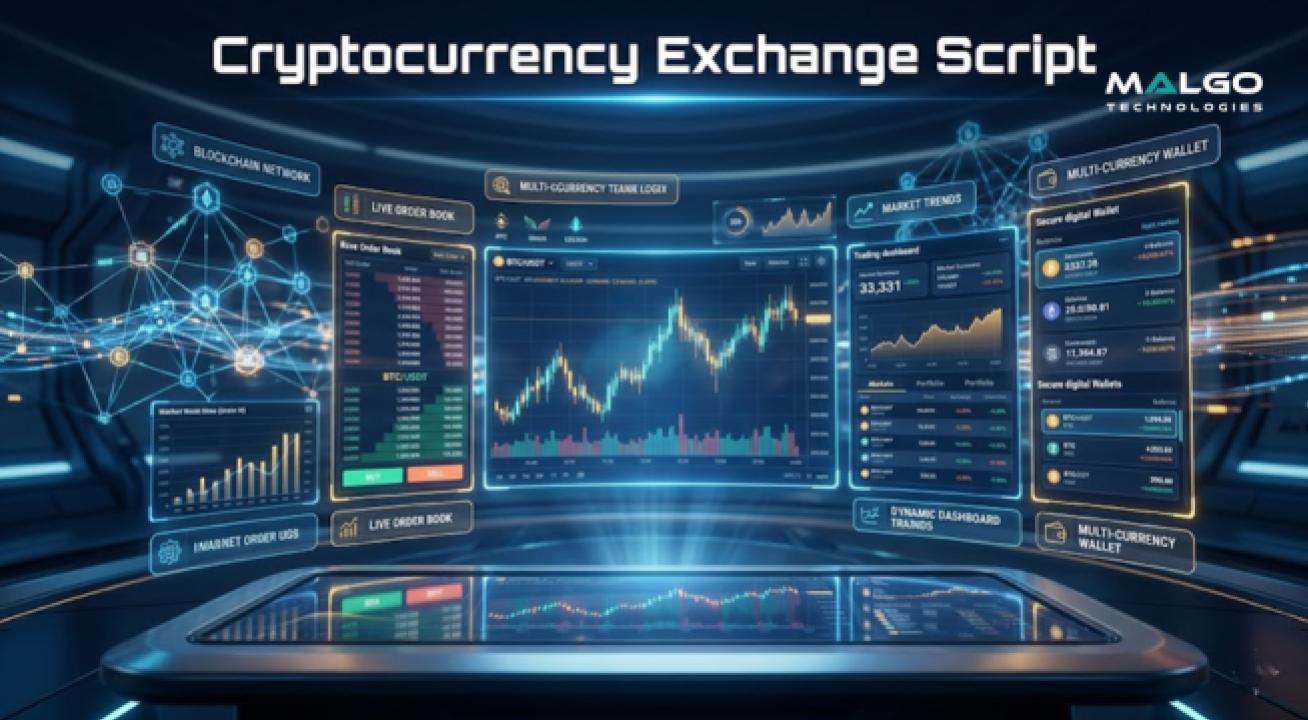
A cryptocurrency exchange script is a pre-configured software base that contains the necessary programming code to launch and manage a functional digital token marketplace. The software package provides standard database designs, admin management dashboards, integrated order books, and secure asset wallet mechanics out of the box. Startups use this pre-built architecture to deploy a working business model quickly while avoiding long development cycles.
Because the underlying transactional code blocks are fully functional upon installation, companies eliminate early programming mistakes. Software developers customize user interface >
Why Changing Federal Taxonomy Demands Coordinated Data Filtering
The regulatory environment in 2026 demands precise asset filtering systems because federal agencies now utilize a strict five-category taxonomy to separate digital commodities from digital securities. Following joint agency interpretive updates, certain tokens are classified as digital commodities if their networks demonstrate genuine technical decentralization, while others remain under strict securities tracking rules. If a software script fails to segregate these assets automatically, the platform risks hosting unregistered financial instruments.
Deploying separate data pathways within the transaction engine allows operators to restrict specific tokens based on a user's verified geographic location. For example, retail traders can be restricted from access to complex margin options while maintaining access to verified digital commodities. This strict filtering capability prevents compliance violations and maintains platform operational legitimacy.
Why Automated Reporting Mitigates Ongoing Sanctions Risks
Operating an exchange within the US requires strict adherence to the Bank Secrecy Act (BSA) and updated enforcement rules, which treat token platforms as money services businesses. Compliance bodies require platforms to log system movements continuously and flag suspicious asset transfers that exceed established federal thresholds. A system that relies on manual profile reviews will quickly face operational backlogs and potential reporting failures.
Integrating automated transaction monitoring logic straight into the ledger backend ensures that high-risk addresses are blocked before an order executes. The software screens incoming wallet nodes against active international sanctions logs, instantly halting suspicious withdrawal requests. Maintaining automated audit trails shields the business owners from expensive litigation and ongoing asset tracking failures.
Analyzing ways to implement joint agency taxonomy rules into your platform? Consult with Malgo's technical compliance group to inspect localized regulatory modules.
Technical Features Required for Compliant US Launches
Successfully introducing a trading setup to American market participants requires specific technical features built straight into the core infrastructure. These specific modules keep platform operations aligned with federal transparency expectations.
Geofencing and Tiered Identity Verification Gateways
Compliant applications utilize advanced IP geofencing alongside automated identity verification pipelines to confirm a user's exact state of residence. The system restricts specific platform functions or token lists automatically depending on the local state license coverage held by the operator. This mechanism prevents illegal account creation from restricted territories.
Real-Time Blockchain Address Screening Modules
Modern script designs integrate automated blockchain analytics tools that run background checks on every external crypto wallet address during deposit requests. If an incoming transaction links back to blacklisted mixers or stolen funding pools, the core engine locks the balance immediately. This automated step keeps the internal liquidity ecosystem clean.
Automated Suspicious Activity Report (SAR) Generation Engines
To meet federal transaction tracking updates, compliance software must generate clean, standardized SAR data files whenever account activity looks abnormal. The administrative panel compiles these ledger logs automatically, providing compliance officers with exportable records ready for immediate submission. This tool minimizes manual administrative work.
Benefits of Deploying Pre-Configured Compliance Frameworks
Using a cryptocurrency exchange script with built-in regulatory tools helps a business pass early corporate state licensing tests with fewer documentation delays. Startups avoid the common coding bugs that emerge when trying to attach third-party identity verification tools to unoptimized codebases. The platform maintains a uniform database design that satisfies both state and federal data safety expectations.
Frictionless Capital Auditing: Decoupled reporting tools summarize corporate financial data points without impacting primary trade matching speeds.
Simplified State Expansion: Flexible administrative controls let teams adjust compliance settings state by state as fresh operating permits arrive.
Protected Corporate Assets: Clean asset segregation rules separate operating funds from user deposits, preventing internal accounting errors.
Infrastructure Comparison: Basic Token Templates vs Regulated Script Builds
Compliance Matrix | Basic Software Template | Regulated Script Framework |
Asset Taxonomy | Lists all tokens under a single, generic trading layout. | Automatically separates digital commodities from digital securities. |
Identity Collection | Basic image uploads handled via manual review. | Automated tiered verification connected to global identity databases. |
Wallet Engineering | Single grouped pool for corporate and user funding. | Fully segregated database balances with multi-signature verification. |
Transaction Audits | No native tracking logs for federal reporting forms. | Real-time creation of standard suspicious activity reports. |
Why Choose Malgo for a Cryptocurrency Exchange Script
Malgo designs cryptocurrency exchange script packages engineered to satisfy the demanding regulatory conditions of the US enterprise market. Their core software applications rely on decoupled microservices architectures, ensuring that data monitoring tools operate independently from primary matching systems. This structural design keeps trade validation speeds high while background compliance scans run concurrently.
The systems delivered by Malgo include clear administrative dashboards and flexible API connections, allowing corporate development teams to configure specialized geofencing parameters easily. Their clean code patterns simplify third-party technical security audits, helping businesses secure necessary state money transmitter permits smoothly. Selecting Malgo provides your company with a professional, secure codebase built for long-term legal and operational stability.
Ready to launch a compliant digital marketplace in the US? Message Malgo’s software architecture group to deploy a regulation-ready cryptocurrency exchange script.