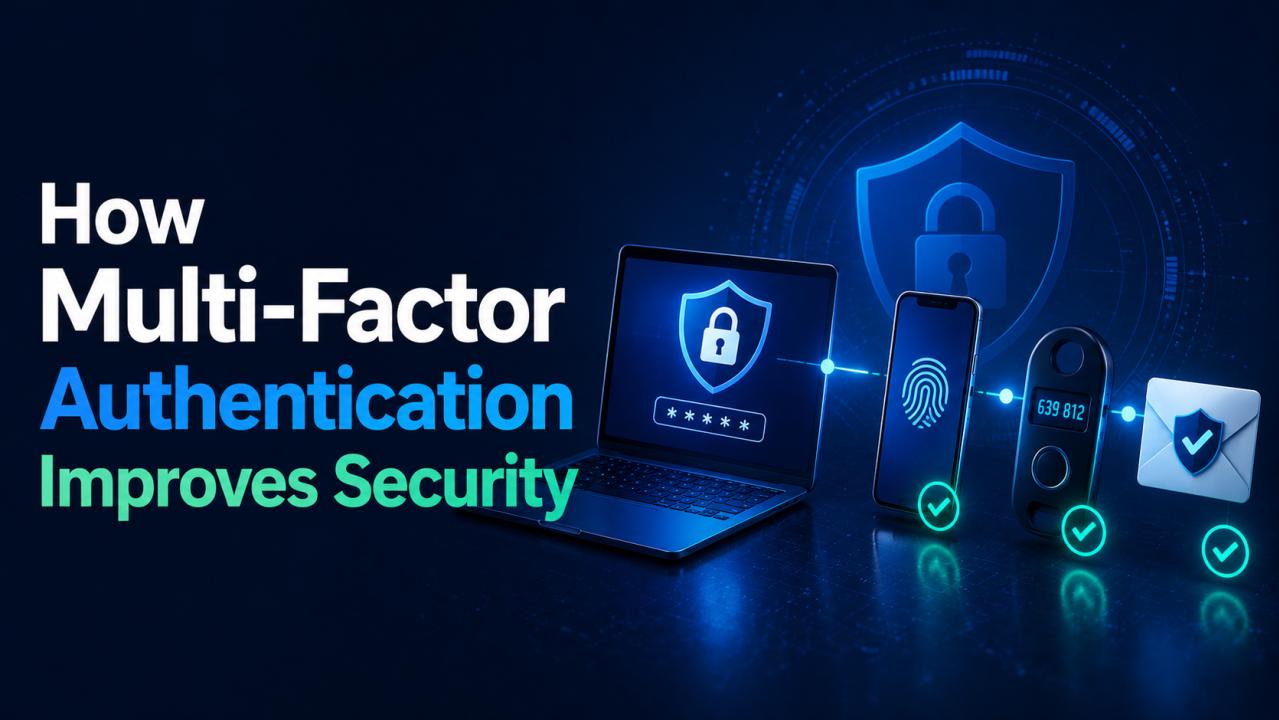
Cybersecurity has become a top priority for organizations as digital systems continue to expand across cloud platforms, remote access environments, and distributed enterprise networks. Traditional password-based security is no longer sufficient to protect sensitive accounts and data from modern cyber threats. Attackers now use advanced techniques such as phishing, credential stuffing, and brute-force attacks to exploit weak authentication systems.
As enterprises strengthen their identity protection strategies, many professionals enhance their foundational knowledge through structured CCIE Security Training programs that help them understand authentication mechanisms, access control models, and enterprise security architecture.
What Is Multi-Factor Authentication?
Multi-Factor Authentication (MFA) is a security mechanism that requires users to verify their identity using more than one authentication factor before gaining access to a system or application.
Why MFA Is Important in Modern Security
Passwords alone are no longer reliable because they can be:
Stolen through phishing attacks
Reused across multiple platforms
Cracked using automated tools
Exposed in data breaches
MFA adds extra layers of protection, making unauthorized access significantly more difficult.
Core Authentication Factors in MFA
Multi-Factor Authentication relies on combining different types of identity verification methods.
Knowledge-Based Factors
These are things the user knows.
Examples Include:
Passwords
PIN codes
Security questions
Possession-Based Factors
These are items the user physically owns.
Examples Include:
Mobile authentication apps
Hardware security tokens
One-time password (OTP) devices
Smart cards
Inherence-Based Factors
These are biometric traits unique to the user.
Examples Include:
Fingerprint recognition
Facial recognition
Voice authentication
Retina or iris scanning
How Multi-Factor Authentication Works
MFA adds multiple verification steps during the login process to ensure secure access.
Step-by-Step Authentication Process
User enters username and password
System requests additional verification
User confirms identity using a second factor
Access is granted after successful verification
Layered Security Approach
Even if one factor is compromised, attackers still need additional verification methods to gain access.
Why Multi-Factor Authentication Improves Security
MFA significantly enhances security by adding multiple layers of protection to user accounts and systems.
Stronger Protection Against Credential Theft
Attackers often target login credentials to gain unauthorized access.
How MFA Helps
Even if passwords are stolen, MFA requires additional verification, preventing unauthorized login attempts.
Reduced Risk of Phishing Attacks
Phishing remains one of the most common attack methods in cybersecurity.
MFA Protection Mechanism
Even when users unknowingly share passwords, attackers cannot access accounts without the second authentication factor.
Protection Against Brute Force Attacks
Brute force attacks attempt to guess passwords through repeated login attempts.
How MFA Blocks These Attacks
Additional authentication steps make automated login attempts ineffective.
Improved Identity Security
Identity protection plays a vital role in today’s enterprise cybersecurity strategies.
Why Identity Protection Matters
Organizations must ensure that only verified users can access sensitive systems and data.
Enhanced Security for Remote Work Environments
Remote work has increased the attack surface for organizations.
Role of MFA in Remote Access
MFA helps secure logins even when employees connect from unsecured networks.
Types of Multi-Factor Authentication Methods
Organizations use different MFA methods depending on security requirements and usability needs.
SMS-Based Authentication
SMS delivers a one-time password to the user’s mobile device.
Advantages
Easy to implement
Widely accessible
Limitations
Vulnerable to SIM swapping attacks
Less secure compared to other methods
Authentication Apps
Mobile apps generate time-based one-time passwords (TOTP).
Benefits
Strong encryption
Offline functionality
More secure than SMS
Hardware Security Tokens
Physical devices generate authentication codes or cryptographic responses.
Advantages
High security level
Resistant to phishing attacks
Biometric Authentication
Biometric systems use physical characteristics for verification.
Common Methods
Fingerprint scanning
Facial recognition
Voice authentication
MFA in Enterprise Security Systems
Organizations implement MFA across multiple enterprise environments.
Securing Cloud Applications
MFA protects cloud-based platforms from unauthorized access.
Protecting VPN Access
Remote access systems often require MFA for secure connectivity.
Securing Administrative Accounts
Privileged accounts use MFA to prevent unauthorized configuration changes.
Benefits of Multi-Factor Authentication in Enterprises
MFA provides several operational and security benefits for organizations.
Enhanced Security Posture
MFA significantly strengthens protection against unauthorized access attempts.
Improved Compliance
Many regulatory standards require strong authentication mechanisms.
Examples Include:
GDPR
HIPAA
PCI-DSS
Better Access Control
MFA helps ensure only verified users gain access to sensitive systems.
Reduced Data Breach Risks
Stronger authentication reduces the likelihood of security incidents.
Challenges of Implementing MFA
Despite its advantages, MFA implementation can present challenges.
User Convenience Issues
Additional login steps may reduce user convenience.
Integration Complexity
Legacy systems may not fully support modern MFA solutions.
Deployment Costs
Advanced MFA systems may require infrastructure investment.
Dependency on User Devices
Mobile-based authentication relies on device availability.
Best Practices for MFA Implementation
Organizations should follow best practices to maximize MFA effectiveness.
Use Strong Authentication Methods
Authentication apps and hardware tokens are recommended over SMS whenever feasible.
Enable MFA for Critical Systems
Focus on protecting high-value accounts and sensitive systems.
Educate Users
Train employees on secure authentication practices.
Monitor Authentication Activity
Continuous monitoring helps detect suspicious login attempts.
Future of Multi-Factor Authentication
MFA technology continues to evolve with advancements in cybersecurity.
Passwordless Authentication
Future systems may eliminate traditional passwords entirely.
AI-Driven Authentication
Artificial intelligence will improve adaptive authentication based on risk analysis.
Behavioral Biometrics
User behavior patterns may be used for continuous authentication.
Risk-Based Authentication
Authentication systems will adjust security requirements dynamically.
Importance of Identity Security Skills
Identity and access management is becoming a critical skill in cybersecurity careers.
Key Areas of Knowledge
Authentication protocols
Identity management systems
Access control frameworks
Zero Trust architecture
Career Relevance
MFA expertise supports roles such as:
Network Security Engineer
SOC Analyst
IAM Specialist
Cybersecurity Architect
Conclusion
Multi-Factor Authentication plays a crucial role in strengthening modern cybersecurity by adding multiple layers of identity verification. It significantly reduces risks associated with password theft, phishing attacks, and unauthorized access attempts, making it an essential component of enterprise security strategies.
As organizations adopt more advanced security frameworks, CCIE Security professionals are better equipped to design and manage secure authentication systems that safeguard enterprise networks and digital assets.