For the longest time, buying a car felt like walking into a fog. The sticker price was just the beginning. There were down payments, trade-in values, sales tax, interest rates, loan terms, and somewhere at the end of all that, a monthly payment that I was supposed to live with for the next five or six years. I would sit at a dealership with a salesperson sliding numbers across the desk, and I would nod along like I understood, when really I was just hoping the math worked out in my favor.
It took me a while, but eventually I figured out that the only way to walk into a car purchase with confidence is to do the math before you ever step on a lot. Not after. Not while you are sitting in a glass office across from someone who does this every day. Before.
The thing nobody really explains is that the monthly payment is mostly a function of four variables: how much you are financing, the interest rate, how long the loan is, and how much you put down. Sales tax matters too, and so do any fees rolled into the loan. Once you understand how those pieces interact, the whole thing stops feeling like magic. A small change in interest rate over a 72-month loan, for example, can mean hundreds or even thousands of dollars over the life of the loan. Stretching a 60-month loan to 72 months might lower the monthly payment by 40 or 50 dollars, but it can also mean you are paying interest much longer and potentially ending up underwater on the car for a chunk of that time.
What changed everything for me was just sitting down with a calculator and playing with the numbers honestly. I started by plugging in the actual out-the-door price of cars I was looking at, not the advertised price, because the advertised price almost never includes fees and taxes. Then I tried different down payment scenarios. What does the payment look like if I put down two thousand? Five thousand? What if I extend the loan? What if I shorten it? Within about twenty minutes of doing this, I had a much clearer picture of what I could actually afford and what kind of deal would feel comfortable rather than stressful.
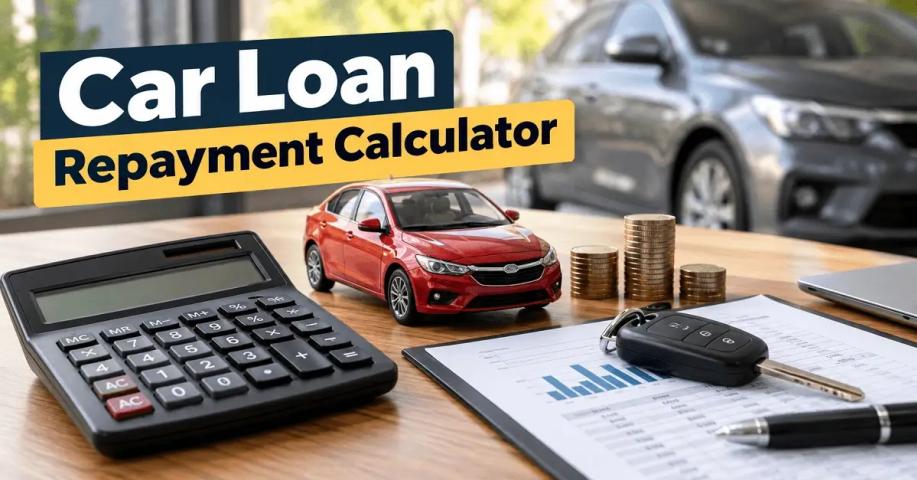
I have been using a tool called Car Payment Calculator for this kind of planning, and what I appreciate about it is that it does not try to sell me anything. It just lets you plug in numbers and see what happens. You can adjust the price, the down payment, the trade-in, the interest rate, the loan term, and the sales tax, and it shows you the monthly payment along with how much total interest you would pay over the life of the loan. That last part is the one that really wakes people up. You see the sticker price, you see your monthly, and then you see the actual total cost, and suddenly the difference between a 4 percent rate and a 7 percent rate becomes very real.
One trick I started using is what I call the reverse approach. Instead of asking how much car I can afford, I start with the monthly payment I am comfortable with. Then I work backward. If I want my payment to be around 350 dollars a month at a realistic interest rate over 60 months, what total loan amount does that correspond to? Add in my down payment and trade-in, and now I have a maximum out-the-door price. Anything above that line, I do not even look at. This single shift saved me from a lot of emotional shopping, because once you have a hard ceiling defined by math, it is much easier to walk away from a car that is just a few thousand over budget.
The other thing I learned is to separate the financing conversation from the price conversation. Dealerships love to talk in monthly payments because it makes everything feel smaller. A six thousand dollar difference in price sounds huge. A hundred dollars a month sounds manageable. They are often the same thing. When you have already done your own math at home, you can negotiate the price of the car as a number, and then negotiate the financing separately, and you can even bring your own pre-approval from a credit union to keep the dealership honest on rates.
Credit unions, by the way, are worth a phone call. I have consistently gotten better rates there than from the dealership financing department. The dealer might match the rate to keep the sale, but you would not have that leverage if you did not have your own pre-approval to wave around.
If you are thinking about buying a car in the near future, I would say give yourself a weekend. Not at the dealership. At your kitchen table. Pull up the listings of cars you are interested in. Look up rough interest rates online for your credit tier. Run the numbers for each car at a few different loan terms and down payment levels. Write down the monthly payment, the total interest, and the total cost. You will be surprised how quickly some cars eliminate themselves from your list and how quickly others start to look more attractive than you expected.
Cars are one of the few large purchases most of us make multiple times in our lives. Getting a little better at the math each time pays off. I am not saying I enjoy car shopping now, but I do not dread it the way I used to. Mostly because I show up knowing exactly what numbers I am willing to sign on.