I moved into a 500 square foot apartment last spring and almost immediately made every mistake you can make with a small space. I bought a couch that was technically beautiful but blocked the only natural light source. I put my desk in the spot where I would later realize the WiFi was weakest. I positioned my bed so that opening the closet door required first moving a chair. Each of these problems revealed itself slowly over the first month, by which point everything was already in place and the only fixes involved moving heavy things across thin walls at inconvenient hours.
The next time I move, and I have already promised myself this, I am sketching the layout before I buy a single piece of furniture.
The thing about small spaces is that the conventional approach of just placing furniture where it looks nice does not work. Every square foot is doing multiple jobs. The corner that is decorative in a 1500 square foot home is critical in a 500 square foot one. You cannot afford to waste space, and you cannot afford to discover the waste after the fact. You have to plan.
For my next move, I have been experimenting with a few different ways to plan a layout before committing. The simplest is just graph paper, which I have written about before. You draw your room to scale, cut out little paper rectangles representing furniture, and shuffle them around until you have something that works. This is genuinely useful and I would recommend it as a starting point. It is fast, it costs nothing, and it forces you to actually measure things.
The limitation of graph paper is that it is two dimensional and static. You can see the layout from above but you cannot easily see what the room will actually look and feel like when you are standing in it. Will the couch block the window from your sitting eye level? Will the bookshelf cast a shadow over the desk in the afternoon? You cannot answer these questions from a top-down sketch.
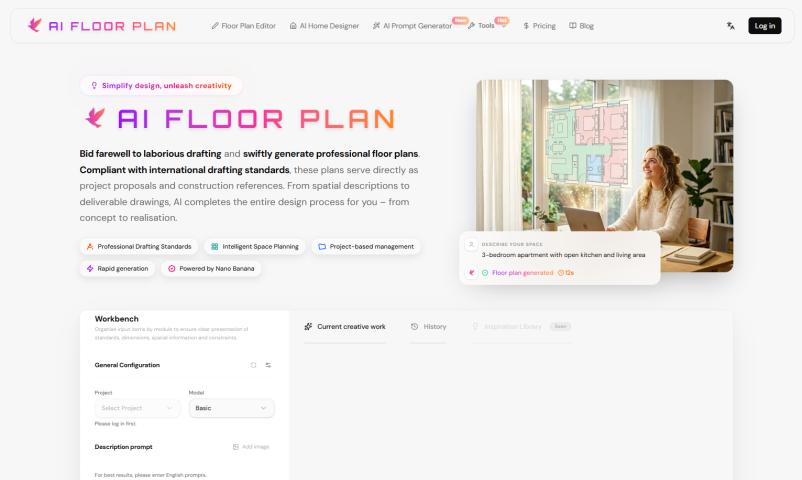
What I have been using lately is a floor plan AI tool. You essentially describe the room, the dimensions, the existing features like windows and doors, and the furniture you are considering, and it generates floor plan options. The interesting part is not the AI itself, which is competent rather than miraculous. The interesting part is how it changes my thinking. Instead of staring at a blank page trying to imagine arrangements, I get presented with three or four options that I can react to. Most of them will be wrong in some way, but reacting to a specific wrong option is much easier than generating a right option from scratch. I see one and I think no, the bed should not face the door, and that gives me information I did not have when I started.
After a few iterations I usually have a layout I am genuinely happy with. Then I take the dimensions back to the real world and start measuring furniture against them. This back and forth between digital exploration and physical measurement is where the actual planning happens.
A few things I have learned by going through this process for my own next move.
First, traffic paths matter more than people realize. In a small space, you need clear lines from the entrance to the bed, from the bed to the bathroom, and from the kitchen to wherever you eat. If furniture interrupts any of these, the space will feel cramped no matter how nicely it is decorated. The grid on graph paper makes these paths easy to see. You draw arrows for the routes and you can immediately tell if a piece of furniture is in the way.
Second, multi-purpose furniture is not a gimmick in small spaces, it is the whole game. A bed with storage underneath. A coffee table that lifts up to become a desk. A dining table that folds against the wall. A bookshelf that doubles as a room divider. Each of these turns one cubic foot of floor space into two functions. Over a whole apartment, this kind of thinking can effectively double your usable space.
Third, vertical space is the great underused resource. Most layout plans focus on the floor, but the walls go up nine feet too. Tall narrow shelving uses way less floor space than wide short shelving for the same amount of storage. Wall mounted desks, fold-down tables, and hanging plants all free up the floor. When I redo my next apartment, the first thing I am going to do is look up.
Fourth, and this took me embarrassingly long to learn, do not buy furniture for the space you wish you had. Buy furniture for the space you actually have. The 90 inch sofa that you fell in love with at the store does not get smaller when you bring it home. Measure twice, then measure again, then check the doorway and stairwell it needs to come through.
The biggest lesson from all of this is that small space living is mostly a planning problem, not a money problem. You can have a beautiful, functional small apartment on a modest budget if you spend the time up front to plan. You can also waste a lot of money on beautiful pieces of furniture that do not work in your space if you do not. The planning is free. Do the planning.