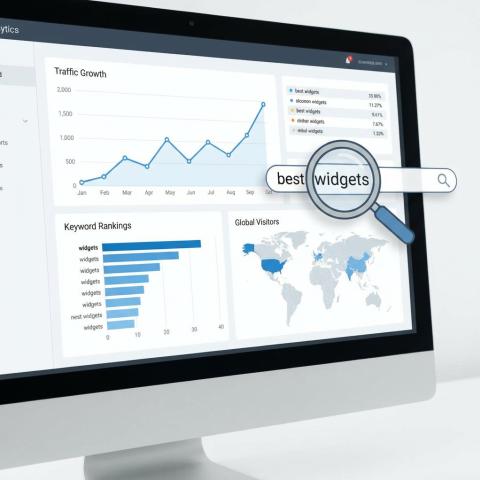
When I was working at a larger company, competitive research was easy in a specific way. The marketing department had subscriptions to all the expensive tools. You could open any of them and within ten minutes have a detailed picture of any competitor's traffic, keywords, ad spend, and audience overlap. It felt powerful. It also cost the company tens of thousands of dollars a year that I never saw on a bill.
Now that I am working on my own thing, I do not have that kind of budget. I also no longer need that level of depth for most of what I do. But I do still need to know what competitors are up to, where their traffic comes from, what is working for them, and what I can learn without copying. Over the last year I have built a research process that costs me essentially nothing and works well enough for almost every decision I need to make.
The first realization that helped me was that the expensive tools are not actually showing you ground truth. They are showing you estimates. Traffic numbers, keyword rankings, ad spend, audience demographics, all of it is modeled. The data is good but it is not the data, it is a model of the data. The same is true for cheaper or free tools. The difference is mostly in the size of the panels they use and the sophistication of the modeling. For decision-making purposes, getting within 20 percent of the right number is usually enough. You very rarely need decimal precision to decide whether a competitor is worth paying attention to.
The second realization was that I do not need a full subscription. I just need to look up specific things at specific times. A weekly check on a few competitor sites. A monthly look at how a new entrant is growing. A pre-launch survey of the keyword landscape in a category. None of this requires perpetual access. It requires occasional access. And it turns out you can get occasional access for free or close to it.
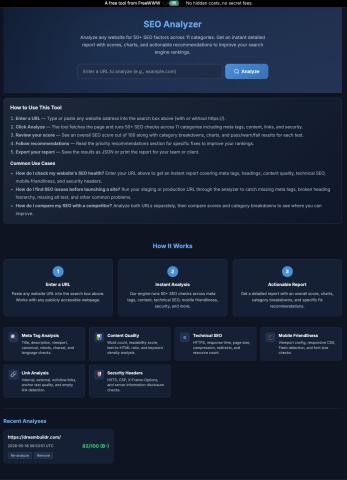
My main workhorse for this is a SimilarWeb Alternative that gives me the basic traffic and traffic source data I need without the price tag. I will not pretend the data is as deep as the enterprise versions, but for the questions I am actually asking, like is this site growing, where does their traffic come from, what are they ranking for, it is more than enough.
Beyond traffic estimation tools, here are the rest of the things I use regularly.
For keyword research, I lean heavily on the autocomplete suggestions from Google itself. Type the start of a query and look at what completes. That is real data based on what people actually search for. I also use the People Also Ask boxes in search results, which tell you what related questions are surfacing. For competitive keyword analysis, free tier tools from a few major SEO platforms give you enough monthly searches to do real work without paying. The trick is to be efficient with the queries you spend, not try to scan everything.
For ad research, I use the Meta Ad Library and the Google Ads Transparency Center. Both are free, both are official, and both let you see actual ads competitors are running right now. This is more useful than estimated ad spend in most cases. You can see the actual creative, the actual hook, the actual call to action. That is gold. Estimates of spend are interesting but the actual ad copy is what tells you what is working.
For audience research, I look at where a competitor is being talked about. Reddit, Twitter, niche forums, podcast appearances. The community discussions around a brand reveal more about its actual positioning than any tool. If everyone in a subreddit is complaining about the same feature gap, that gap is your opportunity. If everyone is praising the same workflow, that is the thing you have to match or beat. This kind of qualitative work cannot be replaced by any tool.
For content research, I look at what competitors are publishing and how recently. A blog that has not posted in six months tells you something. A competitor with twenty new articles a month tells you something else. I also look at which of their posts are getting shared or backlinked. There are free backlink checkers that give you a limited number of checks per day, which is plenty if you are being deliberate.
The general principle here is that competitive research is mostly about asking better questions, not about having better tools. Anyone with a moderate budget can get the same tool access. Not everyone can pay attention well enough to notice that a competitor changed their pricing page or quietly launched a new product line. Attention is the actual differentiator.
If you are operating without the enterprise budget, do not assume you cannot do real research. You can. The combination of cheaper or free alternatives, official transparency tools, and just paying attention to public conversations will get you 90 percent of what the expensive subscriptions provide, for a tiny fraction of the cost. Spend the saved money on actually building something good.