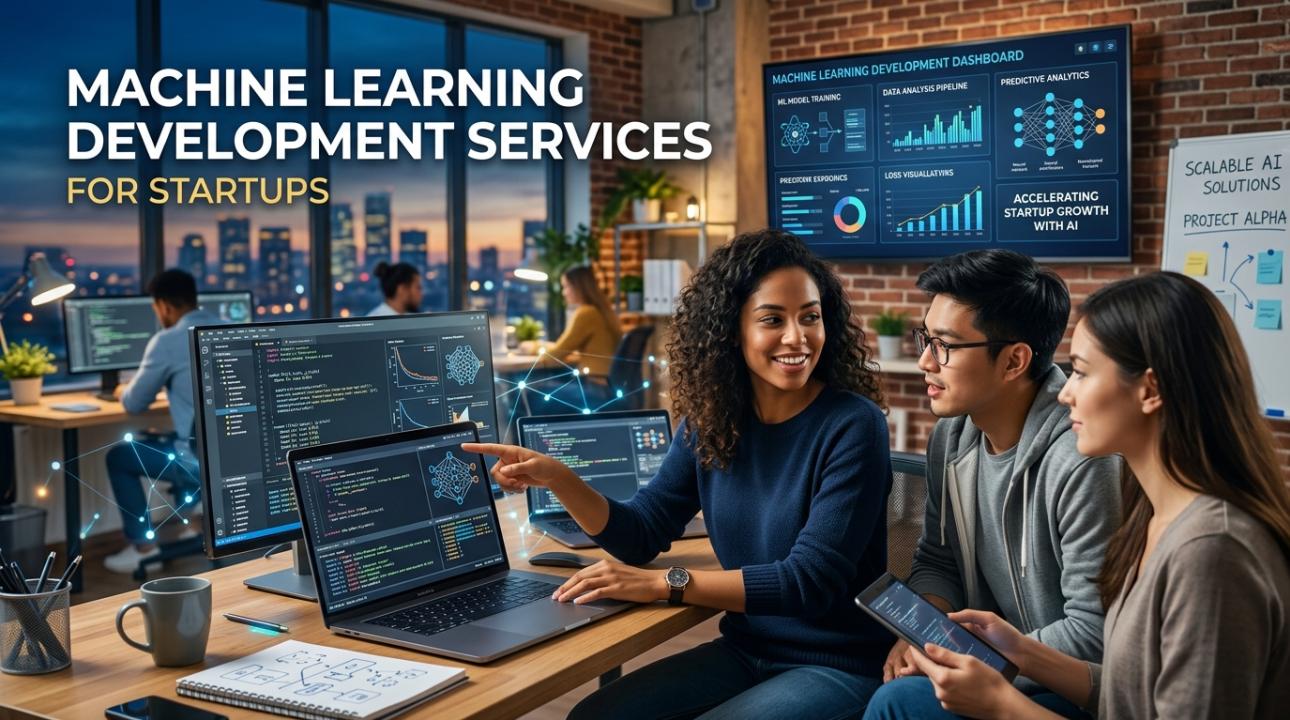

Startups move fast. Every decision matters, every investment is measured, and every process needs to support growth without wasting time or money. In this environment, technology is no longer just a support function it becomes the foundation of how a startup competes, scales, and survives.
This is where machine learning development services are making a real difference for startups across industries. From automating repetitive tasks to predicting customer behavior, machine learning is helping young companies build smarter products and operate more efficiently from day one.
The biggest advantage is not just automation. It’s the ability to make better decisions using data.
Why Startups Are Investing in Machine Learning
Startups often work with limited resources. Small teams manage multiple responsibilities, customer expectations change quickly, and market competition keeps increasing. Machine learning gives startups a way to reduce operational pressure while improving business performance.
For example, an eCommerce startup can use machine learning to recommend products based on customer behavior. A fintech company can detect unusual transactions instantly. A healthcare platform can analyze patient patterns to improve service delivery.
These are no longer ideas reserved for large enterprises. Startups are now using the same technologies to create personalized customer experiences and gain a competitive edge early in their journey.
The Real Value of Machine Learning Development Services
Many founders understand the importance of machine learning but struggle with implementation. Building an internal AI team from scratch is expensive and time-consuming. Hiring experienced engineers, data scientists, and ML architects requires a significant budget.
This is why startups often choose professional machine learning development services.
A specialized development team helps startups:
- Identify practical use cases
- Build scalable ML models
- Manage large datasets
- Improve prediction accuracy
- Integrate AI into existing applications
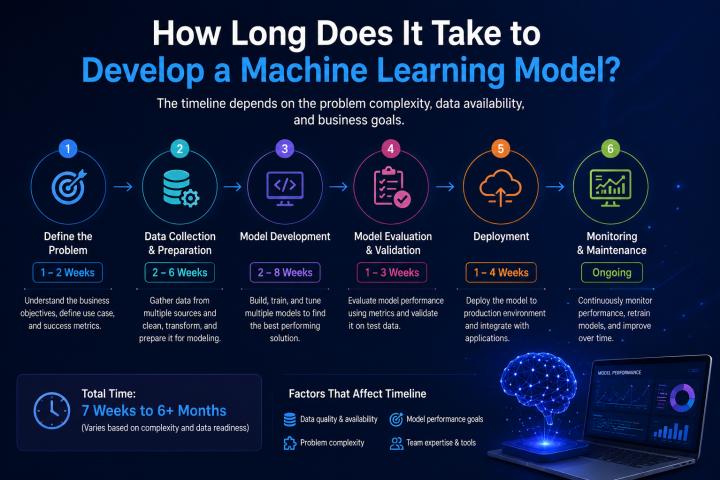
- Reduce development timelines
Working with an experienced machine learning development firm also helps startups avoid costly technical mistakes during the early stages of product development.
Instead of experimenting without direction, startups can focus on building solutions that align with business goals and customer needs.
Key Areas Where Machine Learning Helps Startups
1. Customer Experience Personalization
Modern users expect personalized experiences. Machine learning helps businesses understand customer preferences, browsing habits, and purchase behavior.
Streaming platforms, shopping apps, and online marketplaces already rely heavily on recommendation systems. Startups can use similar strategies to increase customer engagement and retention.
Personalized experiences also improve conversion rates because customers are shown products or services that actually match their interests.
2. Predictive Analytics
Machine learning allows startups to make informed decisions based on historical data and real-time insights.
Predictive analytics can help businesses:
- Forecast sales
- Identify customer churn
- Predict inventory requirements
- Detect market trends
- Improve pricing strategies
Instead of reacting to problems after they happen, startups can make proactive business decisions.
3. Intelligent Automation
Many startup teams spend countless hours on repetitive tasks such as data entry, customer support, report generation, and lead qualification.
Machine learning automates these processes while reducing manual effort and operational costs.
Businesses offering ai chatbot development services are also helping startups automate customer communication through intelligent virtual assistants that can handle queries 24/7 without human intervention.
This improves customer satisfaction while allowing internal teams to focus on strategic work.
4. Fraud Detection and Security
For fintech, SaaS, and digital payment startups, security is critical. Machine learning systems can identify unusual activity patterns and flag suspicious behavior in real time.
Unlike traditional rule-based systems, ML models continuously improve by learning from new data, making fraud detection more accurate over time.
5. Better Marketing Performance
Marketing campaigns generate huge amounts of data. Machine learning helps startups analyze user behavior, campaign performance, and audience engagement more effectively.
This allows businesses to:
- Target the right audience
- Optimize ad spending
- Improve lead quality
- Increase customer acquisition efficiency
Data-driven marketing often produces better ROI compared to traditional marketing methods.
Challenges Startups Face During ML Adoption
While machine learning offers major benefits, implementation is not always simple. Startups commonly face challenges such as:
Limited Data Availability
Machine learning models perform better with quality data. Early-stage startups may not have enough structured data to train accurate models.
Budget Constraints
Developing ML infrastructure internally can be expensive, especially for startups operating with limited funding.
Technical Complexity
Building scalable models requires expertise in data engineering, cloud platforms, AI frameworks, and deployment strategies.
Integration Issues
Many startups already use multiple tools and platforms. Integrating machine learning into existing systems can become complicated without proper planning.
This is why choosing the right technology partner becomes extremely important.
How to Choose the Right Machine Learning Partner
Not every development company understands startup needs. Founders should look for partners that focus on flexibility, scalability, and practical execution rather than overly complicated solutions.
A reliable machine learning partner should offer:
- Industry-specific experience
- End-to-end development support
- Scalable architecture
- Transparent communication
- Long-term maintenance and optimization
- Strong data security practices
The right team should also understand business strategy, not just technical development.
Industries Where Startups Are Using Machine Learning
Machine learning is no longer limited to tech companies. Startups across industries are adopting AI-powered systems to improve operations and customer experiences.
Healthcare
Used for diagnostics, patient monitoring, and predictive healthcare solutions.
Fintech
Supports fraud detection, automated trading, credit scoring, and risk analysis.
Retail and eCommerce
Powers recommendation engines, inventory forecasting, and customer behavior analysis.
Logistics
Improves route optimization, warehouse automation, and supply chain management.
Education
Enables personalized learning experiences and automated assessment systems.
The Future of Machine Learning for Startups
Machine learning will continue becoming more accessible for startups over the next few years. Cloud-based AI platforms, open-source frameworks, and affordable computing resources are lowering the barrier to entry.
At the same time, customer expectations are evolving rapidly. Businesses that fail to adopt intelligent technologies may struggle to compete in increasingly digital markets.
Startups that invest in machine learning early often gain advantages in efficiency, customer engagement, and product innovation.
The goal is not to replace human decision-making but to improve it with smarter insights and automation.
Final Thoughts
Startups operate in highly competitive environments where speed, efficiency, and innovation directly impact survival. Machine learning development services provide startups with the tools needed to build intelligent products, improve customer experiences, and scale operations more effectively.
Whether it’s predictive analytics, automation, recommendation systems, or conversational AI, machine learning is helping startups solve real business challenges with practical solutions.