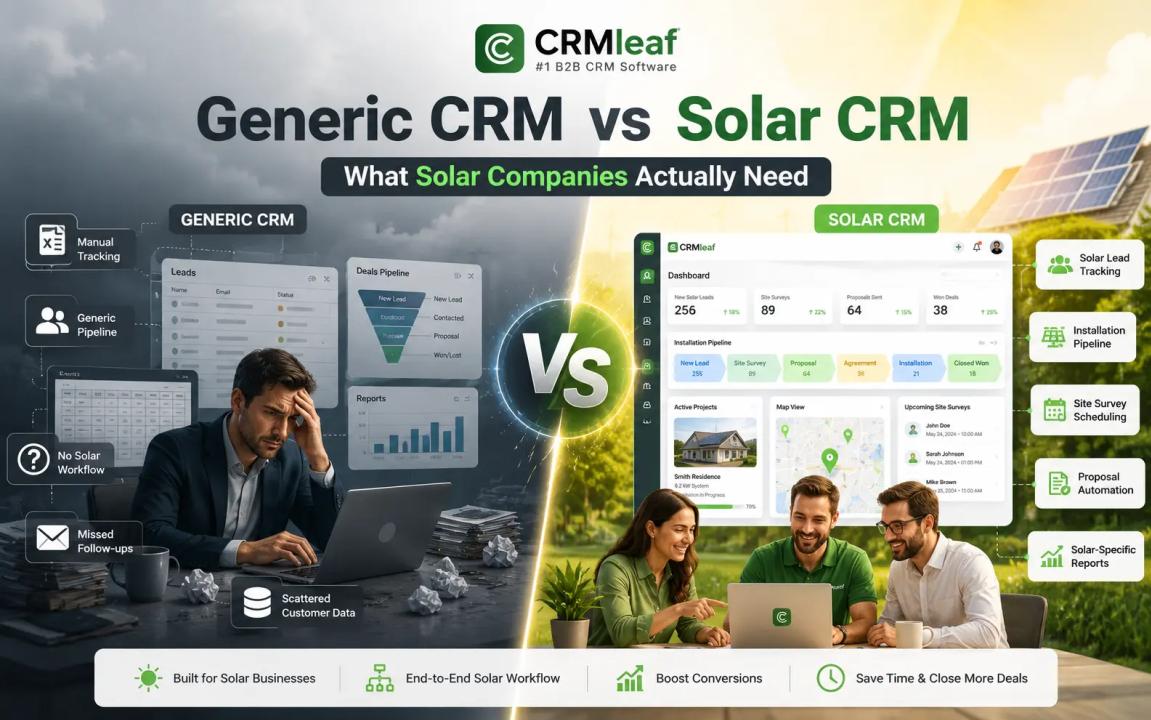
The category mismatch problem
Every year, hundreds of solar companies invest significant time and money in Salesforce or HubSpot solar CRM implementations, only to arrive at the same conclusion 6–18 months later: the platform can be configured to approximate some of what a solar company needs, but the gap between “approximates” and “actually works” is measured in hundreds of hours of configuration, tens of thousands of dollars in professional services, and a persistent residue of workarounds that never fully goes away.
The problem is not that Salesforce and HubSpot are bad products. They are exceptional products within their category. The problem is that their category – enterprise sales and marketing automation – is not the category that solar companies need. This is a category mismatch problem, not a product quality problem.
The distinction matters because it changes the solution. If the problem were product quality, the answer would be to find a better-quality generic CRM. But if the problem is category mismatch, the answer is to find a product in the right category – one built for the operational model of a solar EPC company rather than for the operational model of a B2B software company.
What generic CRMs were designed to do
To understand why generic CRMs fail for solar operations, you need to understand what they were actually designed to do. Salesforce was founded in 1999 to serve enterprise B2B sales organisations – companies where salespeople manage large portfolios of accounts, move deals through complex multi-stakeholder approval processes and need deep integration with marketing, customer success, and finance teams. Every design decision in Salesforce reflects this origin. The data model, the workflow engine, and the reporting architecture – all of it is optimised for the relationship management and pipeline visibility needs of enterprise B2B sales.