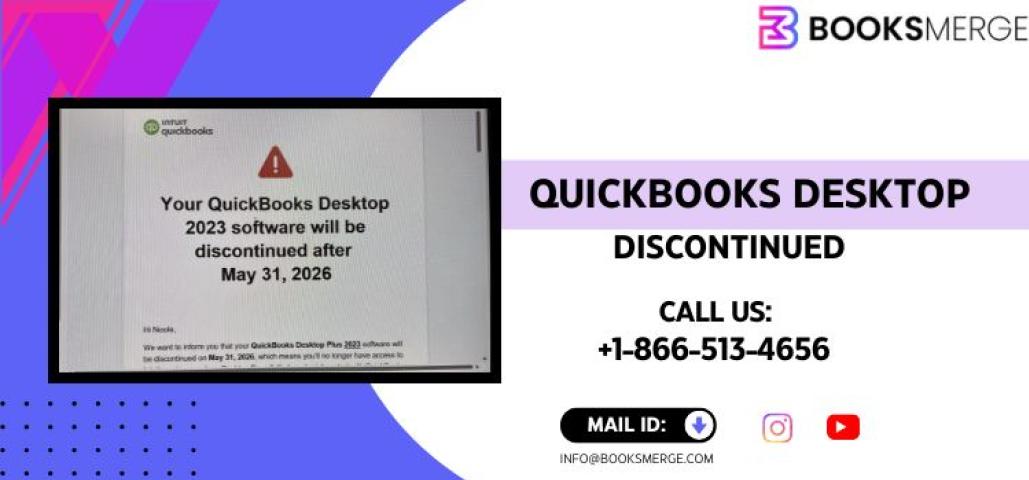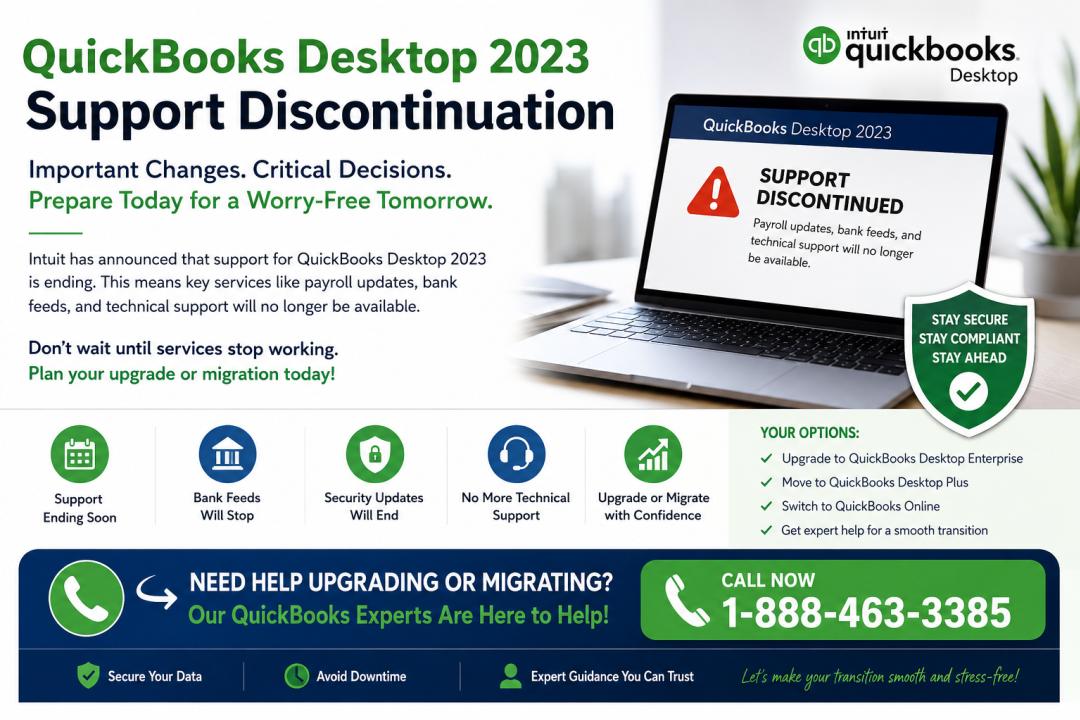
Businesses using QuickBooks Desktop 2023 are facing an important deadline. Intuit has officially confirmed the QuickBooks Desktop 2023 support discontinuation date as May 31, 2026. After this date, several connected services and support features will no longer be available to users still running the 2023 version.
The announcement has generated concern among small businesses, accountants, and enterprises that rely heavily on QuickBooks Desktop for payroll, banking, invoicing, and payment processing. However, experts clarify that the software itself will not suddenly stop opening after the deadline. Instead, this is a service discontinuation that impacts connected features, security updates, and technical support.
What Does QuickBooks Desktop 2023 Service Discontinuation Mean?
The QuickBooks Desktop 2023 service discontinuation means users will lose access to several online and Intuit-connected services after May 31, 2026. According to Intuit’s official discontinuation policy, affected users will no longer receive:
- Live technical support
- Security patches and software updates
- Payroll tax table updates
- Online banking services
- Payment processing features
- Bank feed connections
- Accountant copy transfer services
- Emailing features inside QuickBooks Desktop
This QuickBooks Desktop discontinued cycle follows Intuit’s standard three-year support policy for Desktop versions. Earlier versions, including QuickBooks Desktop 2022, reached their end-of-support timeline in 2025, and now the 2023 editions are next in line.
Which Versions Are Affected?
The QuickBooks Desktop 2023 support discontinuation affects multiple editions, including:
- QuickBooks Desktop Pro Plus 2023
- QuickBooks Premier Plus 2023
- QuickBooks Enterprise Solutions 23.0
- QuickBooks Premier Accountant Edition Plus 2023
- QuickBooks Enterprise Accountant 23.0
- QuickBooks Desktop for Mac Plus 2023
Businesses still operating these editions should begin planning upgrades or migration strategies well before the deadline.
What Will Still Work After Discontinuation?
One of the biggest misconceptions around the QuickBooks Desktop discontinued announcement is that the software will completely stop functioning. In reality, users can still access their local company files and historical accounting records after May 31, 2026.
However, the lack of updates and security support could expose businesses to operational and cybersecurity risks over time. Online features dependent on Intuit servers will no longer function properly, especially payroll and banking integrations.
Why the QuickBooks Desktop 2023 Support Discontinuation Matters
For many businesses, the impact goes beyond losing customer support. Payroll inaccuracies, failed bank feeds, and disabled payment processing can interrupt daily financial operations. Companies handling sensitive customer data may also face compliance concerns once security updates stop.
Accounting professionals warn that continuing to use unsupported software may increase vulnerability to cyber threats and data corruption. Businesses that rely on automated payroll taxes or online banking should especially prioritize upgrading before the QuickBooks Desktop 2023 service discontinuation date arrives.
Upgrade and Migration Options
Users affected by the QuickBooks Desktop discontinued notice generally have three options:
- Upgrade to QuickBooks Desktop 2024 or newer
- Move to QuickBooks Enterprise
- Transition to QuickBooks Online or another accounting platform
Intuit recommends upgrading to supported versions to maintain uninterrupted access to payroll services, payment processing, and security enhancements.
Final Thoughts
The QuickBooks Desktop 2023 support discontinuation is a major milestone for businesses still using older accounting software versions. While the application itself may continue functioning locally, the loss of payroll, banking, updates, and technical support can create serious operational challenges.
Businesses should use the months leading up to May 31, 2026, to review their accounting needs, evaluate upgrade options, and avoid unexpected service interruptions. Planning early can help organizations maintain compliance, security, and uninterrupted financial operations during the transition away from unsupported software versions.