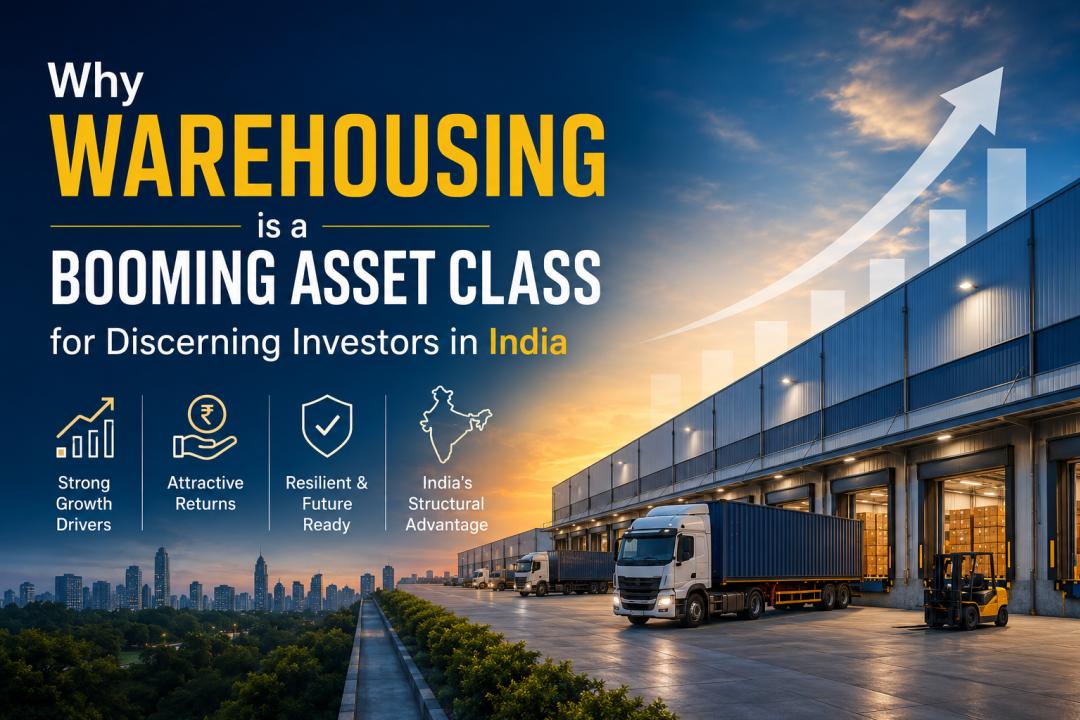
A few years ago, warehouses were rarely part of mainstream real estate conversations. Residential towers, office spaces, and luxury projects usually grab the attention. Warehousing was seen as the quieter side of the industry, important, but not particularly exciting. That perception has changed dramatically. Today, warehousing sits at the center of India’s economic growth story. From e-commerce deliveries to manufacturing supply chains, almost every major industry now depends on logistics infrastructure. In many ways, warehouses have quietly become the backbone of modern business.
Conversations reflected across Landmark Capital Advisors News increasingly point toward this shift. The focus is no longer just on owning land or buildings. Investors are looking at how efficiently goods move, how supply chains operate, and how infrastructure supports long-term economic activity.
The Pandemic Changed How India Thinks About Logistics
The biggest turning point came during the pandemic years. Businesses across India realized how fragile supply chains could become when transportation slowed or inventories dried up. Companies that once operated with minimal storage suddenly started rethinking everything. Keeping inventory closer to consumers became less of a cost burden and more of a survival strategy. In cities like Pune, Mumbai, Bengaluru, and Chennai, demand for organized logistics parks began rising rapidly. Developers who once focused mainly on commercial or residential projects started paying attention to industrial corridors and warehousing zones.
As noted by Ashish Joshi of Landmark Capital Advisors, this transition isn't a fleeting response to the e-commerce boom; it represents a permanent structural shift in how businesses safeguard their future supply chains.
Why Investors Are Taking Warehousing Seriously
Office markets can fluctuate with hiring cycles. Residential demand can slow when interest rates rise. Warehousing, however, is closely tied to consumption and manufacturing, two areas where India continues to show long-term momentum. Large logistics tenants also tend to sign longer leases compared to traditional commercial tenants. For investors, that creates more predictable income visibility.
Within discussions linked to Landmark Capital Advisors Private Limited, warehousing is often viewed as an asset class driven more by functionality than speculation. The success of a warehouse depends less on branding and more on connectivity, execution, and operational efficiency.
Pune’s Quiet Transformation Into a Logistics Hub
For decades, the city was primarily known for education, engineering, and automobile manufacturing. But over time, its strategic location between Mumbai and western industrial corridors started attracting logistics demand. The automotive industry played a major role in shaping this ecosystem. Yet the journey has not always been smooth.
Automobile slowdowns, semiconductor shortages, and changing EV trends created uncertainty across manufacturing-linked sectors. Family-run businesses and investment firms operating around industrial real estate had to adapt continuously rather than rely on one growth cycle.
This is one reason why market participants associated with Landmark Capital Advisors often speak about discipline and long-term thinking instead of aggressive expansion narratives. Real estate cycles are rarely linear, especially in sectors connected to manufacturing and logistics.
E-Commerce Changed Consumer Expectations Forever
Customers today expect deliveries within one or two days, sometimes even within hours. That expectation creates enormous pressure on logistics networks. Suddenly, warehouses are no longer just storage spaces on city outskirts. They have become part of the customer experience itself.
Businesses now need:
Faster last-mile delivery systems
Better inventory visibility
Technology-enabled logistics operations
Warehouses located closer to urban demand centers
This has pushed warehousing from a low-profile industrial activity into a strategic real estate segment. Industry discussions reflected in Landmark Capital Advisors News often emphasize that warehousing demand today is tied directly to consumer behavior, not just industrial production.
Global Capital Is Looking at Warehousing Differently
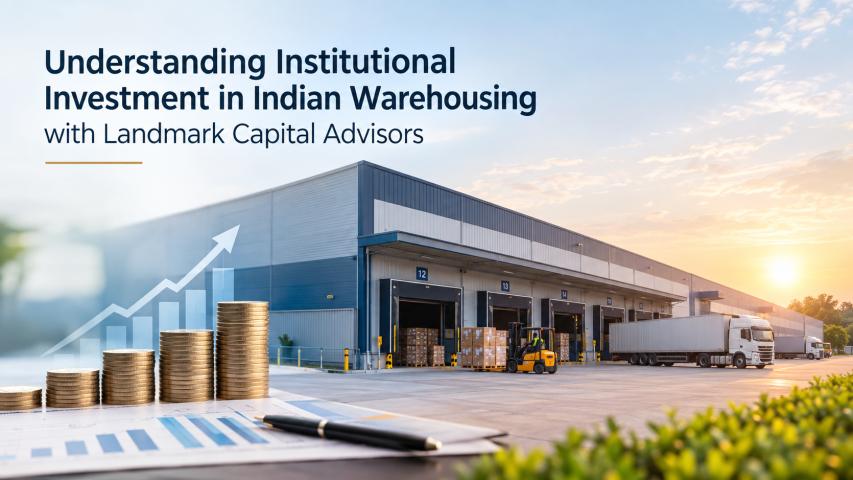
Earlier, warehousing in India was largely fragmented and locally managed. Today, pension funds, sovereign investors, and institutional capital are actively evaluating logistics assets. The reason is simple: warehouses generate relatively stable rental income while benefiting from India’s manufacturing and consumption growth. At the same time, investors have become more selective.
They now evaluate infrastructure connectivity, tenant quality, compliance standards, and operational capability before committing capital. This is where structured investing becomes important. The approach associated with the Landmark Capital Advisors Owner often reflects this shift toward disciplined underwriting and governance-focused investing. Warehousing may be growing quickly, but institutional investors still expect careful capital allocation and realistic execution timelines.
Warehousing Is No Longer “Back-End” Real Estate
One of the biggest misconceptions about warehousing is that it exists in the background of the economy. In reality, it influences everything from retail pricing to manufacturing efficiency. A poorly located or inefficient warehouse can increase transportation costs, delay deliveries, and affect entire supply chains.
India’s infrastructure push, including highways, freight corridors, industrial zones, and port connectivity, is strengthening this trend further. As infrastructure improves, logistics networks become more integrated, making warehouses even more valuable. From insights associated with Ashish Joshi Landmark Capital Advisors, the next phase of real estate growth in India may depend less on speculative appreciation and more on how efficiently assets support economic activity.
The Real Challenge: Execution and Patience
Land acquisition remains complex in many regions. Infrastructure development takes time. Regulatory approvals can delay projects. Rising construction costs and financing pressures also affect feasibility. This is why experienced investors avoid treating warehousing as a short-term trend.
Discussions around Landmark Capital Advisors Private Limited often reflect a realistic understanding of these cycles. Growth in logistics real estate may be strong, but sustainable success still depends on execution discipline and long-term planning.
That balance between opportunity and caution is what separates durable platforms from short-lived market enthusiasm.
A Sector That Reflects India’s Economic Transition
The country is moving from an economy driven mainly by consumption toward one increasingly connected with manufacturing, exports, digital commerce, and infrastructure. Warehouses sit at the intersection of all these trends. They may not carry the glamour of luxury skyscrapers or premium residences, but they are becoming essential to how the modern economy functions.
That is why warehousing is no longer viewed as a side category within real estate. It has become one of India’s most strategic asset classes, shaped by logistics, technology, consumer behavior, and long-term capital flows.
And for firms like Landmark Capital Advisors, the conversation around warehousing reflects something broader: real estate is evolving into a sector where discipline, infrastructure, and execution matter far more than short-term market noise.