Every business reaches a turning point — the moment when your trusted Sage 50 Desktop installation can no longer keep pace with your growth. Whether you're switching to a cloud-based platform, upgrading to a new version, or simply transferring your company files to a new computer, migrating data from Sage 50 Desktop is one of the most critical technical processes your finance team will ever undertake.
Done right, it protects years of financial records, customer data, vendor histories, payroll details, and transaction logs. Done wrong, it can cause corrupted files, missing balances, broken payroll records, and hours of manual cleanup. This comprehensive guide walks you through everything — from pre-migration preparation to post-migration verification — so you can move forward with confidence.
Why Migrating Data from Sage 50 Desktop Matters More Than You Think
Sage 50 Desktop has served millions of small and mid-size businesses as a reliable, feature-rich accounting solution for decades. However, the shift toward cloud accounting, remote work, and real-time financial visibility has pushed many organizations to explore Sage 50 cloud migration or transition to platforms like QuickBooks Online, Xero, or Sage Intact.
Beyond platform switching, many businesses simply need to transfer Sage 50 to a new computer due to hardware upgrades, office relocations, or IT infrastructure changes. Regardless of the reason, understanding the exact process of Sage 50 data transfer support ensures your historical data arrives intact, accurate, and fully usable from day one.
- Customer and vendor master records with full transaction histories
- Chart of accounts, opening balances, and journal entries
- Payroll data, employee records, and tax calculations
- Inventory items, purchase orders, and sales invoices
- Bank reconciliation records and audit trails
- Custom reports, templates, and company preferences
2. Step-by-Step Process for Migrating Data from Sage 50 Desktop
Following a structured approach to Sage 50 upgrade migration dramatically reduces the risk of errors, data loss, or system incompatibilities. Here are the essential steps every business should follow:
- Audit and Clean Your Existing Sage 50 DataBefore any Sage 50 export data process begins, audit your current company file. Identify and resolve duplicate customer or vendor records, unreconciled transactions, and outstanding purchase orders. A clean dataset migrates faster and with far fewer errors on the destination platform.
- Create a Full Sage 50 BackupNavigate to File → Backup within Sage 50 Desktop and create a complete, verified backup of your company data. Store this backup in at least two separate locations — an external drive and a cloud storage folder. This is your safety net if anything goes wrong during the Sage 50 backup and restore process.
- Choose Your Migration DestinationDecide where your data is going. Common Sage 50 data migration destinations include Sage 50cloud (the hosted version), QuickBooks Online or Desktop, Xero, Sage Intacct, or a new local machine running the same version. Each destination has different data compatibility requirements and export formats.
- Export Data from Sage 50 DesktopUse Sage 50's built-in export tools under File → Import/Export to extract CSV or XML files for customers, vendors, chart of accounts, transactions, and inventory. For full Sage 50 cloud migration scenarios, Sage's own migration wizard handles much of this automatically. For third-party platforms, manual CSV mapping is typically required.
- Map and Transform Data FieldsThis is the most technically demanding step. Each platform uses slightly different field names, data structures, and required formats. For example, Sage 50's "customer reference" field may need to map to "client ID" in your new system. Build a data mapping document before importing to avoid mismatched or missing records.
- Perform a Test Migration FirstNever go straight to production. Import a subset of your data — perhaps one month of transactions and a sample of customer records — into a test environment. Verify that balances match, records appear correctly, and no data has been truncated or corrupted during the Sage 50 data transfer support process.
- Execute the Full MigrationOnce your test migration is verified, proceed with the full Sage 50 export data import into your target system. Schedule this during off-hours or over a weekend to minimize business disruption. Have your IT team and a Sage specialist on standby throughout the process.
- Validate, Reconcile, and Go LiveRun a full reconciliation between your old Sage 50 Desktop records and the newly migrated data. Compare opening balances, account totals, and transaction counts. Only after full validation should you decommission the original Sage 50 Desktop instance and go live on your new platform.
Common Challenges in Sage 50 Data Migration (And How to Avoid Them)
Even experienced IT teams encounter obstacles during Sage 50 upgrade migration. Knowing the most common pitfalls helps you prepare proactive solutions before they become costly problems.
Data Format Incompatibilities
Sage 50 Desktop stores data in a proprietary Pervasive (Actian) database format. When migrating to cloud platforms or third-party accounting software, raw database files cannot simply be copied over. You must export to a universally readable format like CSV or XML first. Skipping this step is the number one cause of failed Sage 50 to QuickBooks migration attempts.
Payroll Record Complications
Payroll data is particularly sensitive during Sage 50 data migration. Employee records, year-to-date tax figures, benefit deductions, and pay history must be transferred with exact precision to avoid payroll calculation errors. Many businesses choose to close out a payroll period before migrating to ensure clean, complete records carry forward.
Version Mismatch Issues
If you are simply transferring Sage 50 to a new computer running a different version of the software, version mismatches can prevent company files from opening. Always ensure both the source and destination machines run the same Sage 50 release version, or upgrade the file format using Sage's built-in upgrade utility during the Sage 50 backup and restore sequence.
3. Sage 50 Cloud Migration: Moving to the Modern Era
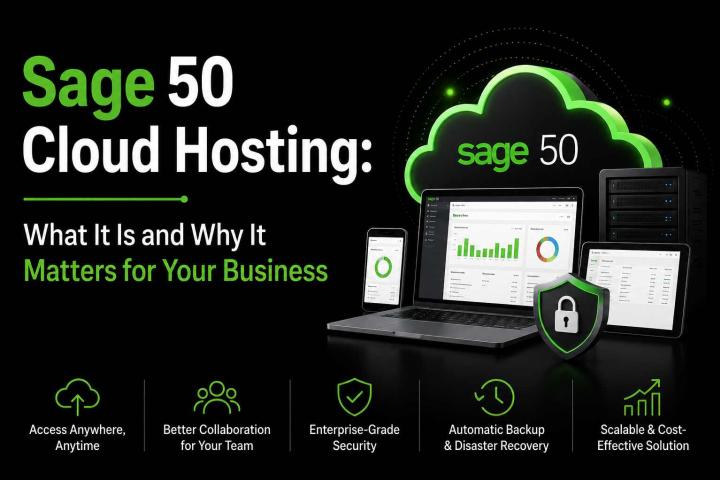
For businesses ready to leave desktop software behind entirely, Sage 50 cloud migration opens the door to real-time financial dashboards, remote access, automatic backups, and seamless collaboration between your accountant and finance team. Sage offers an official cloud migration pathway for existing Sage 50 Desktop users that preserves most of your historical data through its guided migration wizard.
The key advantage of Sage's official Sage 50 cloud migration path is that it maintains the familiar Sage interface while adding cloud capabilities — reducing the learning curve for your team. However, for businesses migrating to entirely different platforms (such as Sage 50 to QuickBooks migration), a more manual approach involving data mapping, third-party migration tools, and professional assistance is recommended.
- Sage 50cloud Accounting (hosted Sage 50 with cloud sync)
- Sage Intacct (mid-market cloud ERP)
- QuickBooks Online (popular SMB cloud accounting)
- Xero (cloud-native accounting for growing businesses)
- Microsoft Dynamics 365 Business Central (enterprise-grade ERP)
Post-Migration Best Practices for Sage 50 Data Transfer
The work doesn't end when the last file is imported. Effective Sage 50 data migration requires a disciplined post-migration review to ensure your new system is accurate, complete, and ready for day-to-day operations.
Begin by reconciling your trial balance in the new system against your last known good Sage 50 Desktop report. Check that all customer outstanding balances match, vendor aging is correct, and inventory quantities align with your physical count records. Cross-reference at least three months of historical transactions for accuracy before fully relying on the migrated data for financial reporting or tax filings.
Additionally, retrain your accounting staff on any workflow differences in the new platform. Even if you have stayed within the Sage ecosystem, the transition from desktop to cloud introduces new navigation, approval workflows, and reporting structures that require hands-on orientation.
4. When to Call a Sage 50 Migration Expert
While many straightforward transfer Sage 50 to new computer scenarios can be handled by an in-house IT team, complex migrations involving large data volumes, multi-currency transactions, integrated payroll, third-party software connections, or cross-platform moves benefit enormously from professional Sage 50 data transfer support. Errors made during migration can take weeks to correct — and in some cases, recovering corrupted or improperly mapped financial data is simply not possible without starting over.
5. If you are facing any of the following situations, it is strongly advisable to engage a certified Sage specialist before proceeding: your company file size exceeds 2GB, you have more than 5 years of historical transaction data, your Sage 50 installation includes custom third-party integrations, or you are migrating to an entirely different accounting platform such as a Sage 50 to QuickBooks migration. In these cases, the cost of expert assistance is far outweighed by the risk of data loss, compliance issues, or extended system downtime.