Most seed-stage founders don’t think they need a hiring system.
They think they need “just a few great hires.”
That sounds reasonable until you realize those few hires rarely arrive at the same time. They come in waves. A designer today, an engineer next month, a growth lead when things start to move. And each time, you start from scratch.
That’s where things quietly fall apart.
Because hiring from scratch is expensive. Not just in money, but in focus. You pause everything, scramble to source candidates, rush decisions, and hope you got it right.
A talent engine for seed-stage startups changes that equation. It replaces reactive hiring with a system that runs in the background, feeding you candidates even when you’re not actively hiring.
And no, this isn’t about building a corporate HR function at seed stage. It’s about building a simple, repeatable foundation early, before chaos becomes your default.
Why Most Startup Recruiting Systems Break Early
Let’s start with an uncomfortable truth.
Most startup recruiting systems are not systems at all. They’re a collection of habits.
Post a job. Share it on LinkedIn. Ask for referrals. Review resumes late at night. Repeat when needed.
This works until it doesn’t.
The problem is inconsistency. Every role feels like a new problem. Every search starts from zero. And over time, the cracks show up in two places.
Speed and quality.
You either move fast and compromise on quality, or you slow down and miss momentum.
A real startup recruiting system avoids that trade-off. It doesn’t rely on urgency. It relies on continuity.
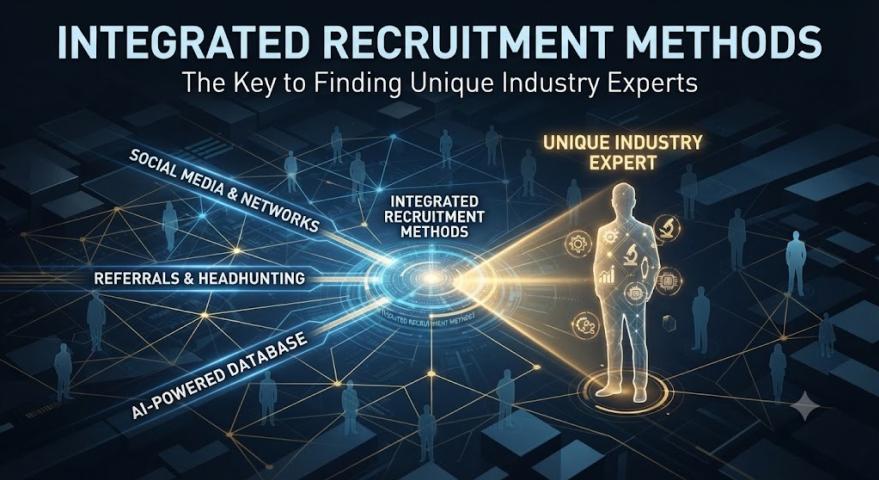
One of the easiest ways to introduce that continuity early is through an AI-powered recruiting pipeline. Not as a fancy add-on, but as a way to keep sourcing, filtering, and tracking candidates running in the background.
Because here’s the reality. The best candidates don’t appear when you need them. They appear when they’re curious. If your system isn’t active at that moment, you miss them.
Early-Stage Talent Pipeline Starts Before You Need It
Most founders think pipeline building begins when a role opens.
That’s already too late.
An early-stage talent pipeline is not about collecting resumes. It’s about building familiarity.
People join startups they recognize, not just ones that pay well.
So the question becomes, how do you stay visible without constantly “hiring”?
You show your work.
Share product decisions. Talk about challenges. Highlight what your team is figuring out. Not in a polished, PR-heavy way, but in a way that feels real.
This attracts a specific kind of candidate. Someone who cares about problems, not just positions.
Then comes the second layer. Capture that interest.
When someone engages, comments, or shows curiosity, they should have an easy path to stay connected. Not necessarily apply, but stay in your orbit.
This is where frameworks like Founder's Guide To Zero-Touch Candidate Sourcing can help shape your approach. They focus less on active hiring and more on passive relationship building.
A pipeline built this way doesn’t feel forced. It grows naturally.
And when a role opens, you’re not starting from zero. You’re choosing from people who already know you.
Repeatable Hiring Process Startup Teams Can Actually Use
There’s a common mistake founders make when trying to build a repeatable hiring process startup teams can rely on.
They overdesign it.
Multiple interview rounds. Complex scorecards. Layers of approval.
It looks structured, but it slows everything down.
At seed stage, simplicity wins.
A repeatable process should answer three questions clearly:
What does a strong candidate look like?
How do we test for that?
How quickly can we decide?
That’s it.
For example, instead of generic interviews, use role-specific scenarios. Give candidates a problem they would actually face in your company. Watch how they approach it.
This tells you more than any resume ever will.
Another overlooked detail is feedback loops.
After every hire, take time to reflect. What worked? What didn’t? Did the process reveal what you needed to know?
Small adjustments compound quickly.
Over time, your process becomes sharper. Not because it’s complex, but because it’s tested.
That’s what makes it repeatable.
Scalable Recruitment Framework Without Corporate Overhead
“Scalable” often gets misinterpreted.
Founders assume it means adding layers, tools, and processes. In reality, a scalable recruitment framework is about reducing dependence on any single person.
Especially you.
If hiring only works when you’re deeply involved, it’s not scalable.
The goal is to design a system where sourcing, initial screening, and coordination happen without constant intervention. You step in where judgment matters.
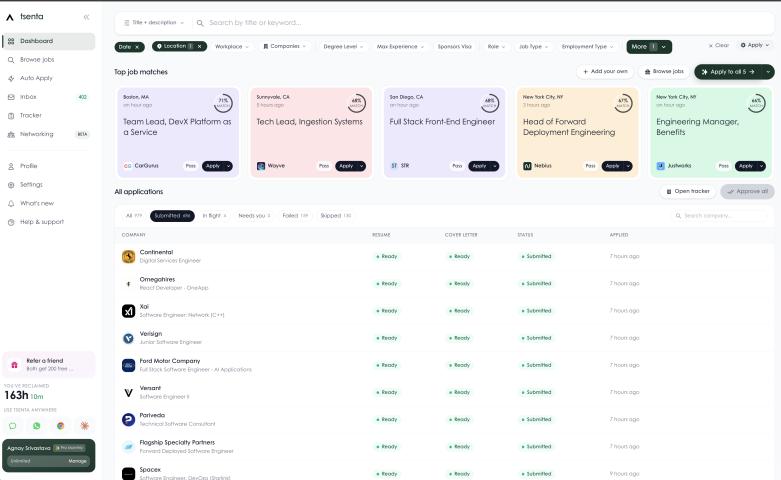
This is where tools like top recruiting software for startups can play a role. Not as replacements for decision-making, but as support for consistency.
They keep track of candidates. They maintain communication. They reduce manual work.
But tools alone won’t fix a broken process.
You need clarity first.
What roles matter most in the next six months?
What kind of people thrive in your environment?
What signals indicate long-term fit?
Once those are defined, the framework becomes easier to build.
And importantly, easier to scale.
Hidden Advantage of Building Early
There’s a reason this matters more at seed stage than later.
Because habits formed early stick.
If your default mode is reactive hiring, it will follow you into Series A, B, and beyond. The stakes just get higher.
On the other hand, if you build a talent engine for seed-stage startups early, it compounds.
Your pipeline grows. Your process improves. Your hiring becomes faster without feeling rushed.
And perhaps most importantly, your reputation strengthens.
Candidates talk. They share experiences. A smooth, thoughtful hiring process becomes part of how your company is perceived.
That perception attracts better talent.
Which improves your team.
Which improves your product.
It’s a loop.
Subtle Shift From Hiring to Building
Here’s the shift that changes everything.
Stop thinking of hiring as something you do.
Start thinking of it as something you build.
A system. A pipeline. An engine.
Because when hiring is treated as an activity, it competes with everything else on your plate.
But when it’s treated as a system, it runs alongside everything else.
Quietly. Consistently. Reliably.
And that’s what you need at seed stage.
Not more effort. Not more hours.
Just a smarter way to make hiring happen without stopping everything else.
Conclusion
A self-sustaining talent engine is not about complexity. It’s about consistency.
It’s about having a startup recruiting system that doesn’t reset every time you open a new role. It’s about building an early-stage talent pipeline before urgency hits. It’s about creating a repeatable hiring process startup teams can trust. And it’s about designing a scalable recruitment framework that doesn’t depend on your constant involvement.
If hiring still feels like a scramble every time, that’s your signal.
Not to work harder on it.
But to build something that works without you.