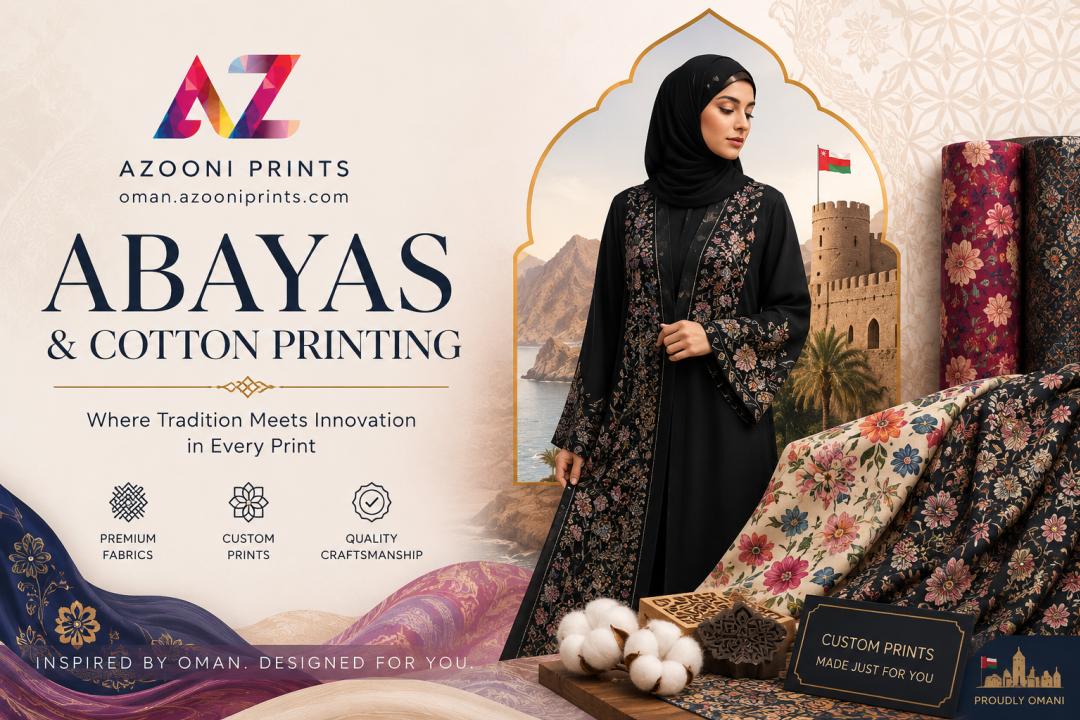
In today’s fast-moving fashion market, custom clothing is more popular than ever. Many fashion brands now want unique designs that help them stand out. This is where abaya printing becomes important. Modern printing methods allow businesses to create stylish, high-quality abayas with beautiful colors and detailed patterns. In 2026, customers are looking for personalized fashion, eco-friendly fabrics, and premium designs. Because of this, fashion businesses need smart printing solutions that are fast, affordable, and reliable. Whether you run a small boutique or a large clothing company, choosing the right printing method can improve your product quality and increase customer satisfaction. This article will explain the best abaya printing solutions for fashion businesses in 2026. You will also learn about common mistakes, useful trends, and helpful tips to grow your fashion brand successfully.
What Is Abaya Printing?
Abaya printing is the process of adding designs, patterns, logos, or artwork onto abaya fabric using different printing technologies. These designs may include floral patterns, Arabic calligraphy, geometric artwork, or modern fashion graphics. Today, many businesses use digital textile printing because it offers better color quality and faster production. Unlike traditional methods, digital printing allows brands to print custom designs directly onto fabric with excellent detail.
Fashion companies use abaya printing to create:
Luxury designer abayas
Customized fashion collections
Branded uniforms
Seasonal fashion trends
Limited-edition clothing
Additionally, modern printing methods support eco-friendly production. This is becoming very important for customers in 2026.
Top Abaya Printing Solutions for Fashion Businesses
1. Digital Textile Printing
Digital textile printing is one of the best solutions for modern fashion businesses. It uses advanced printers to place designs directly onto fabric.
This method is popular because it produces sharp images and vibrant colors. It also works well for small and large orders.
Benefits include:
Fast production speed
High-quality print detail
Lower setup costs
Easy customization
Reduced fabric waste
Many fashion brands prefer digital abaya printing because it helps them create trendy designs quickly.
2. Sublimation Printing
Sublimation printing is another excellent choice for polyester-based fabrics. In this process, heat transfers dye into the fabric.
The print becomes part of the material instead of sitting on top. As a result, the design lasts longer and does not crack easily.
This solution is ideal for:
Sports->
Lightweight fashion wear
Bright color designs
Full-print patterns
However, sublimation works best on synthetic fabrics.
3. Screen Printing
Screen printing is a traditional method still used by many businesses. It involves pushing ink through a stencil onto the fabric.
This method is best for bulk orders because it becomes cost-effective at higher quantities.
Advantages include:
Durable prints
Strong color coverage
Good for simple designs
Affordable for mass production
Many fashion manufacturers still choose screen printing for classic abaya collections.
4. Embroidery and Print Combination
In 2026, luxury fashion brands are combining embroidery with abaya printing to create premium designs.
For example, a printed floral design may include embroidered details around the sleeves or neckline. This gives the abaya a rich and elegant look.
This trend is growing because customers now prefer unique and high-end fashion products.
5. Eco-Friendly Printing Solutions
Sustainability is becoming a major trend in the fashion industry. Many businesses are now using water-based inks and organic fabrics.
Eco-friendly abaya printing solutions help brands:
Reduce environmental impact
Save water and energy
Attract eco-conscious buyers
Improve brand reputation
Additionally, sustainable fashion is expected to grow rapidly in the coming years.
How to Choose the Right Abaya Printing Method
Choosing the right printing method depends on your business goals.
Firstly, think about your fabric type. Cotton, polyester, silk, and chiffon all react differently to printing techniques.
Secondly, consider your order size. Digital printing works well for small custom orders, while screen printing is better for bulk production.
Thirdly, focus on design quality. If your artwork contains detailed graphics, digital printing may provide the best results.
Finally, think about your budget and delivery time. Faster methods can help businesses meet customer demand quickly.
Common Mistakes to Avoid
Many fashion businesses make mistakes when starting with abaya printing. Avoiding these problems can save time and money.
Ignoring Fabric Compatibility
Not every printing method works on every fabric. Always test the material before full production.
Choosing Low-Quality Inks
Cheap inks may fade after washing. High-quality inks provide better durability and customer satisfaction.
Overcomplicated Designs
Sometimes simple designs look more elegant. Too many colors or patterns can reduce print clarity.
Skipping Sample Testing
Always request a sample before large production orders. This helps check color accuracy and fabric quality.
Ignoring Fashion Trends
Fashion changes quickly. Businesses should follow current trends to stay competitive in the market.
Latest Trends in Abaya Printing for 2026
The fashion industry is changing rapidly. Several new trends are shaping abaya printing in 2026.
Minimalist Designs
Simple and clean patterns are becoming very popular among younger buyers.
Metallic and Foil Prints
Gold and silver foil effects add a luxury touch to modern abayas.
AI-Based Design Customization
Some companies now use AI tools to create personalized fashion designs for customers.
Sustainable Fashion
Eco-friendly fabrics and low-waste printing methods continue to grow in demand.
Smart Fabric Technology
Innovative fabrics with cooling and wrinkle-resistant features are entering the abaya market.
Where to Find More Information and Printing Services
Fashion businesses can learn more about abaya printing through trusted textile platforms and industry websites.
Useful resources include:
Textile industry blogs
Fashion trade shows
Digital printing equipment suppliers
Online textile courses
Sustainable fashion organizations
Additionally, businesses can connect with experienced printing companies for expert guidance and production support.
Trade exhibitions in the Middle East and Asia are also excellent places to discover the latest abaya printing technologies and fashion trends.
Conclusion
The demand for stylish and customized abayas continues to grow in 2026. Because of this, businesses need reliable and modern abaya printing solutions to stay competitive. Digital printing, sublimation, screen printing, and eco-friendly methods all offer unique advantages. However, choosing the right solution depends on your fabric, design, budget, and business goals.
By following the right strategies and avoiding common mistakes, fashion brands can create high-quality abayas that attract more customers and improve brand value. Now is the perfect time to explore advanced abaya printing technologies and grow your fashion business successfully.
Frequently Asked Questions
What is the best fabric for abaya printing?
Cotton, polyester, nida, and chiffon are commonly used fabrics. The best option depends on the printing method and design >
Is digital abaya printing better than screen printing?
Digital printing is better for detailed and custom designs, while screen printing works well for large bulk orders.
How long does abaya printing last?
High-quality prints can last for many years with proper washing and fabric care.