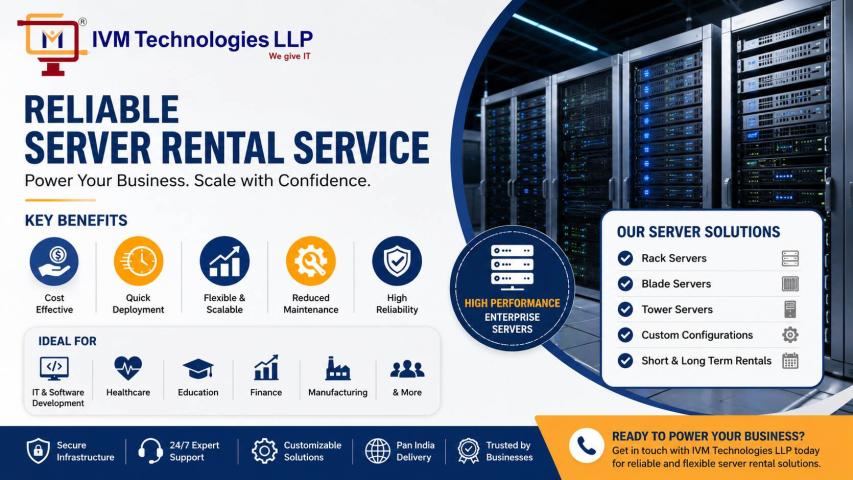
Businesses today depend on fast, secure, and dependable IT infrastructure. Whether you're running business applications, hosting websites, managing databases, or supporting remote teams, having the right server setup matters. Buying enterprise-grade servers can be expensive, especially for startups, project-based operations, and companies that need flexibility.
This is where a professional server rental service becomes a practical solution. Renting servers gives businesses access to high-performance hardware without the large upfront investment that comes with purchasing equipment.
Companies like IVM Technologies provide server rental solutions that help organizations get the computing power they need while keeping costs under control.
What Is a Server Rental Service?
A server rental service allows businesses to use physical servers for a specific period by paying a monthly or yearly rental fee. Instead of purchasing hardware, companies can rent servers that match their workload requirements.
This approach is useful for:
Temporary projects
Software testing environments
Data processing workloads
Application hosting
Disaster recovery setups
Corporate events and training programs
The rented server can be configured according to business needs, making it a flexible choice for organizations of all sizes.
Why Businesses Prefer Renting Servers
Many organizations choose server rentals because they offer financial and operational advantages.
Lower Initial Investment
Buying enterprise servers requires a significant budget. Renting removes that burden and allows businesses to start using powerful hardware immediately.
Quick Deployment
Server rental providers typically maintain ready-to-use inventory. This reduces waiting time and helps businesses launch projects faster.
Easy Upgrades
Business requirements change over time. With rented servers, upgrading RAM, storage, or processing power is usually straightforward.
Reduced Maintenance Concerns
Hardware maintenance and replacement support are often handled by the service provider, reducing IT management workload.
Better Budget Planning
Monthly rental costs are predictable, making financial planning easier for businesses.
Types of Servers Available for Rent
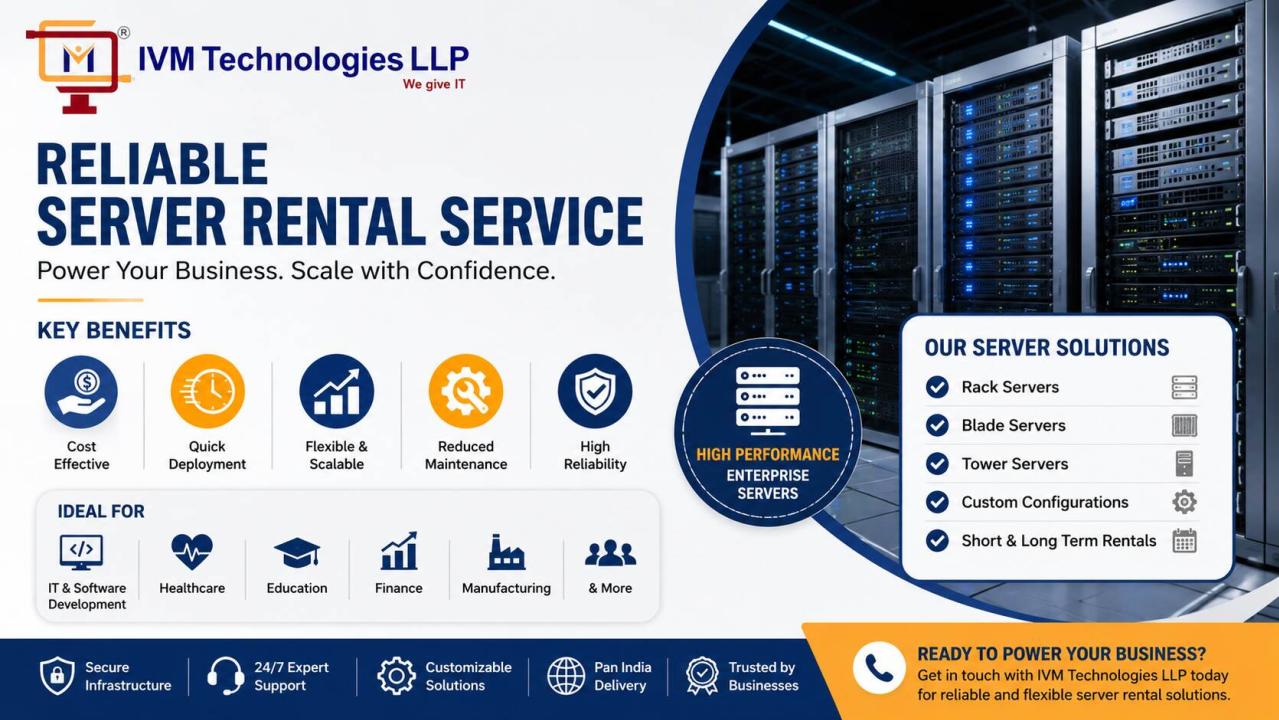
Different workloads require different server configurations. A quality server rental service usually offers several options.
Rack Servers
Rack servers are among the most common choices for businesses. They are mounted inside standard server racks and offer excellent performance, expandability, and reliability.
Rack servers are suitable for:
Database management
Web hosting
Virtualization
Enterprise applications
Blade Servers
Blade servers use a modular design where multiple server blades fit into a shared chassis.
These servers are often selected for:
Large-scale computing
Data center environments
High-density deployments
Tower Servers
Tower servers resemble traditional desktop systems but provide server-grade performance. They are often used by small businesses with modest infrastructure needs.
Rack Server vs Blade Server: Which One Should You Choose?
One of the most common questions businesses ask is about rack server vs blade server selection.
Rack Servers
Benefits include:
Lower initial setup complexity
Easier maintenance
Flexible component upgrades
Suitable for small and medium-sized deployments
Rack servers are often preferred when businesses need a balance between performance and cost.
Blade Servers
Benefits include:
Higher server density
Reduced cabling
Centralized management
Efficient use of data center space
Blade servers are generally chosen for larger environments that require many servers operating together.
Which Option Is Better?
The answer depends on your workload and infrastructure goals.
If you're running a growing business and need dependable computing resources, rack servers often provide a practical starting point. For large enterprise environments with space limitations and extensive processing requirements, blade servers can be a strong option.
Understanding the differences between rack server vs blade server setups helps businesses select hardware that matches both current and future requirements.
Industries That Benefit from Server Rental Services
Server rentals are useful across many sectors.
IT and Software Development
Development teams often need temporary environments for testing, staging, and deployment.
Healthcare
Healthcare organizations use servers for storing patient records, managing applications, and processing data securely.
Education
Educational institutions may require servers for online learning platforms, research projects, and examination systems.
Finance
Financial organizations use rented servers for transaction processing, analytics, and application hosting.
Manufacturing
Manufacturers rely on servers for inventory management, production planning, and operational systems.
Key Features to Look for in a Server Rental Provider
Not all rental services offer the same level of support. Before selecting a provider, consider the following factors.
Hardware Quality
Choose providers that offer enterprise-grade hardware from trusted manufacturers.
Technical Support
Reliable support helps resolve issues quickly and minimizes downtime.
Flexible Rental Terms
Businesses often need short-term and long-term rental options.
Custom Configuration
The ability to customize processors, RAM, storage, and operating systems is valuable.
Fast Delivery
Quick deployment helps projects stay on schedule.
Security Options
Data protection and system security should be part of the overall solution.
How Server Rentals Help During Business Growth
Growth often creates new IT demands. More users, larger databases, and increased application usage can put pressure on existing infrastructure.
Renting servers allows businesses to expand resources without making large capital investments. Additional servers can be added when demand rises and adjusted when requirements change.
This flexibility helps organizations remain agile while controlling operational costs.
Common Use Cases for Server Rental Services
Businesses rent servers for many practical reasons.
Hosting business applications
Running ERP software
Virtual machine environments
Website hosting
Data analytics projects
Backup and recovery systems
Temporary project deployments
Corporate training programs
The ability to access enterprise hardware without ownership responsibilities makes server rentals attractive across many industries.
Why Businesses Work with Experienced Providers
Selecting the right service provider can affect system reliability, uptime, and project success.
Companies like IVM Technologies provide server rental solutions that help organizations access dependable infrastructure without the challenges associated with purchasing and maintaining hardware. Working with an experienced provider can simplify deployment, support, and future expansion plans.
FAQs About Server Rental Service
1. What is a server rental service?
A server rental service allows businesses to use enterprise servers on a rental basis instead of purchasing them outright. Companies pay a recurring fee for access to the hardware.
2. Is renting a server cheaper than buying one?
For many businesses, yes. Renting eliminates large upfront hardware costs and provides predictable monthly expenses.
3. How long can I rent a server?
Rental periods vary by provider. Options often range from a few days to several years, depending on project requirements.
4. What is the difference between rack server vs blade server?
Rack servers operate as individual units mounted in racks, while blade servers use modular blades within a shared chassis. Rack servers are often easier to manage for smaller deployments, while blade servers suit high-density environments.
5. Can rented servers be customized?
Yes. Most providers offer customization options including processor selection, RAM capacity, storage configuration, and operating system installation.
Get Reliable Server Rental Solutions
If your business needs dependable computing resources without investing heavily in hardware, server rental can be a smart choice. Whether you need infrastructure for application hosting, virtualization, data processing, or temporary projects, choosing the right provider matters.
IVM Technologies offers flexible server rental solutions backed by professional support, quality hardware, and configurations tailored to business requirements. Contact the team today to discuss your project and find a server setup that fits your operational goals and budget.