If you've ever tried buying original Shilajit resin in India and ended up confused by the options, you're not alone. The market is flooded with products making the same claims - Himalayan sourced, lab tested, pure, potent. But the differences between them can be significant, and a lot of it comes down to something most brands don't talk about openly: where exactly their Shilajit was collected, and at what altitude.
This matters more than most people realise. Let's get into it.
What Shilajit Actually Is (And Why Sourcing Changes Everything)
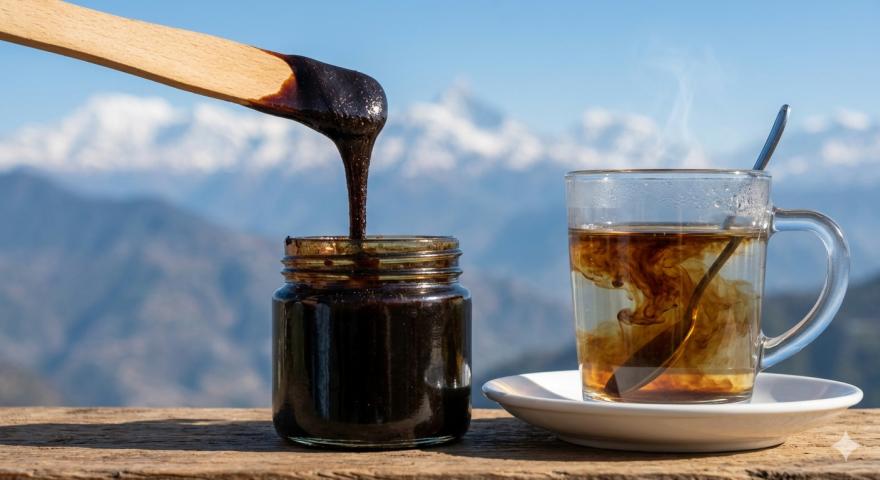
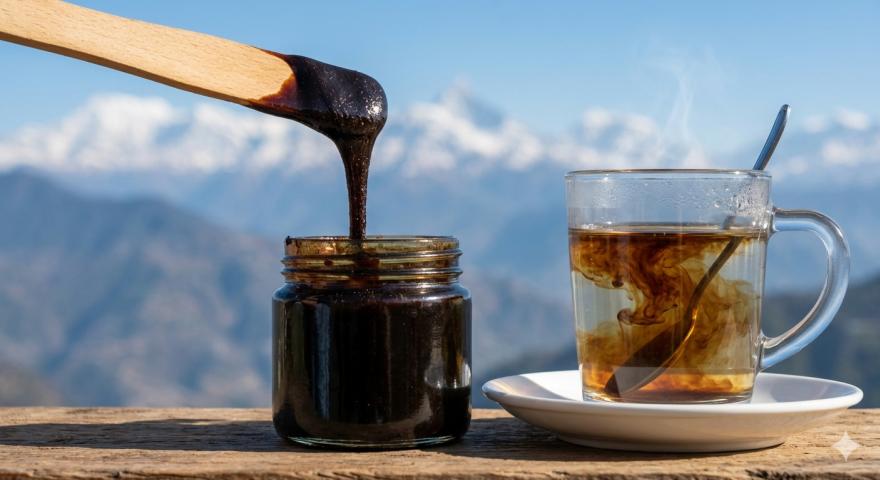
Shilajit isn't manufactured. It's collected. Over centuries, organic plant matter - ancient mosses, roots, microbial biomass - gets compressed within rock fissures at high elevations and slowly transforms under heat and pressure into a thick, mineral-rich exudate. During warmer months, this substance seeps out from between rock layers and is harvested by collectors who know where to look.
The quality of what seeps out depends heavily on what went in and what happened to it over time. And altitude turns out to be one of the most consequential variables in that equation.
High Altitude Shilajit: Why It's Different
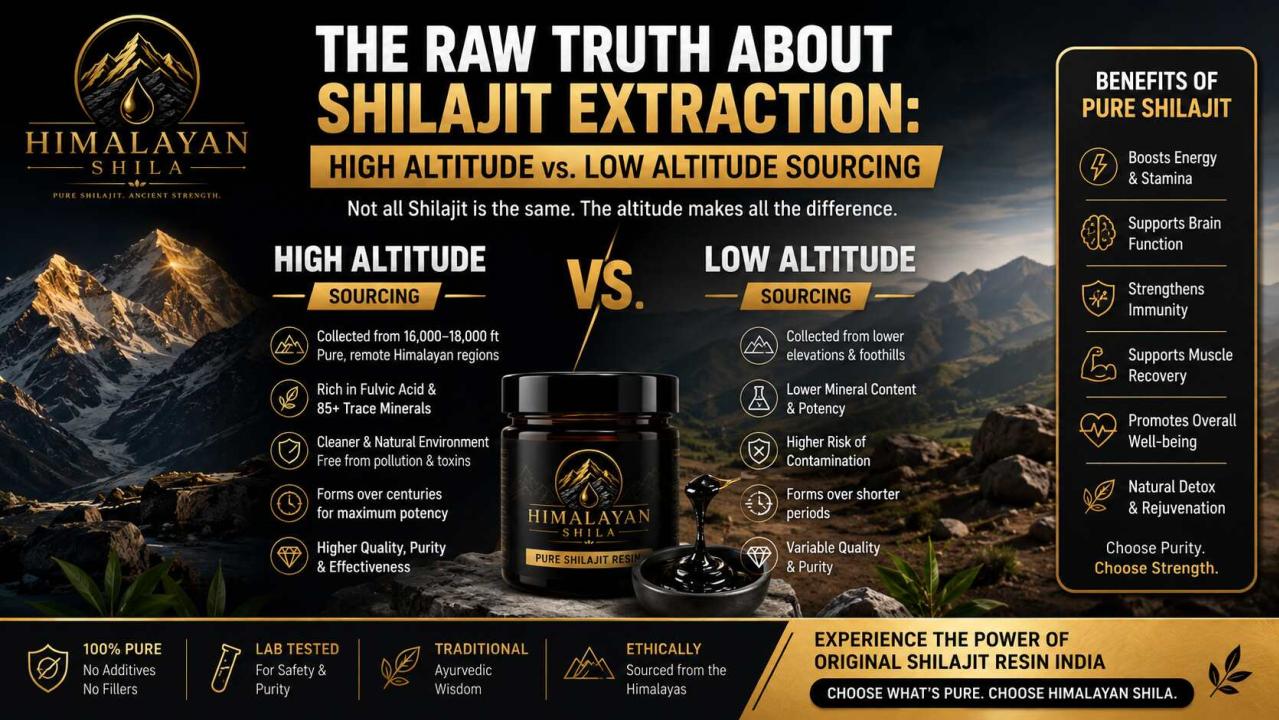
When people refer to authentic Himalayan Shilajit, they're typically talking about material harvested from elevations above 16,000 feet - roughly 3,000 metres and higher. In these zones, the conditions that produce Shilajit are more extreme and, as it turns out, more favourable for quality.
Richer Organic Layers
At high altitudes, the ecosystems that contribute to Shilajit formation are more pristine. Fewer centuries of industrial activity, less contamination from lower-altitude agriculture, and a more compact, concentrated layer of organic deposits. The plant matter that originally composed those deposits was subject to more intense freeze-thaw cycling, which breaks down organic compounds differently - producing a denser concentration of fulvic acid and humic acid over time.
Higher Fulvic Acid Content
Fulvic acid is the most studied active compound in Shilajit and the primary marker used to assess potency in independent lab reports. High-altitude specimens consistently test with higher fulvic acid percentages than lower-altitude counterparts. This isn't just a quality claim - it's measurable. Any Certificate of Analysis worth reading will show the fulvic acid percentage, and this single number tells you a lot about whether the material was genuinely collected at elevation.
Natural Mineral Density
The rock composition at high Himalayan elevations contains a different mineral profile than lowland formations. Material collected from these zones naturally carries a broader spectrum of trace minerals - including magnesium, iron, zinc, and copper - absorbed directly from the surrounding geology over centuries. That mineral density doesn't survive processing if the raw material wasn't there to begin with.
Lower Contamination Risk
High-altitude collection zones are typically far removed from agricultural runoff, chemical pollution, and industrial water sources. The contamination risks that affect lower-altitude deposits - particularly heavy metals from mining activity and pesticide residue from nearby farming - are significantly reduced. This is one reason why reputable brands that source from genuine high-altitude Himalayan regions tend to have cleaner heavy metal test results.
Low Altitude Shilajit: What You're Actually Getting
Low-altitude Shilajit - collected from elevations below roughly 1,500 metres - is a different product, even when it's marketed with similar language.
Thinner Organic Composition
Lower elevations don't produce the same density of organic compression. The layers are thinner, more spread out, and often mixed with mineral sediment that contributes to the bulk without adding potency. The resulting exudate may look similar but typically has a lower concentration of the bioactive compounds that make genuine Shilajit worth using.
Weaker Fulvic Acid Levels
This is the most consistent difference you'll see in lab results. Low-altitude specimens routinely test at fulvic acid concentrations that are a fraction of high-altitude material. Brands that don't publish their fulvic acid percentage are often working with lower-altitude or mixed-source material - and they know it.
Greater Contamination Exposure
Lower-altitude zones in the Indian subcontinent and surrounding regions face real contamination challenges. Proximity to mining, agricultural activity, and industrial water sources means that low-altitude Shilajit often requires more aggressive purification - which can itself degrade some of the sensitive bioactive compounds if done poorly. When you see original shilajit resin india brands making heavy metal-free claims without sharing a third-party COA, this is the context worth keeping in mind.
How to Apply This When Buying Online
Most consumers in India are buying Shilajit online, which means you can't hold the product and assess it physically before purchasing. A few practical filters:
Ask for the COA.
Any serious brand - including those like Himalayan Shila that position themselves around verified quality - should have an independent lab report available for their current batch. Look specifically for the fulvic acid percentage and the heavy metals panel.
Check the sourcing specificity.
Does the brand tell you the elevation, region, or harvesting method? Vague "Himalayan mountains" language without specifics is a weaker trust signal than a brand that names the altitude range and collection method.
Look at the ingredient list.
Pure Shilajit resin should list one ingredient. Any additional binders, fillers, or flow agents are a signal that the raw material wasn't potent enough to stand alone.
Check if they do the water test.
Brands confident in their product quality will actively encourage you to test what they've sold you. That's the kind of transparency worth rewarding.
This article is for educational purposes only. Shilajit is a dietary supplement and is not intended to diagnose, treat, cure, or prevent any disease. Consult a healthcare professional before adding new supplements to your routine.