For networking professionals preparing for advanced certifications, understanding VXLAN EVPN is essential. As modern data centers continue to scale, traditional Layer 2 architectures face significant limitations. This is why VXLAN EVPN has become a foundational technology in enterprise and cloud environments. Many engineers pursuing CCIE Data Center Training focus heavily on VXLAN EVPN because it plays a critical role in modern network design, automation, and scalability.
What Is VXLAN EVPN?
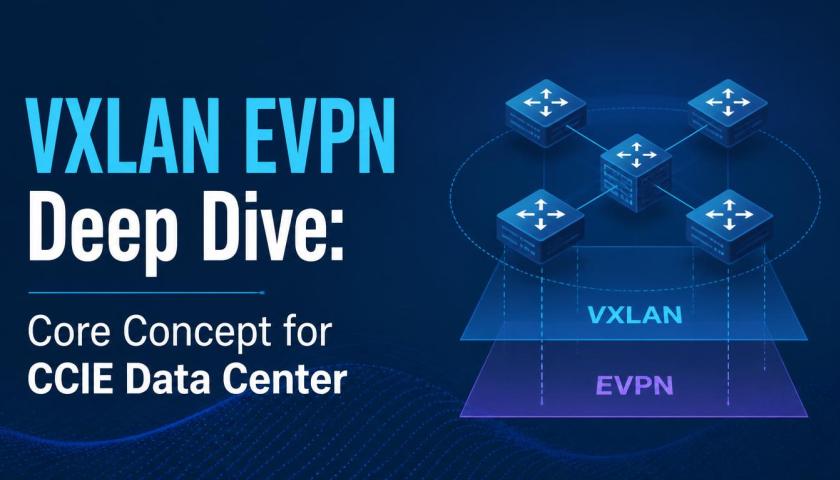
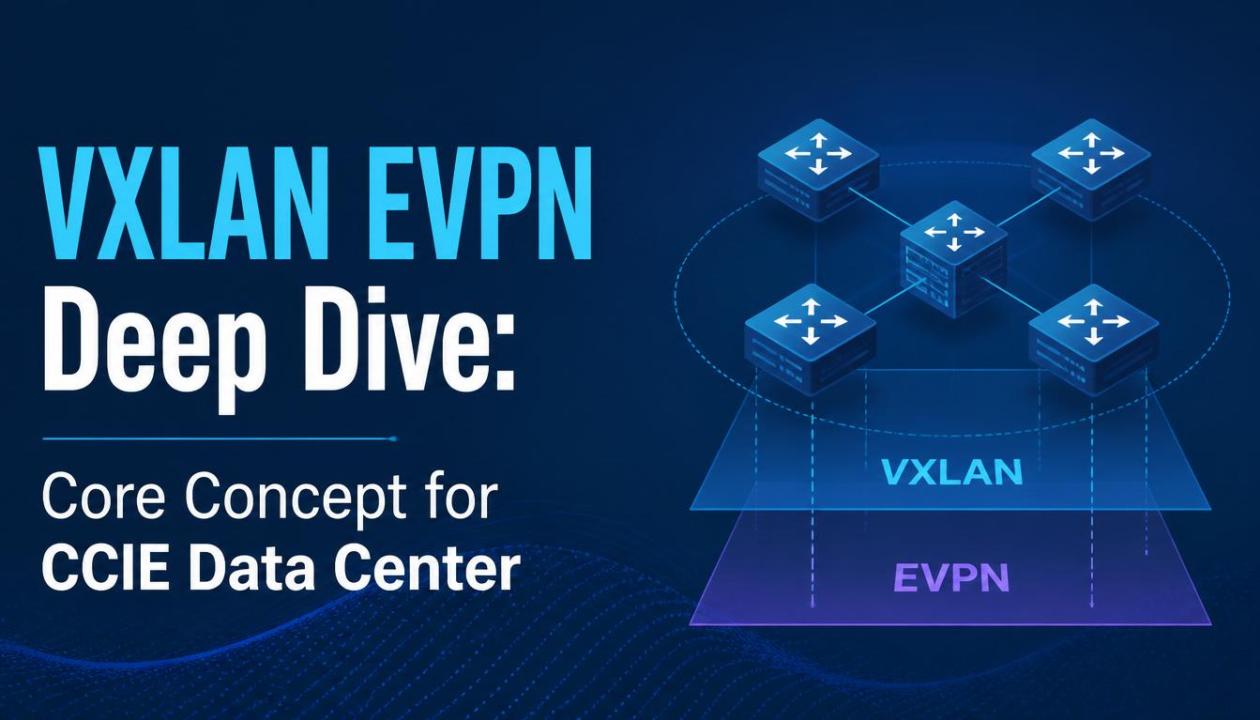
VXLAN EVPN combines two powerful technologies that work together to create scalable and efficient data center networks.
VXLAN (Virtual Extensible LAN) provides Layer 2 network virtualization over a Layer 3 infrastructure.
EVPN (Ethernet Virtual Private Network) serves as the control plane for VXLAN, enabling efficient MAC and IP address learning and distribution.
Together, VXLAN EVPN addresses the scalability challenges of traditional VLAN-based environments while supporting modern cloud and multi-tenant architectures.
Why Traditional Data Center Networks Face Challenges
Traditional Layer 2 networks were designed for smaller environments and often encounter limitations in large-scale deployments.
VLAN Scalability Issues
Standard VLANs support only 4,096 VLAN IDs, which can become insufficient in large enterprise or cloud data centers.
Spanning Tree Limitations
Traditional networks rely on the Spanning Tree Protocol (STP) to prevent loops. While effective, STP blocks redundant paths, leading to inefficient bandwidth utilization.
Mobility Constraints
Virtual machine mobility requires consistent Layer 2 connectivity across multiple racks and locations, which can be difficult to achieve with conventional architectures.
VXLAN EVPN was developed to overcome these challenges while providing greater flexibility and scalability.
Understanding VXLAN Fundamentals
VXLAN is an overlay technology that encapsulates Layer 2 Ethernet frames within Layer 3 UDP packets.
How VXLAN Works
When traffic enters a VXLAN-enabled network:
The original Ethernet frame is encapsulated.
A VXLAN header is added.
The packet is transported across an IP network.
The destination device decapsulates the packet and forwards the original frame.
This process allows Layer 2 segments to extend across Layer 3 boundaries.
VXLAN Network Identifier (VNI)
Instead of VLAN IDs, VXLAN uses a 24-bit VXLAN Network Identifier.
Benefits of VNI
Supports approximately 16 million segments.
Enables massive scalability.
Supports large multi-tenant environments.
Reduces dependence on traditional VLAN limitations.
What Is EVPN?
EVPN is a standards-based control plane that provides efficient distribution of MAC and IP address information.
Unlike traditional flood-and-learn methods, EVPN uses MP-BGP to exchange endpoint information between network devices.
Key Functions of EVPN
MAC address learning
IP address advertisement
Host mobility support
ARP suppression
Multi-homing support
These capabilities significantly improve network efficiency and reduce unnecessary broadcast traffic.
Key Components of VXLAN EVPN Architecture
Understanding the major architectural components is critical for mastering the technology.
VTEP (VXLAN Tunnel Endpoint)
A VTEP is responsible for VXLAN encapsulation and decapsulation.
Functions include:
Encapsulating Ethernet frames into VXLAN packets
Decapsulating received VXLAN traffic
Maintaining VXLAN tunnel information
Underlay Network
The underlay is the IP transport network that carries VXLAN traffic.
Characteristics include:
High availability
Layer 3 routing
Fast convergence
Equal Cost Multi-Path (ECMP) support
Overlay Network
The overlay consists of VXLAN tunnels that create virtual Layer 2 connectivity across the Layer 3 underlay.
Benefits of VXLAN EVPN
VXLAN EVPN has become the preferred architecture for modern data centers due to several advantages.
Improved Scalability
The large VNI space enables organizations to support millions of virtual networks without exhausting resources.
Better Traffic Efficiency
EVPN minimizes flooding through control-plane learning mechanisms.
Enhanced Redundancy
Multi-homing capabilities provide active-active connectivity and eliminate many traditional bottlenecks.
Simplified Operations
Automation and centralized control reduce operational complexity and improve consistency.
Cloud Readiness
VXLAN EVPN supports modern cloud-native applications, containerized workloads, and hybrid cloud deployments.
VXLAN EVPN Control Plane Deep Dive
The control plane is one of the most important concepts for CCIE Data Center candidates.
MP-BGP as the Control Plane
EVPN uses Multiprotocol Border Gateway Protocol (MP-BGP) to exchange endpoint reachability information.
Benefits include:
Reduced flooding
Faster convergence
Better scalability
Consistent endpoint learning
EVPN Route Types
Several route types play important roles in EVPN operations.
Type 1 Route
Used for Ethernet Auto-Discovery.
Type 2 Route
Used for MAC and IP advertisement.
Type 3 Route
Used for Inclusive Multicast Ethernet Tag routes.
Type 5 Route
Used for IP Prefix advertisement.
Understanding these route types is essential for troubleshooting and exam preparation.
VXLAN EVPN Data Plane Operations
The data plane handles actual packet forwarding after control-plane information has been exchanged.
Endpoint Learning
Endpoints are learned through EVPN advertisements rather than relying entirely on flooding mechanisms.
Packet Forwarding
Traffic follows these steps:
Endpoint information is learned through EVPN.
VXLAN encapsulation occurs at the source VTEP.
Traffic traverses the IP underlay.
The destination VTEP decapsulates the packet.
Traffic reaches the intended endpoint.
This approach improves efficiency and reduces unnecessary broadcasts.
Common VXLAN EVPN Use Cases
Organizations deploy VXLAN EVPN for various business and technical requirements.
Data Center Modernization
Many enterprises replace traditional Layer 2 networks with VXLAN EVPN to achieve greater scalability.
Multi-Tenant Environments
Service providers use VXLAN EVPN to isolate customer environments securely.
Private Cloud Deployments
Private cloud infrastructures benefit from workload mobility and flexible network segmentation.
Disaster Recovery Solutions
VXLAN EVPN supports seamless workload movement between data centers.
VXLAN EVPN in CCIE Data Center Certification
VXLAN EVPN is a major focus area in the CCIE Data Center blueprint.
Topics Commonly Tested
VXLAN architecture
EVPN route types
MP-BGP operations
Anycast Gateway
Multi-site deployments
Layer 2 and Layer 3 VNIs
Troubleshooting methodologies
Candidates should understand both theoretical concepts and hands-on implementation.
Lab Preparation Recommendations
Build a Practical Environment
Create a lab using virtual or physical Nexus devices.
Master Show Commands
Practice verifying:
BGP EVPN routes
VTEP status
VNI mappings
Endpoint learning
Troubleshoot Regularly
Develop skills in identifying:
Route advertisement issues
VTEP connectivity problems
Overlay and underlay mismatches
Hands-on experience is crucial for certification success.
Best Practices for VXLAN EVPN Deployment
Organizations should follow several best practices when implementing VXLAN EVPN.
Design a Robust Underlay
A stable Layer 3 underlay is essential for reliable overlay performance.
Use Automation
Automated provisioning reduces human error and improves consistency.
Implement Monitoring
Continuous monitoring helps identify performance issues before they impact users.
Follow Standardized Configurations
Consistent configuration templates simplify management and troubleshooting.
Conclusion
VXLAN EVPN has become the cornerstone of modern data center networking, providing scalability, flexibility, and operational efficiency that traditional architectures cannot match. By combining VXLAN’s powerful overlay capabilities with EVPN’s intelligent control plane, organizations can build highly scalable and resilient infrastructures for cloud and enterprise environments. For professionals pursuing advanced networking expertise, mastering VXLAN EVPN is essential for both real-world deployments and certification success. Whether you are preparing for a certification exam or expanding your data center knowledge, a comprehensive CCIE Data Center Course can help you develop the skills needed to design, deploy, and troubleshoot VXLAN EVPN networks effectively.