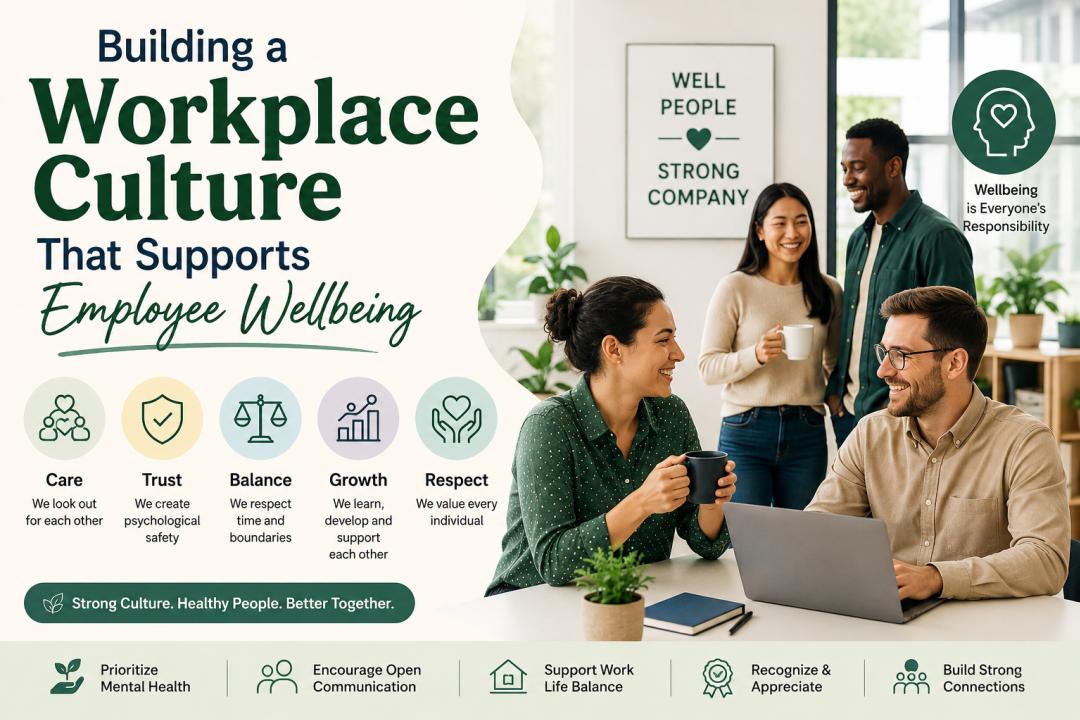
When did work start feeling like something you just survive through the week?
Most people have been there. You show up, put in the hours, and go home feeling emptied out, not because the job was hard, but because the place itself felt cold. No one checked in. Stress was worn like a badge of honor. And "wellbeing" was that word HR used in the company newsletter before nothing actually changed.
Here's the thing though: that does not have to be the norm. And more leaders are starting to figure that out.
Why Wellbeing Is So Much Bigger Than a Gym Membership
Let's be honest. A lot of companies think ticking the wellbeing box means handing out free snacks or subsidizing a yoga app. And sure, those things are appreciated. But they don't move the needle on how people actually feel at work.
Real wellbeing is about whether someone feels secure in their role, whether they have people around them who genuinely give a damn, and whether the place they spend 40-plus hours a week actually respects them as a full human being, not just a set of deliverables.
When those deeper needs are met, everything changes. People show up more engaged. They stick around longer. They carry their teams through the hard stretches instead of quietly looking for the exit. And when those needs aren't met? Even your best performers will eventually burn out, no matter how talented they are.
Wellbeing isn't a HR initiative. It's what holds a team together.
What Building This Culture Actually Requires
Psychological Safety Isn't a Buzzword
Picture a team where someone has a concern but stays quiet because they've seen what happens when people speak up. That silence? That's where problems fester and people disengage.
Psychological safety simply means your team feels okay being honest. They can raise a bad idea without getting shot down, admit they're struggling without worrying it'll go against them, and ask a "dumb question" without feeling judged. When that safety exists, people actually talk to each other. Issues get caught early. Work gets better.
And it starts with whoever's leading the room. When a manager responds to mistakes with questions instead of blame, people take note. That's where trust gets built.
Your Managers Are Doing More Than Managing Tasks
Here's something most organizations haven't fully reckoned with yet: your managers are your culture, full stop.
Not the values on your website. Not the team offsite. The person your employees talk to every week, the one who decides how work gets assigned, who notices when someone's off, and who either makes space for real conversations or shuts them down without meaning to.
When managers are trained to lead with empathy, to actually listen rather than just hear, and to treat people like adults with lives outside work, wellbeing stops being a program and starts being woven into how things get done day to day.
Flexibility Matters More Than Most Leaders Realize
People don't want to feel like their entire personal life has to be scheduled around a company's convenience. Flexible hours, some autonomy over where work gets done, and not being expected to answer messages at 10pm are not radical asks. They're basic signs of respect.
And when leaders model these boundaries themselves, something shifts. Teams stop glorifying busyness. People actually take their lunch breaks. The culture starts to feel less like a pressure cooker.
The Small Stuff That Actually Shapes How People Feel
Culture gets built in the tiny, repeated moments of everyday work, not in big announcements.
Putting out a harvest mix Fruit box in the kitchen, kicking off a meeting by asking how everyone's week has been and actually listening to the answers, or simply sending a message to someone after a tough project to say they handled it well. These things seem small. They are also exactly what people remember when they describe a workplace they loved.
Other habits worth building in: start meetings with a genuine check-in before diving into the agenda. Make it normal to acknowledge when the workload has been heavy. Let people see that rest is respected here, not something they have to sneak in or apologize for.
None of this costs much. All of it compounds over time into a culture people want to stay in.
Communication Either Builds or Destroys Trust
One of the quietest sources of workplace anxiety is just not knowing what's going on. Rumors fill the gaps when leadership doesn't communicate clearly, and that uncertainty drains people in ways that are hard to see until someone's already out the door.
Honest Leadership Goes a Long Way
You don't have to have everything figured out to communicate openly. In fact, leaders who say "here's what we know, here's what we don't, and here's how we're thinking about it" build far more trust than those who only show up with polished answers.
Same goes for mental health. When a leader openly acknowledges that they've had a hard month, or that they've been working on managing their own stress, it gives everyone around them permission to be human too. That one moment of honesty can shift the entire tone of a team.
Real Conversations Over Checkbox Check-ins
There's a difference between a 1:1 that runs through a task list and one where someone actually asks how you're doing and waits to find out. The second kind matters enormously, especially during stretches when work is demanding or uncertain.
Wellbeing culture grows in those moments. Not in the formal channels, but in the space between them where people feel seen.
People Need to Grow, Not Just Perform
A steady paycheck matters. So does having a role that makes someone feel like they're going somewhere.
Give Work a Reason
When people understand why their work matters and how it connects to something bigger, motivation starts to come from within rather than from external pressure. This doesn't require a grand mission statement. It just means regularly helping your team connect the dots between what they do and what it actually changes.
Invest in Where People Want to Go
When a company supports someone's growth, whether through training, mentorship, or just letting them try something new, it sends a message that sticks. We believe in you here. That message is worth more than most retention strategies.
Make People Feel Like They Belong
This one often gets lost in the conversation. Wellbeing is social at its core. Someone can have great benefits and a flexible schedule and still feel like an outsider at work. Building belonging means paying attention to who gets included, who gets heard, and who consistently falls through the cracks
Conclusion
Building a culture that genuinely supports employee wellbeing isn't something you finish. It's something you keep choosing, in small ways, every single day. It shows up in how a manager responds to a mistake, in whether leaders actually take time off, in whether stress is talked about openly or swept under the rug.
The companies that get this right aren't usually the ones with the flashiest perks. They're the ones that consistently show appreciation through genuine support, recognition, and thoughtful Corporate Gifts that make employees feel valued.. And honestly? That's not that complicated to start. Pick one thing this week: a more honest conversation, a boundary you model out loud, or simply asking someone on your team how they're really doing. That's where it begins.