There is a specific feeling every gearhead knows the moment
you roll into a show field. It’s that mix of pride and anxiety. You’ve spent
hundreds of hours in the garage, wrenching, polishing, and perfecting. The
paint is dripping wet, the chrome is blinding, and the engine bay is cleaner
than your kitchen table. But as you park among rows of other pristine machines,
a realization hits: having a great car is only half the battle.
The difference between a spectator glancing at your ride for
five seconds and them staying for five minutes often comes down to one thing:
presentation.
In the world of show cars especially in the lowrider culture where >
At Car Show Boards, we’ve seen it all. We know that a killer
display tells a story. It invites the viewer in. It shows the judges that you
care about every detail, not just the mechanical ones. Whether you are rolling
in a traditional G-Body lowrider or a restored classic muscle car, this guide
will help you transform your patch of pavement into a trophy-winning exhibit.
Why Car Show Signs Are Non-Negotiable
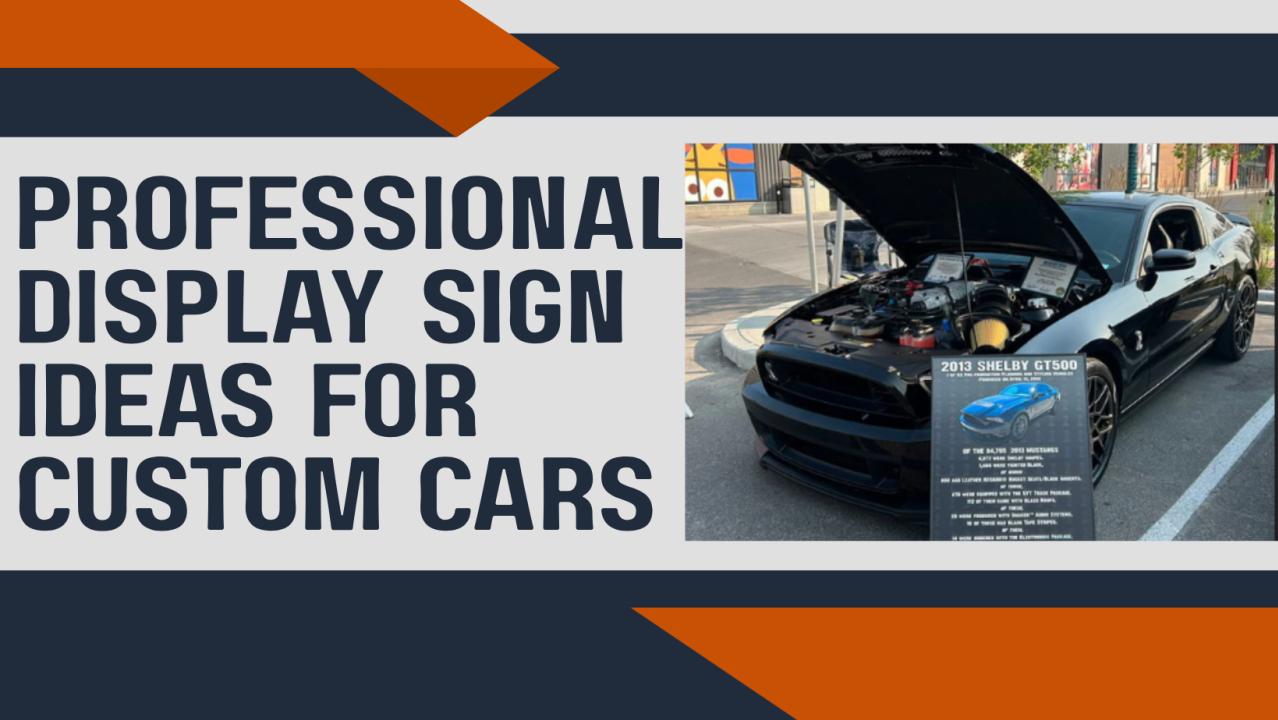
Let’s get one thing straight: a car without a sign is a
mystery. Unless you are standing by your hood 24/7 to answer the same three
questions ("What year is it?", "Is it original?", "How
much horsepower?"), you are losing engagement.
Car show signs
act as your silent salesman. They bridge the gap between the vehicle and the
audience. For a judge, a clear, professional sign suggests organization and
professionalism. For the public, it provides the context needed to appreciate
the build.
The Anatomyics of a Winning Car Show Board
Not all signs are created equal. You’ve probably seen the
guy with a piece of printer paper taped to his windshield, or the handwritten
cardboard sign held down by a brick. That might work for a garage sale, but at
a concours or a major lowrider show, it screams "amateur."
To look professional, your board needs to hit these marks:
- Legibility:
Use bold, clear fonts. Avoid script fonts that are hard to read from a
distance or in direct sunlight.
- Material
Quality: This is where branding matters. At Car Show Boards, we recommend
durable materials like expanded PVC or acrylic. They don’t blow away, they
resist curling in the heat, and they look premium.
- High-Resolution
Imagery: If you include a photo of the car on the sign (a popular choice),
ensure it is high-res. A blurry picture cheapens the look of the entire
display.
- Concise
Info: Keep it clean. Year, Make, Model, Owner Name, and a few key specs
(Engine size, Transmission, Paint color). You don’t need to list every
single bolt; just the highlights.
Lowrider Car Show Display Ideas: Setting the Stage
Now, let’s talk about the culture. Lowriding is an art form. It is about expression, history, and "cruising" >
Coming up with fresh lowrider car
show display ideas requires thinking beyond the vehicle. You need to
consider the ground, the perimeter, and the atmosphere.
1. The "Ground Game": Mirrors and Carpeting
If you have spent money on a detailed undercarriage, chrome
driveshafts, or custom air-ride setups, hiding it under the car is a waste.
- Undercarriage
Mirrors: This is a staple in the lowrider community. Placing large, framed
mirrors on the ground allows spectators to see the underside of the car
without lying on the dirty asphalt. It shows confidence in your build
quality.
- Custom
Carpeting: Define your space. Roll out a section of indoor/outdoor carpet.
Typically, black or grey works best to frame the car, but don't be afraid
to match the carpet to your interior or paint for a cohesive theme. This
creates a barrier that subtly tells people, "Look, but don't
touch," while keeping your display area clean.
2. Thematic Props and Hydraulics
Lowriding is deeply rooted in specific eras and life>
- The
"Pit" Setup: If your car is a hopper (equipped with hydraulics
to jump), your display should reflect that. Display your pump racks and
battery setups outside the trunk. Many show-goers set up a
secondary display table next to the car featuring the "heart" of
the hydraulic system—chrome pumps, long cylinders, and thick batteries.
It’s industrial art.
- Era-Correct
Accessories: Old school Boomboxes, vintage coolers, or retro bicycles
parked next to the ride add layers to the display. It transports the
viewer back to the 80s or 90s.
- Awards
and Hardware: If you’ve won previous trophies, bring them. Set them up on
a stand. It establishes credibility.
3. Lighting the Night
Many lowrider shows extend into the evening. If you want
your car to pop when the sun goes down, lighting is essential.
- LED
Rope Lights: Outline your display area or the perimeter of the car with
LEDs.
- Spotlights:
Small, battery-operated spotlights can be placed on the ground pointing up
at the engine bay or the murals on the trunk. This highlights the artwork
that gets lost in the shadows.
Designing Your Sign: What Information Matters?
When you sit down to design your car show signs, the
temptation is often to include the entire build sheet. Every nut, every bolt,
every part number. Resist this temptation.
Think of your sign like a movie trailer. It gives you the
highlights to make you want to know more.
The Essential Checklist:
- Year/Make/Model:
The absolute basics. Don't make people guess.
- Owner/Builder:
Give credit where it’s due. If a specific shop built the engine or laid
the paint, tag them. It shows respect for the community.
- The
"Hook": What makes this car special? "377ci Small Block
Chevy" or "Full Chrome Undercarriage."
- Club Affiliation: If you belong to a car club (like Invaders, Life>
Visual Design Tips for Maximum Impact
Color contrast is your best friend. If your sign has a black
background, use white or yellow text. If your board is white, use black or dark
blue text. Avoid red text on black backgrounds it vibrates and is notoriously
hard to read.
At Car Show Boards, we often suggest matching the sign's
color scheme to the car’s paint. If you are rocking a Candy Apple Red lowrider,
a red-bordered sign looks incredibly sharp and intentional.
The Psychology of a Winning Display
Why do judges gravitate towards certain cars? Yes, the car
matters. But the display signals the owner's mindset.
A messy display with a crooked sign and scattered tools
suggests the car might be "unfinished" or a "driver." A
polished display with matching carpet, a professional sign, and a clean engine
bay suggests a "trailer queen" or a serious contender for "Best
in Show."
Creating a Barrier
One subtle psychological trick is defining the perimeter.
When you use car show signs and rope, or even the carpet mentioned earlier, you
create a "stage." People naturally respect boundaries. It keeps kids
(and careless adults) from leaning on your fenders.
- Roping
Off: Use stanchions or decorative rope. This is very common in the
lowrider world. It frames the car like a museum piece.
- Information
Stands: Don't just lean your sign against the tire. Use a professional
stand. It elevates the sign to eye level, making it easier to read and
protecting it from being kicked or stepped on.
Lowrider Specifics: Murals and Metalflake
Lowriders are unique in the automotive world because the
paint itself is often the main attraction. Cars with murals (scenery,
portraits, or historical figures) on the trunk or hood need specific display
considerations.
If your car features a mural on the trunk, open the trunk.
If you have a mural on the hood, prop it up. You cannot effectively show off
that art if the car is "shut tight."
However, open hoods can clutter the lines of the car. This
is where a car show sign becomes vital it directs the eye. "Trunk Mural by
[Artist Name]" on your sign tells the viewer exactly where to look.
Furthermore, metalflake and pearl paints change in different
lighting. If you are at an indoor show, bring your own lighting to make that
flake pop. If you are outdoors, position the car (if allowed) so the sun hits
the main panels.
Common Mistakes to Avoid
We have seen thousands of displays. Here is how to avoid the
"rookie mistakes":
- The
"Clutter" Effect: Too many signs. You don’t need a sign for the
engine, a sign for the interior, a sign for the trunk, and a sign for the
owner. Consolidate your info onto one high-quality main board.
- Bad
Angles: Don’t hide your custom wheels by turning them completely straight.
Slight turn of the front wheels to show off the rim face and rotor
calipers.
- Dirty
Equipment: We see this often. The car is clean, but the mirrors used for
the undercarriage display are filthy, or the carpet has oil stains. Clean
your display props just as meticulously as you clean your car.
- Wind
Hazards: Paper signs blow away. Foam boards blow over. Invest in heavier
materials or sturdy stands. There is nothing more embarrassing than
chasing your display board across the show field.
Digital vs. Traditional Displays
A growing trend in car shows is the use of digital
displays—iPads or tablets mounted near the car playing a build video or a photo
slideshow.
This is a cool addition, but it should supplement, not
replace, your physical car show signs.
- Why?
Tablets have glare issues in sunlight. Batteries die. Technology can
glitch.
- The
Solution: A physical sign is always on, always readable, and never runs
out of battery. Use the tablet for video content, but keep the stats on a
professional board.
Preparing for the Show Day
You have your ideas. You have your sign. Now, execution is
key.
Pack a "display kit" separate from your tool kit.
This kit should contain:
- Your
Car Show Boards (wrapped in a blanket to prevent scratching).
- Stands
or easels.
- Cleaning
supplies (microfiber towels, detail spray) for the sign and the car.
- Extension
cords (if you are using lights).
- Weights
or sandbags (to secure the sign stand).
Arrive early. The best spots get taken quickly, and you need
time to set up your lowrider car show display without rushing. Take a step back
once you are set up. Does it look balanced? Is the sign readable? Does the
lighting hit the right spots?
Conclusion: Elevate Your Experience
Entering a car show is a commitment of time, money, and
passion. It is a celebration of automotive artistry. Whether you are building a
full-custom lowrider with hydraulic switches that can make the car dance, or a
resto-mod muscle car, your presentation is the final brushstroke on your
masterpiece.
Don't let your hard work go unnoticed because you skipped
the signage. A professional display commands respect. It tells the world that
you are serious about your hobby.
At Car Show Boards, we specialize in helping you make that
statement. From durable materials to custom designs that fit your specific make
and model, we are here to help you bring home the gold.
So, the next time you prep for a show, remember: the car is
the star, but the display sets the stage. Make it count.