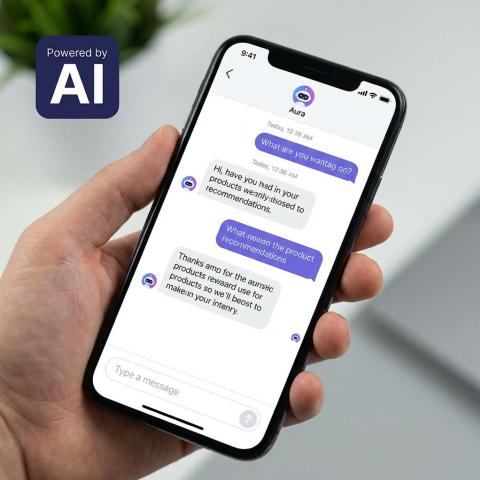
A mobile AI agent is software — or a small device — that can actually operate your phone for you: opening apps, tapping, typing, and completing tasks end to end, instead of just answering questions like a chatbot. The simplest way to put it: a chatbot tells you what to do, while a mobile AI agent does it.
That difference is small to say and enormous in practice. It's also the reason "AI agents" became the dominant conversation in tech through 2025 and 2026. This guide explains what a mobile AI agent is, how it actually works, how it differs from a chatbot and from the "AI agent phones" being announced for the future, and what to look for if you want one.
Mobile AI agent vs chatbot: answering vs acting
Most people's first experience of AI was a chatbot — a tool that responds with text. You ask, it answers. Useful, but the work still lands on you: you read the answer, switch apps, and do the steps yourself.
A mobile AI agent closes that loop. Instead of describing the steps to reschedule a meeting or fill in a form, it carries them out on your device. The model still does the thinking, but the agent adds the doing — perceiving the screen, deciding the next action, and performing it.
A blunt way to test the difference: if it can reason brilliantly but can't tap a button, it's a chatbot. If it can complete the task on your phone without you touching it, it's an agent.
How a mobile AI agent actually works
Under the hood, most mobile AI agents run a simple loop:
- Perceive — capture the current state of the screen (a screenshot or the accessibility layer).
- Reason — send that state to a model that decides the next action.
- Act — perform the action (a tap, swipe, or keystroke), then look again and repeat until the task is done.
The interesting engineering question is how the agent acts. There are two broad approaches, and the choice shapes everything:
- Integration-based: the agent controls apps through APIs, SDKs, or an accessibility tree. This is reliable where it works, but it's limited to apps that choose to expose those hooks — and many never will.
- Operation-based: the agent operates the device the way a human does, reading the screen and sending input directly. This works on any app you can see and tap, with no integration required — at the cost of needing a way to see the screen and send input.
Mobile AI agent vs "AI agent phone": you may not need new hardware
A point of confusion worth clearing up. An AI agent phone is a brand-new phone built around an AI agent — and the headline examples announced so far aren't expected to ship until around 2028. A mobile AI agent runs on the phone you already have, today.
In other words, one asks you to buy and wait for new hardware; the other works with the device already in your pocket. For most people and businesses, the second is far more practical in the near term.
A real example: Aiden
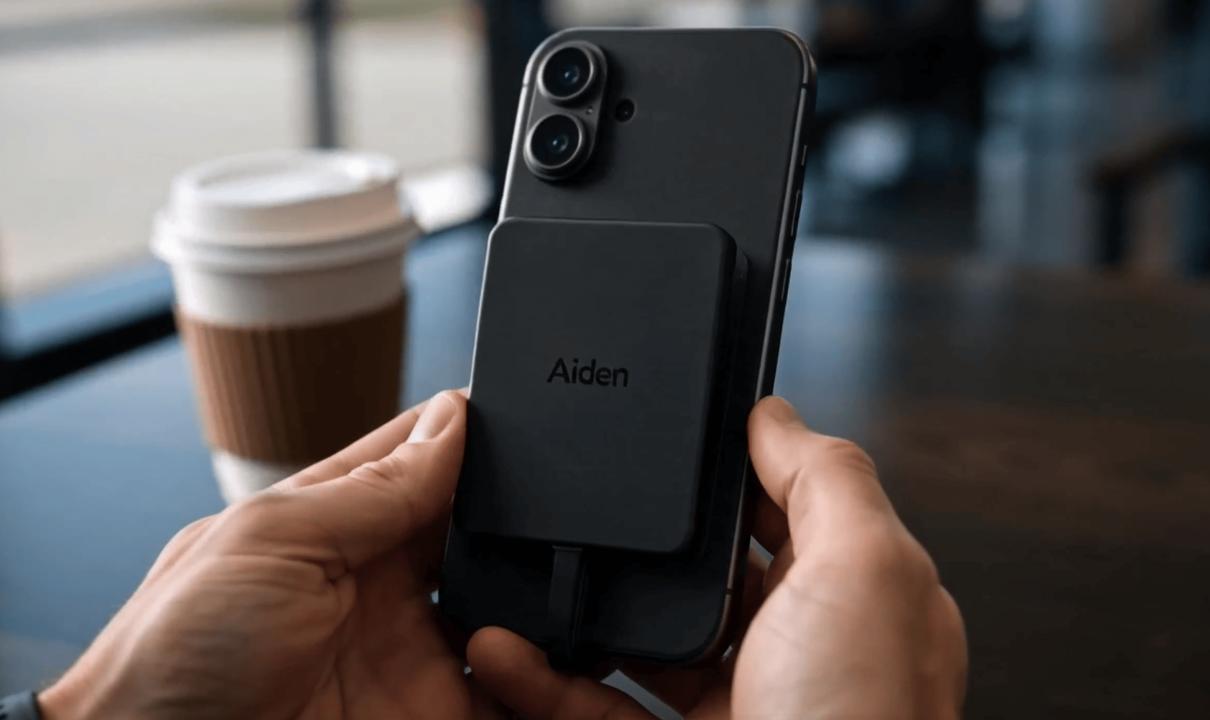
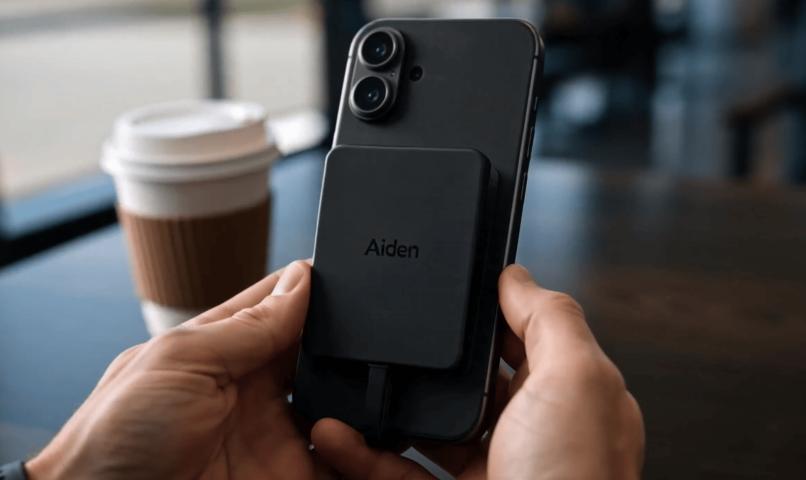
A concrete example of the operation-based approach is Aiden, a physical mobile AI agent device that plugs into any phone or computer via USB. It watches the screen and sends keyboard and pointer input over USB HID, so it operates apps the way you do — including apps that have no automation API at all, with no jailbreak, no developer mode, and nothing installed on the phone.
Because it works at the screen-and-input layer rather than through integrations, it isn't limited to "supported" apps. It also leans hard into being open and private: you bring your own model (OpenAI, Anthropic, or a local LLM), there's no vendor backend, and the firmware is open-source. The current implementation runs on a development board and the team is building it in the open — so it's an early, working core rather than a finished retail product. The positioning is deliberate: while AI agent phones are years away, Aiden is meant to work on the phone you already have.
Mobile AI agent vs other "agent" types
| Type | What it does | Best for |
|---|---|---|
| Chatbot | Answers questions and generates text | Quick answers, drafting, brainstorming |
| Mobile AI agent | Operates your existing phone — taps, types, completes tasks | Hands-free task completion on the device you already own |
| AI agent phone | A new phone built around an AI agent (announced for ~2028) | People willing to buy new hardware and wait for it |
| Computer-use agent | Operates a desktop or browser environment, often in the cloud | Automating desktop and web workflows on a computer |
What to look for in a mobile AI agent
If you're evaluating one, a few questions separate the serious options from the hype:
- Does it work on apps without an API? If it only supports a handful of integrated apps, its usefulness is capped.
- Whose model and servers does it use? Bring-your-own-model and no vendor backend mean your screen and voice data stay under your control.
- Is it private and auditable? Open-source firmware and self-hosting options let you verify what it does, rather than trusting a black box.
- Does it need new hardware? Working on your current phone beats waiting years for a new device.
Frequently asked questions
What is a mobile AI agent? A mobile AI agent is software or a device that operates your phone on your behalf — opening apps, tapping, typing, and completing tasks — rather than only answering questions.
How is a mobile AI agent different from a chatbot? A chatbot answers; a mobile AI agent acts. The chatbot tells you the steps, while the agent performs them on your device.
Do I need a special phone to use a mobile AI agent? No. A mobile AI agent runs on the phone you already have. That's different from an "AI agent phone," which is new hardware — and the announced ones aren't expected until around 2028.
Can a mobile AI agent control apps that have no API? Yes, if it operates at the screen-and-input layer rather than through integrations. Agents that read the screen and send input directly — like Aiden — can drive apps that expose no automation API.
Are mobile AI agents private? It depends on the design. The most private options let you bring your own model, run without a vendor backend, and are open-source and auditable, so your screen and voice data stay under your control.
Want to see an operation-based mobile AI agent in practice? Aiden's approach and open-source firmware are at aidenai.io.