When purchasing a new vehicle in
India, you may notice that some cars on the road display Red Number Plates in India instead of
the standard white or yellow registration plates. Many vehicle owners are
curious about the purpose of these temporary plates and, more importantly, how
long they remain valid.
Understanding the validity of Red
Number Plates in India is important because driving a vehicle beyond
the permitted registration period can lead to penalties, fines, and legal
complications. These plates are issued to newly purchased vehicles before they
receive permanent registration from the Regional Transport Office (RTO),
allowing owners to legally use their vehicles for a limited period.
What
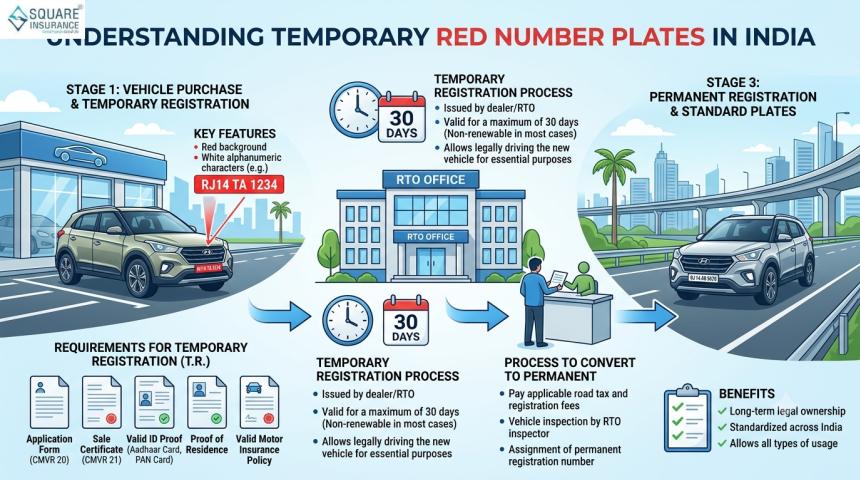
Is a Red Number Plate in India?
A red number plate is generally
issued to newly purchased vehicles that have not yet received permanent
registration from the Regional Transport Office (RTO). It serves as a temporary
registration plate, allowing the vehicle owner to legally drive the vehicle for
a limited period while completing the permanent registration process.
These temporary registration numbers
are issued by authorized vehicle dealers or transport authorities under the
guidelines of the Motor Vehicles Act.
The red number plate typically
displays a temporary registration number and is used until the vehicle receives
its permanent registration certificate and official number plate.
Why
Is a Red Number Plate Issued?
The primary purpose of a red number
plate is to enable vehicle owners to legally operate a newly purchased vehicle
before permanent registration is completed.
Some common situations where a red
number plate is issued include:
- Newly purchased cars awaiting permanent registration
- Newly purchased motorcycles and scooters
- Vehicles being transported to another state for
registration
- Cases where registration documentation is still under
processing
Without a valid registration number,
a vehicle cannot legally be driven on public roads. Therefore, the temporary
registration system provides a practical solution during the registration
process.
How
Long Is a Red Number Plate Valid in India?
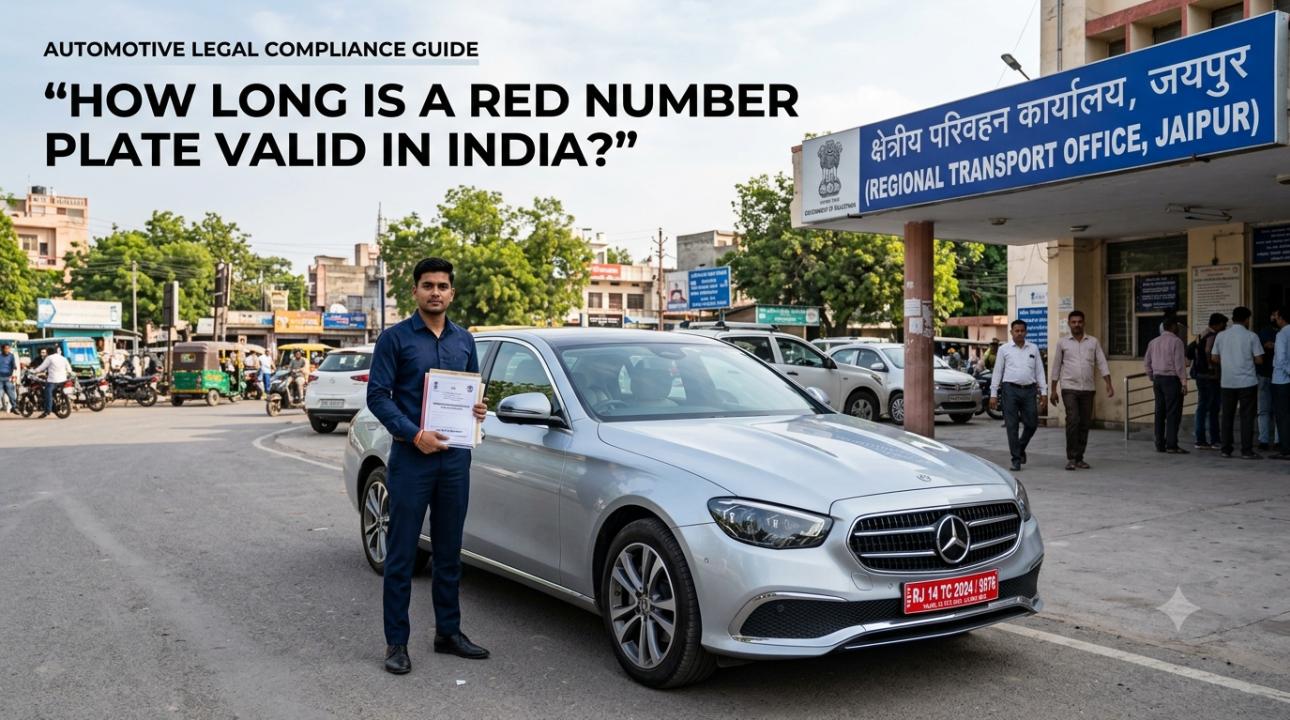
The validity of a red number plate
in India is generally 30 days from the date of issue.
This means the vehicle owner has one
month to complete the permanent registration process through the concerned RTO.
During this validity period, the
vehicle can be legally driven on Indian roads, provided all other legal
requirements are fulfilled, including:
- Valid temporary registration certificate
- Mandatory motor insurance policy
- Pollution compliance where applicable
- Necessary purchase documents
Once the 30-day period expires, the
vehicle should ideally have a permanent registration number assigned by the
transport authority.
Can
the Validity Be Extended?
In certain exceptional
circumstances, the validity of temporary registration may be extended.
However, such extensions are not
automatic and depend on approval from the relevant transport authority. Vehicle
owners must provide a valid reason for the delay in obtaining permanent
registration.
Possible reasons for extension may
include:
- Delays in document verification
- Interstate vehicle transfer procedures
- Administrative processing delays
- Special circumstances approved by the RTO
Vehicle owners should contact their
local RTO before the temporary registration expires if they anticipate delays
in obtaining permanent registration.
What
Happens After the Validity Period Ends?
Driving a vehicle with an expired
temporary registration can result in legal consequences.
If the red number plate validity
expires and permanent registration has not been obtained, authorities may
impose penalties under applicable motor vehicle regulations.
Possible consequences include:
Monetary
Fines
Traffic authorities may issue fines
for operating an unregistered vehicle.
Vehicle
Seizure
In some situations, enforcement
agencies may detain the vehicle until registration requirements are fulfilled.
Insurance
Complications
Although insurance coverage may
still exist, claim settlement can become more complicated if the vehicle is
being used in violation of registration rules.
Legal
Issues
Repeated non-compliance may lead to
additional legal consequences under the Motor Vehicles Act.
Therefore, vehicle owners should
complete permanent registration well before the temporary registration period
expires.
Is
Insurance Mandatory During Temporary Registration?
Yes, motor insurance is mandatory
even when a vehicle is operating under temporary registration.
A newly purchased vehicle must have
at least a valid third-party insurance policy before it can legally be driven
on public roads.
Many buyers choose comprehensive
insurance coverage because it offers broader financial protection against:
- Accidental damage
- Theft
- Natural disasters
- Fire-related losses
- Third-party liabilities
Insurance remains one of the most
important requirements regardless of whether the vehicle has temporary or
permanent registration.
Documents
Required for Permanent Registration
To obtain permanent registration
after receiving a red number plate, vehicle owners generally need the following
documents:
- Vehicle purchase invoice
- Temporary registration certificate
- Form 20 application
- Road tax payment proof
- Insurance policy document
- Pollution Under Control (PUC) certificate where
applicable
- Identity proof
- Address proof
Requirements may vary slightly
depending on the state and RTO guidelines.
Tips
for New Vehicle Owners
If you have recently purchased a
vehicle, consider the following best practices:
Start
Registration Early
Do not wait until the last week of
temporary registration validity.
Keep
Documents Organized
Maintain copies of all registration
and insurance-related documents.
Verify
Dealer Assistance
Many authorized dealers assist
customers with permanent registration procedures.
Purchase
Adequate Insurance
Comprehensive motor insurance can
provide stronger financial protection than basic third-party coverage.
Track
Registration Status
Stay updated regarding application processing through official transport authority channels.
Conclusion
A red number plate in India
represents temporary vehicle registration and is generally valid for 30 days
from the date of issuance. This period allows vehicle owners to legally drive
their newly purchased vehicle while completing permanent registration
formalities. Although extensions may be possible in exceptional cases, vehicle
owners should aim to obtain permanent registration before the temporary
registration expires.
Along with registration compliance,
maintaining proper motor insurance coverage is equally important for financial
and legal protection. Whether you are purchasing your first vehicle or
upgrading to a new one, understanding registration requirements can help you
avoid penalties and ensure a smooth ownership experience.
For individuals seeking reliable
insurance solutions alongside vehicle registration guidance, Square
Insurance can help simplify the process by offering suitable motor
insurance options that align with your protection needs.
Frequently
Asked Questions
1.
How many days is a red number plate valid in India?
A red number plate is generally
valid for 30 days from the date of temporary registration issuance.
2.
Can I drive a vehicle with a red number plate anywhere in India?
Yes, you can legally drive the
vehicle during the validity period, subject to applicable registration and
insurance regulations.
3.
Is insurance compulsory for a vehicle with a red number plate?
Yes, at least third-party motor
insurance is mandatory before driving the vehicle on public roads.
4.
Can temporary registration be extended?
In certain exceptional
circumstances, the RTO may approve an extension upon proper application and
justification.
5.
What happens if the red number plate expires?
Driving with an expired temporary
registration may result in fines, legal action, or vehicle detention by
authorities.
6.
Who issues a red number plate?
Temporary registration is usually
issued through authorized dealers or the Regional Transport Office (RTO).