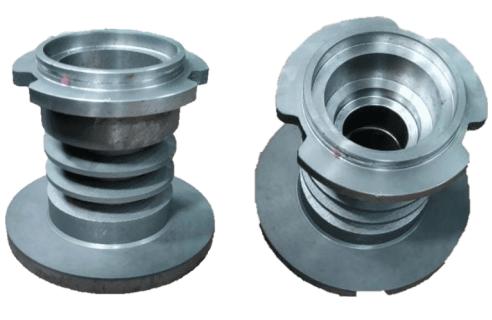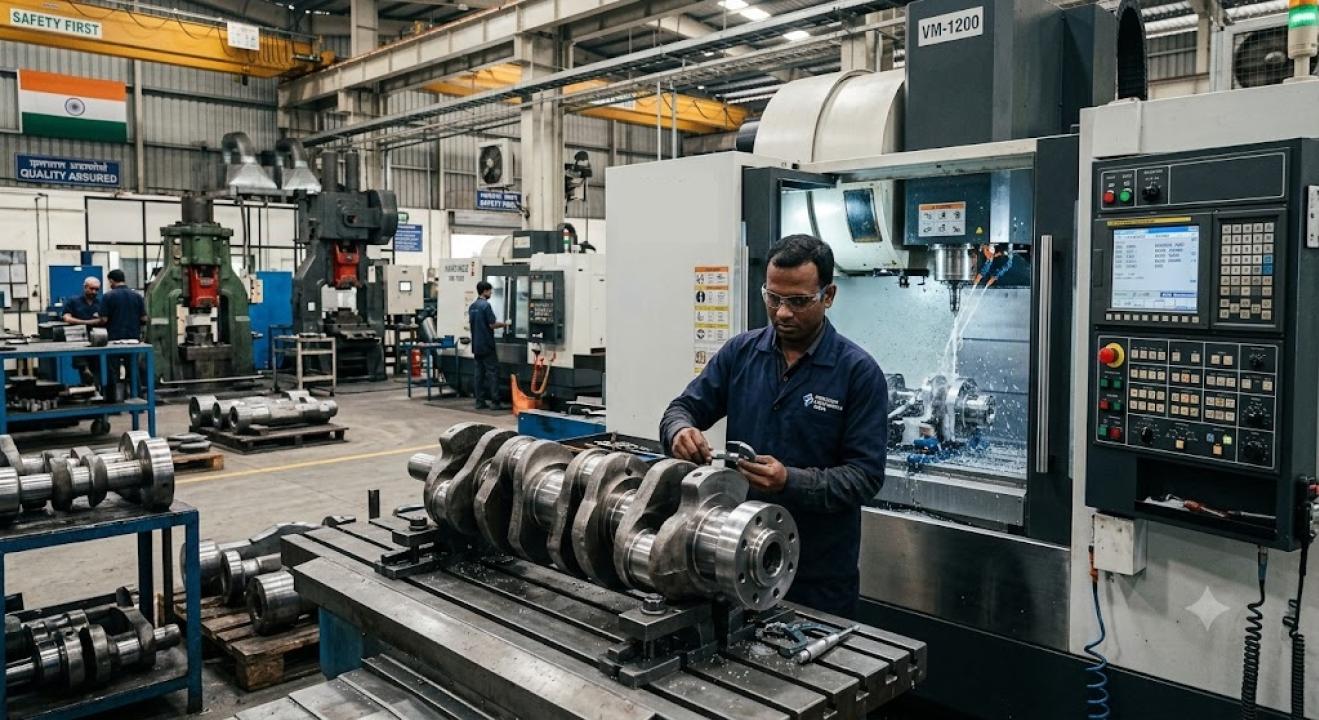
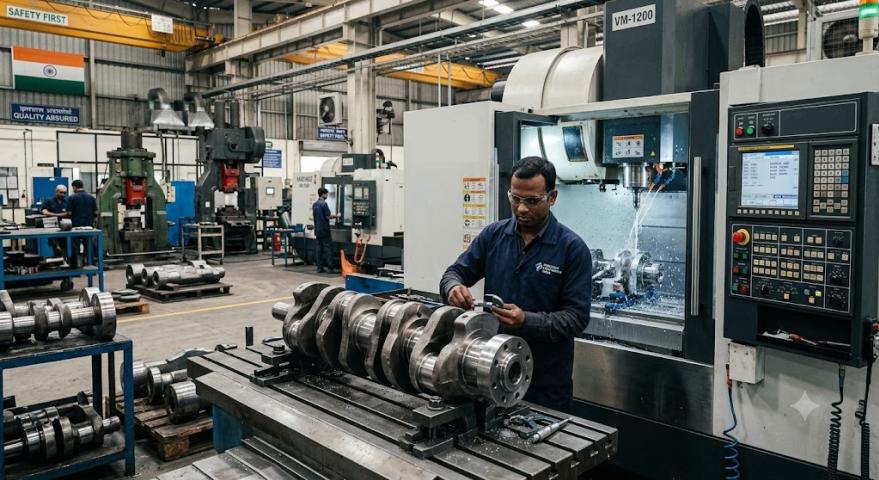
The forging machining industry in India has developed into one of the top sources for providing quality precision forging machined pieces to the domestic and foreign markets. The forging machining segment of the manufacturing business in India utilizes both the latest forging processes and contemporary CNC machines to create parts with excellent dimensional accuracy, strength and finish. Manufacturers in India create both precision forged and machined components used in the automotive, aerospace, defense, railway, oil and gas, power generation, construction and industrial machine industries. Due to investments in automated, multi-axis CNC machining centres, robotic material handling systems and state-of-the-art quality control inspection tools, Indian forging machining companies have the ability to produce parts that meet rigorous international standards and complicated engineering specifications. The advantages of low-cost manufacturing, knowledgeable labour force, metallurgical capability, and a growing export service level have reinforced India as a leading sourcing destination for precision forging machined parts.
Analysing risks associated with Forging machining India
Ishikawa or fishbone diagrams, also referred to as cause-and-effect diagrams, serve as highly useful methods to help identify and assess the risks involved in forging machining processes in India. A fishbone analysis outlines possible types of risk associated with forging machining operations into six main categories: Manpower; Machines; Material; Method; Measurement; and Environment. As an example for Manpower-related risks, an example includes either insufficiently skilled machinists or insufficient training of collaborators, and the potential for human error during production. As for machine-related risks, examples include issues like broken machines, tool wear or damage, machine maintenance delays, and error with Computer Numerically Controlled (CNC) programming causing issues with product quality or on-time deliveries. Material-related risks consist of raw material quality inconsistencies, disruptions within the supply chain (e.g. transportation delays), and an increase in the cost of steel. The types of risk associated with each method of forging may come from incorrect or inappropriate forging parameters, lack of efficient machining process, or no standard operating procedures in a manufacturing environment. Measurement-related risks consist of inaccurate inspections, calibration-related issues, or inadequate quality control measures, all of which can cause dimensional defects. Environmental-related risks include power supply outages, regulation compliance issues, workplace safety issues, and increased utility costs. The utilization of fishbone analysis allows forging machining businesses in India to systematically identify the root causes of operational difficulties; develop corrective measures; lower their production-related risks; increase the quality of their product; and improve their overall manufacturing efficiency.
Mitigating manufacturing risks through actionable tasks in Forging machining units
Forging machining units can reduce manufacturing risk through a proven process of treating quality, productivity, safety, and operational efficiency through established procedures designed to allow real-time corrective action. By regularly performing preventive maintenance on their forging presses, CNC, and all other machining equipment, forging machining units reduce unplanned downtime and produce delays. Continually training the workforce on manufacturer-approved methods will create a higher quality of work by reducing the amount of human error and improving safety standards. Carefully controlling raw material inspection processes will ensure raw materials have a consistent quality leading to reduced risk of defective parts at the finished-component level. Implementing real-time production monitoring, automatic inspection systems, and Statistical Process Control (SPC) allows for deviations to be identified and eliminated before they affect the quality of the finished product. Energy Management programs that utilize AI-based power metering and optimized machine usage will help reduce transaction costs due to power outages while providing manufacturers with a higher level of certainty concerning their exposure to fluctuations in utility rates due to seasonality. Other ways to improve supply chain resilience and increase the reliability of production would include introduction of Standard Operating Procedures (SOP's), conducting risk assessment audits, implementing inventory planning strategies, and diversifying suppliers. Continuous implementation of these actionable items will allow forging machining units to reduce their exposure to manufacturing risk, provide a consistent product, create satisfied customers, maintain a competitive advantage domestically and internationally.
Conclusion
The forging machining India has become an efficient production source for precision forged machined products to a number of different industries. Manufacturers provide superior value in terms of product quality and price; they utilize the most advanced technologies in their designs as well as the latest forging methods, CNC machining capabilities, skilled labour, and quality control systems to meet all domestic and international standards and regulations. On the other hand, the industry does experience a number of challenges due to increasing raw material prices, reliability of equipment used in production, ability to staff required positions, and inefficient logistical processes.
Systematic means of risk assessment such as fishbone analysis can help identify root causes to support continuous improvement efforts. Effective risk mitigation measures include implementing preventive maintenance programmes, automated inspection systems, investment in workforce skills, adoption of industry digital technologies, and development of standard operating procedures (SOPs). The rapid and ongoing investment into automation projects, the emerging Industry 4.0 technologies, and continued infrastructure development will contribute to the ongoing global competitiveness of India's forging machining sector and maintain its position as a preferred source for precision-engineered forged and machined components.