Most people don't think about what's running through their air conditioner until it stops working on the hottest day of the year. But in 2026, there's something worth knowing before that moment arrives.
The HVAC industry has undergone its biggest refrigerant overhaul in decades, and the chemical quietly keeping homes cool has officially changed. A2L refrigerant, a next-generation class of low-emission cooling agents, is now the standard for most newly manufactured residential and commercial systems installed across the United States.
For anyone purchasing or replacing a system this year, there's a very good chance it runs on an A2L refrigerant.
Understanding what this shift means, why it happened, and how R-454B and R-32 actually compare is genuinely useful, whether someone is buying a new system, managing a property, or just trying to make sense of a contractor's quote.
Why R-410A Got Phased Out
For nearly two decades, R-410A was the go-to refrigerant in residential HVAC systems. It worked reliably, technicians knew it well, and equipment was widely available. The problem? Its environmental footprint was enormous.
R-410A carries a Global Warming Potential (GWP) of 2,088, meaning a single pound of it released into the atmosphere traps over 2,000 times more heat than carbon dioxide over a 100-year period.
Under the EPA's American Innovation and Manufacturing (AIM) Act, the agency set a hard ceiling of 700 GWP for new residential systems. R-410A wasn't even close.
Manufacturers were required to stop producing R-410A equipment on January 1, 2025, and by 2026, dealers and distributors have largely cleared through remaining inventory.
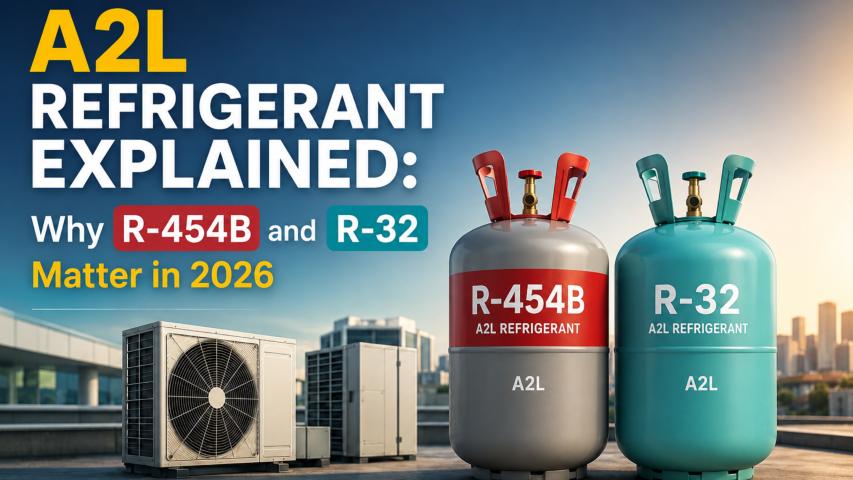
What's sitting in most warehouses and showrooms today runs on eco-friendly refrigerant solutions, specifically R-454B and R-32.
Meet the Replacements: R-454B and R-32
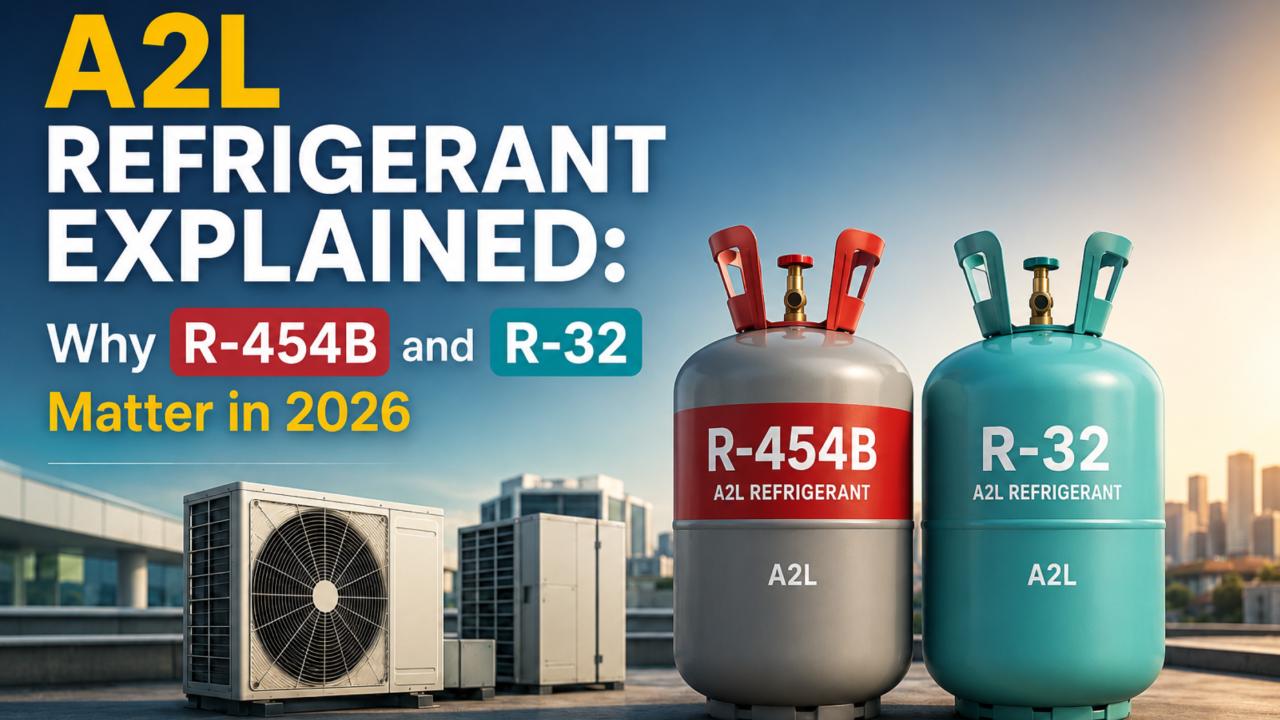
These two refrigerants are the pillars of the modern HVAC refrigerant transition in 2026, and while they both meet the EPA's environmental standards, they're not identical. Knowing the difference matters.
R-454B
GWP of 466 — the lowest among mainstream residential options
A blended refrigerant combining R-32 and R-1234yf
Operating pressures comparable to R-410A, making it a smoother mechanical transition — though technicians should note it is still classified as a high pressure refrigerant and requires the same pressure-rated fittings, hoses, and recovery equipment used for legacy systems
Requires full refrigerant recovery during service due to its blended composition
Considered the most future-proof option against further EPA restrictions
R-32
GWP of 675, still well within the EPA's 700 threshold
A single-component refrigerant, meaning no fractionation issues during service
Can be topped off without degrading the refrigerant balance, unlike blended alternatives
Also operates as a high pressure refrigerant, with working pressures that exceed those of R-22 and require appropriately rated service equipment
Many systems designed around R-32 may deliver meaningful efficiency improvements compared with older R-410A equipment
Widely used in ductless mini-split systems and smaller residential setups
Both qualify as sustainable cooling systems under current regulations, and both represent a genuine step forward, not just environmentally, but in terms of real-world performance.
What "A2L" Actually Means — And Why It Sounds Scarier Than It Is
The A2L classification comes from ASHRAE Standard 34, which rates refrigerants on toxicity and flammability. "A" means low toxicity. "2L" means mildly flammable. That last part is where most homeowners pause.
Here's the important context: A2L refrigerants have a Lower Flammability Limit (LFL) of around 9.5% by volume. For comparison, propane ignites at just 2.1% and natural gas at 5%.
A2L refrigerants also require a very specific ignition energy, far above anything generated by standard household appliances or normal HVAC operation. The risk, in real-world residential conditions, is extremely low.
That said, the classification still carries meaningful implications for how systems are designed and serviced. Every new A2L system installed today comes with a mandatory Leak Detection System as part of the unit, not optional, not an add-on.
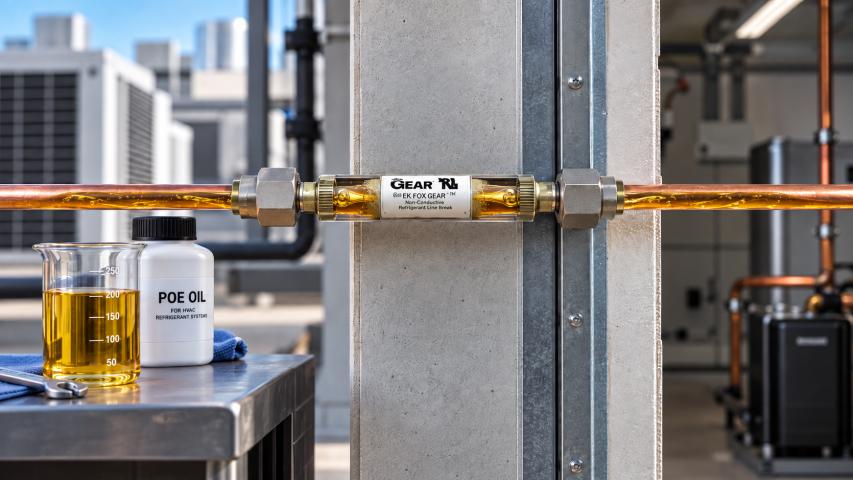
It's also worth noting that both R-32 and R-454B are dielectric refrigerants, meaning they do not conduct electricity under normal operating conditions.
This property, also described as being non-conductive refrigerant options, allowed manufacturers to integrate them safely into modern HVAC equipment without introducing new electrical hazard risks for service technicians or homeowners.
A2L Refrigerant Safety Updates: What's Built Into Every New System
According to EPA AIM Act requirements and updated industry standards from AHRI and ASHRAE, these A2L refrigerant safety updates represent a mandatory shift across all new residential equipment — not optional add-ons. Here's how these systems actually work:
Sensors continuously measure refrigerant concentration in real time
If levels approach 25% of the lower flammability limit, the system triggers automatically
The compressor shuts down immediately
The indoor blower runs at full speed to dilute and disperse any leaked refrigerant
An alert is sent to the thermostat or smart control panel
This isn't experimental technology. It has been used successfully in commercial refrigeration and international markets for years, and these updated safety protocols are now officially recognized by the EPA, AHRI, and ASHRAE for U.S. residential use.
What Do A2L Systems Actually Cost?
This is the question most homeowners are quietly asking, and it deserves a straight answer.
A2L systems are priced comparably to late-2024 R-410A equipment, generally in the $6,500–$13,000 range for a complete residential installation, depending on home size and efficiency tier. The integrated leak detection system is built into the unit at no separate charge.
Installation may take slightly longer due to additional setup and testing requirements. Service calls could run a little higher over time since A2L work requires specialized tools and certified technicians.
That said, the efficiency gains built into modern system designs do translate into measurable savings on monthly energy bills, helping offset those costs across a few cooling seasons.
Why R-410A Repair Bills Are About to Get Painful
For anyone holding onto an older R-410A system, here's the financial reality. Production has been cut dramatically, and remaining supply is reserved for servicing existing equipment only.
Prices have already doubled since 2024, closely mirroring the trajectory of R-22, a refrigerant that went from affordable to eye-wateringly expensive over the course of a decade.
If an R-410A system needs a recharge of more than 2 pounds, that typically signals a significant leak. At current prices, that repair alone could run $700–$1,200 depending on the region.
When a system is already 12+ years old and facing that kind of bill, replacement with a high efficiency AC system running A2L refrigerant often makes more financial sense.
What to Ask Before Buying a New System
Not every HVAC technician is equally prepared for this transition. A2L service requires different tools, spark-resistant vacuum pumps, left-hand thread adapters for refrigerant tanks, and leak detectors calibrated specifically for A2L gases. Before agreeing to any installation, ask:
Are the technicians A2L-certified?
Do they carry A2L-rated recovery equipment and spark-resistant tools?
How many A2L systems have they installed?
What leak detection system is integrated with the unit?
These questions aren't about distrust, they're about making sure the system gets installed safely and correctly the first time.
Prepare for the Future with A2L Refrigerant Technology
The 2026 refrigerant transition is a genuine generational shift, not a minor regulatory footnote. R-454B and R-32 are real improvements in environmental impact, system design, and long-term cost stability.
That said, if a current R-410A system is running well and hasn't needed major repairs, there's no urgent reason to replace it based on refrigerant alone. The EPA ban applies to new installations, not existing equipment.
The smart move is to keep maintaining it properly and plan for an A2L-compatible system when replacement eventually becomes necessary. When that time comes, the technology waiting on the other side is genuinely worth it.