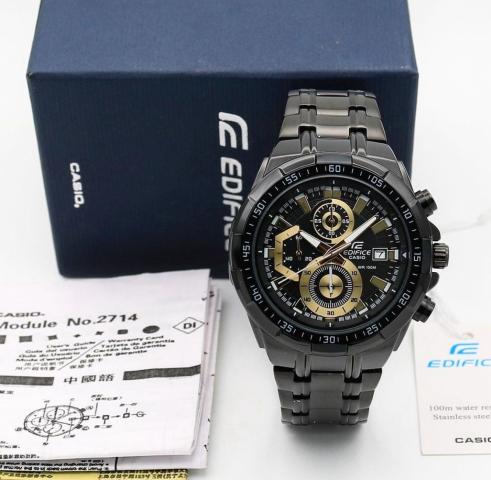
Quartz movements dominate the budget end of the first copy watches market, but a growing number of buyers are specifically seeking out automatic and mechanical pieces instead. The appeal is simple — a sweeping seconds hand, a faint mechanical hum when shaken, and a sense that the watch is doing something more interesting than just running on a battery. Before buying one, it helps to understand exactly what that experience does and does not include.
What "Automatic" Actually Means
An automatic movement is a mechanical watch movement powered by the natural motion of the wrist, rather than a battery. A rotor inside the case spins as the wearer moves, winding the mainspring that drives the watch. This differs from a manual mechanical movement, which requires the wearer to wind the crown by hand periodically, and from quartz movements, which use a battery-powered oscillating crystal for timekeeping.
In the first copy market, "automatic" almost always refers to this self-winding mechanical type, since pure manual-wind movements are rarely used in replica watches at any price point.
Why Buyers Choose Automatic Over Quartz
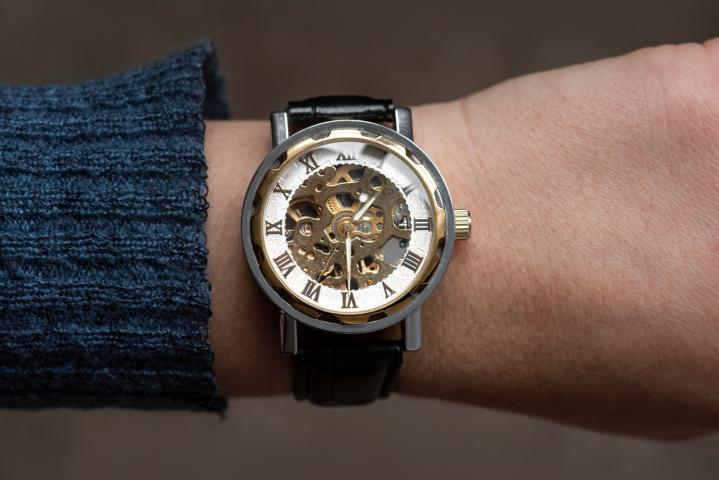
The most immediate difference is visual. A quartz seconds hand ticks in distinct one-second steps. An automatic seconds hand sweeps continuously, gliding around the dial in a way that instantly signals "mechanical" to anyone familiar with watches. For buyers trying to replicate the specific feel of a luxury original — many of which use automatic movements as standard — this sweep is often the single most important detail to get right.
There is also a tactile element. Automatic movements are physically heavier than quartz cells, which shifts the overall weight and presence of the watch on the wrist. Give the watch a gentle shake and the rotor's movement can sometimes be felt inside the case — a small but genuinely satisfying detail that quartz movements cannot replicate.
What Automatic First Copies Do Not Deliver
It is worth being upfront about the gap that remains. A first copy automatic movement will not match the timekeeping precision of a genuine luxury automatic movement, particularly one built to chronometer standard. Expect daily accuracy variance in the range of 20 to 40 seconds, compared to 2 seconds or less in a certified original.
Automatic movements in first copy watches are also generally less durable over the long term than the originals they imitate. A genuine luxury automatic movement is built to be serviced and run for decades; first copy automatic movements are typically more disposable, reliable for a few years of regular wear rather than a lifetime.
Buyers should also know that automatic watches stop running if left unworn for roughly 24 to 48 hours, requiring the time to be reset and the watch given a few wrist shakes or a manual wind to restart. This applies equally to originals and first copies, and it is worth factoring in for anyone who does not wear their watch daily.
Quality Grades and What They Change
Movement quality varies noticeably across grades within the first copy automatic watches category. Lower-grade automatic movements tend to have rougher rotor action and less consistent timekeeping. Higher 7A grade movements offer smoother rotor spin, marginally better accuracy, and a more refined overall feel — closer, though never identical, to the original experience.
For buyers specifically prioritising the automatic feel, it is worth paying the difference for a higher grade rather than buying the cheapest automatic option available, since movement quality is precisely where budget grades cut the most corners.
Automatic Watches Across Men's and Women's Collections
Automatic movements are not exclusive to larger, traditionally masculine watch designs. Many first copy watches for men in automatic configuration follow sports or dress-watch silhouettes inherited from brands like Rolex and Omega, where the original itself uses an automatic movement as standard.
Automatic options also exist within first copy watches for women, generally in smaller case sizes paired with slimmer automatic movements designed to fit a more compact case without excessive added thickness. Buyers shopping for women's automatic pieces should pay particular attention to case thickness, since smaller automatic movements sometimes require a noticeably thicker case than an equivalent quartz design, which can affect how the watch sits on a smaller wrist.
Caring for an Automatic First Copy
A few habits help an automatic first copy run reliably for longer. Wearing it regularly keeps the movement wound naturally through everyday wrist motion. If it will sit unworn for more than a day or two, a brief manual wind through the crown, where supported, helps avoid it stopping mid-cycle unexpectedly. Avoiding sharp impacts matters more for automatic movements than quartz, since the rotor and gear train are more sensitive to shock than a sealed quartz module.
Storing an automatic watch in a stable, moderate environment — avoiding extreme heat, humidity, or direct sunlight for extended periods — also helps preserve both the movement and the case finish over time, particularly for higher-grade pieces where the investment is greater.
How to Decide If Automatic Is Right for You
Automatic and mechanical first copy watches make the most sense for buyers who genuinely value the sweeping seconds hand and added wrist presence, and who are prepared for the minor inconvenience of resetting the time after a day or two of non-wear. Buyers who want a watch that simply works reliably with zero maintenance thinking are often better served by a quality quartz first copy instead, since quartz movements require no winding, no regular wear to stay accurate, and generally hold up with fewer moving parts to go wrong.
Neither choice is objectively better — it depends entirely on what the buyer values more: the mechanical feel and visual sweep, or the low-maintenance simplicity of a battery-powered movement.
Final Thoughts
Automatic and mechanical first copy watches offer a genuinely different experience from their quartz counterparts — a sweeping seconds hand, added weight, and a subtle mechanical presence that many buyers find worth the extra cost. What they do not offer is the precision or longevity of a genuine luxury automatic movement, and buyers who understand that distinction going in tend to find the trade-off a satisfying one rather than a disappointing one, whether shopping across men's or women's collections.