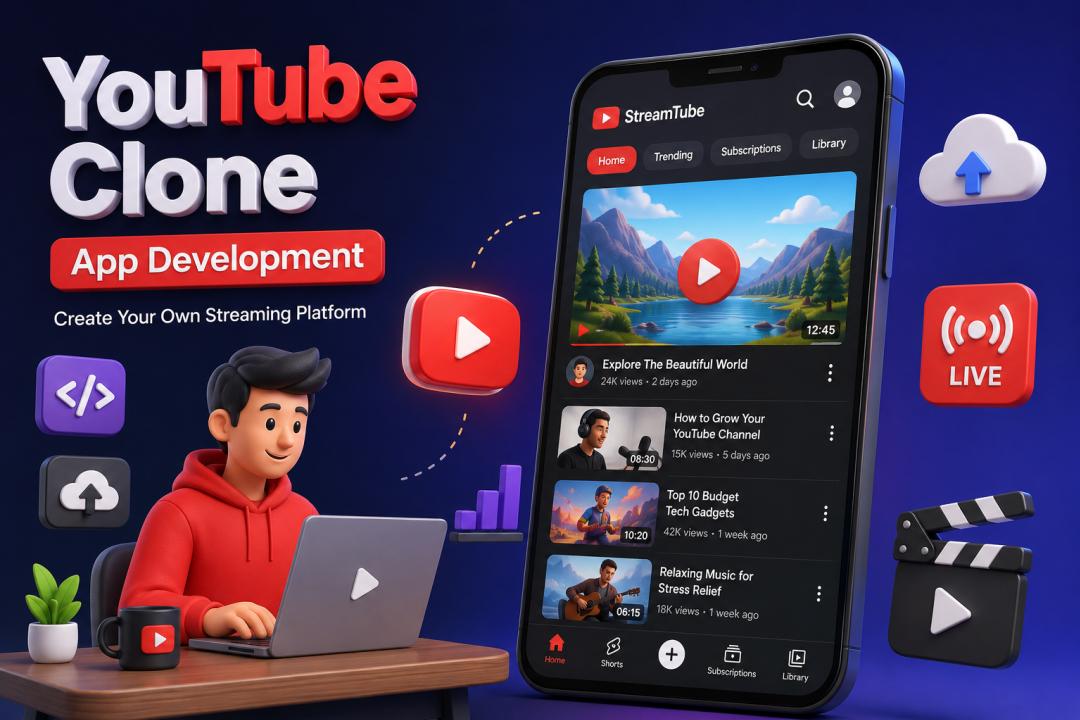
Video streaming has become one of the fastest-growing digital industries, with millions of users consuming content daily across mobile devices and smart TVs. Businesses and startups are increasingly investing in custom video-sharing applications to capture this growing market. YouTube Clone App Development provides a practical way to build a feature-rich platform that offers video uploads, live streaming, subscriptions, and monetization opportunities.
Developing a video streaming application requires careful planning, advanced technology, and a clear understanding of user expectations. From content management to recommendation algorithms, every feature plays a vital role in delivering a seamless experience. This guide explores the essential aspects of creating a modern streaming platform and the factors businesses should consider before launching.
Why Invest in a Video Streaming Platform?
The demand for digital entertainment and educational content continues to rise. Businesses can benefit from launching a dedicated video-sharing app by:
- Creating new revenue streams through subscriptions and advertisements.
- Building a loyal online community.
- Expanding brand visibility and audience engagement.
- Delivering content directly to users without third-party restrictions.
Streaming applications are no longer limited to entertainment companies. Educational institutions, fitness brands, media organizations, and enterprises also use video platforms to connect with their audiences.
Essential Features of a Modern Video App
A successful video streaming platform should provide an intuitive and engaging user experience. Some key features include:
User Registration and Profiles
Simple sign-up options and personalized profiles improve user retention and engagement.
Video Upload and Management
Creators should be able to upload, edit, categorize, and manage content easily.
Smart Search and Recommendations
AI-powered recommendations and advanced search filters help users discover relevant content quickly.
Live Streaming Capabilities
Live events, webinars, and real-time interactions significantly increase user engagement.
Monetization Options
Revenue generation methods may include:
- Subscription plans
- In-app advertisements
- Premium content access
- Sponsored videos
- Pay-per-view events
Technologies Behind Streaming Applications
Building a scalable video platform requires the right technology stack. Development teams generally focus on:
Front-End Development
Responsive interfaces for web and mobile applications ensure smooth navigation and accessibility.
Back-End Infrastructure
Robust servers and cloud solutions manage video processing, user data, and content delivery efficiently.
Content Delivery Networks (CDNs)
CDNs reduce buffering and improve streaming performance by distributing content across multiple servers.
Security Measures
Modern streaming applications should implement:
- End-to-end encryption
- Secure payment gateways
- Multi-factor authentication
- Copyright protection mechanisms
Businesses working with experienced technology partners like Tantrija often prioritize security and scalability from the initial development stage.
Challenges in Building a Video Sharing Platform
Creating a streaming application involves several technical and operational challenges.
Managing Large Volumes of Content
As user-generated content increases, platforms need efficient storage and moderation systems.
Maintaining Streaming Quality
Users expect uninterrupted playback regardless of network conditions or device types.
Content Moderation
Implementing AI-based moderation tools helps prevent copyright violations and inappropriate content.
User Retention
Continuous innovation, personalized recommendations, and engaging features are essential to keeping users active on the platform.
Addressing these challenges early can significantly improve long-term platform performance and user satisfaction.
Expert Tips for Choosing the Right Development Approach
Before starting your video app project, consider these practical recommendations:
- Define your target audience and content niche.
- Prioritize a mobile-first user experience.
- Choose scalable cloud infrastructure.
- Implement strong security and data protection measures.
- Include analytics to understand user behavior.
- Plan monetization strategies from the beginning.
- Invest in ongoing updates and feature improvements.
Working with experienced developers can reduce technical risks and accelerate time to market.
FAQ
How long does it take to build a video streaming app?
Development timelines vary depending on features and complexity, but most projects take several months from planning to deployment.
What are the main revenue models for streaming platforms?
Subscription services, advertising, premium memberships, and pay-per-view events are among the most common monetization methods.
Why is scalability important for a streaming application?
Scalability ensures the platform can handle increasing users and content without performance issues.
What security features should a video platform include?
Encryption, secure payment processing, authentication systems, and copyright protection are essential security measures.
Can startups build a platform similar to YouTube?
Yes. With proper planning, technology selection, and expert guidance, startups can successfully launch competitive video-sharing applications.
Conclusion
Video streaming platforms continue to shape the future of digital content consumption. Building a successful application requires a strong technical foundation, user-focused features, and long-term scalability planning. Businesses that invest in modern streaming solutions can create valuable communities and sustainable revenue opportunities.
For organizations exploring custom video platform solutions, consulting experienced development teams such as Tantrija can provide valuable insights into creating scalable and feature-rich streaming applications tailored to evolving market demands.