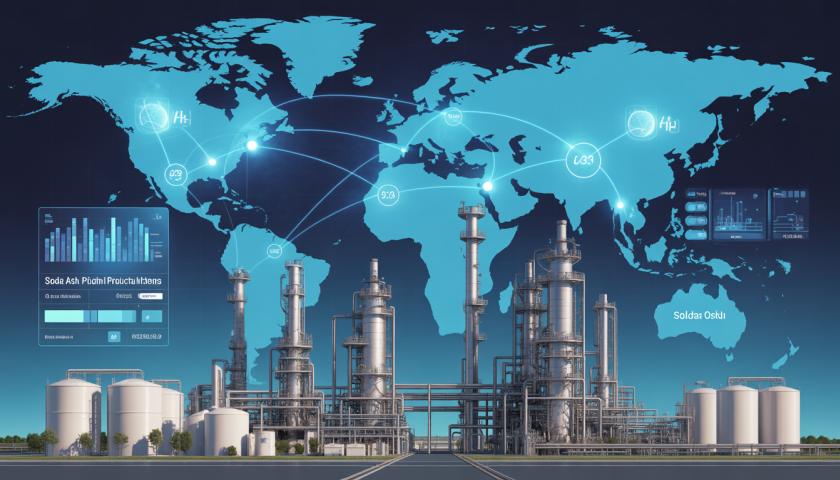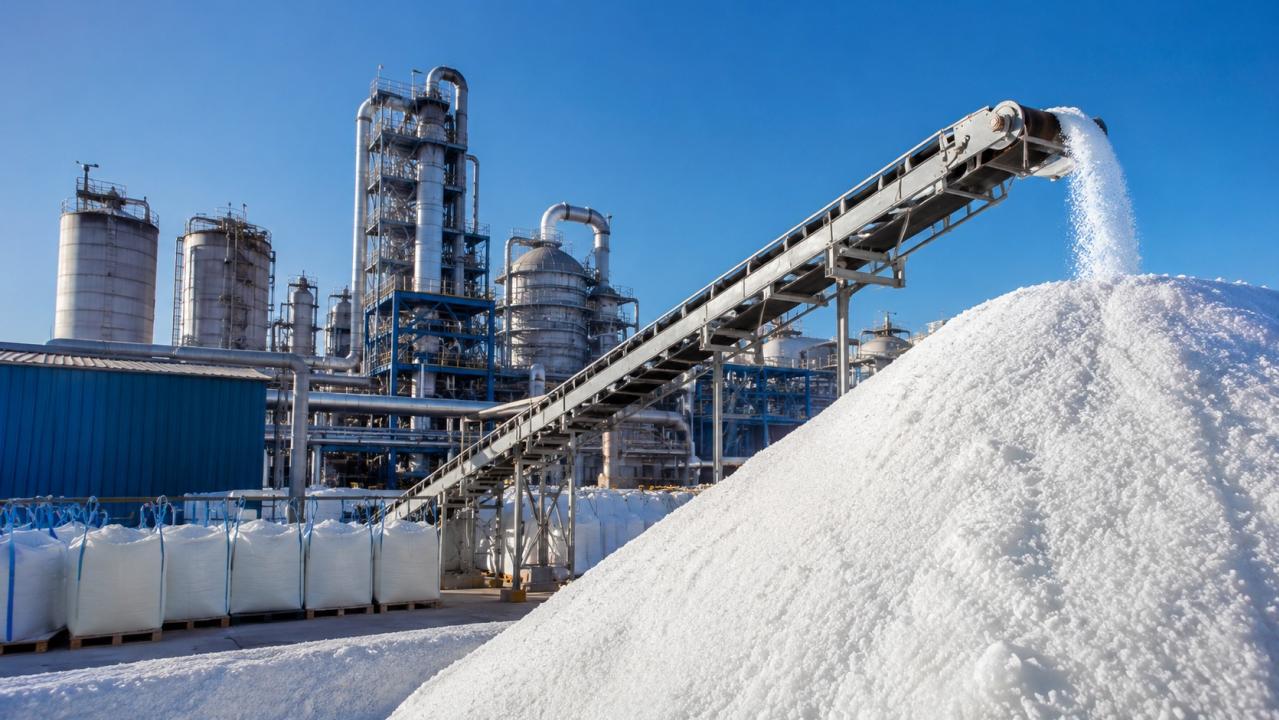
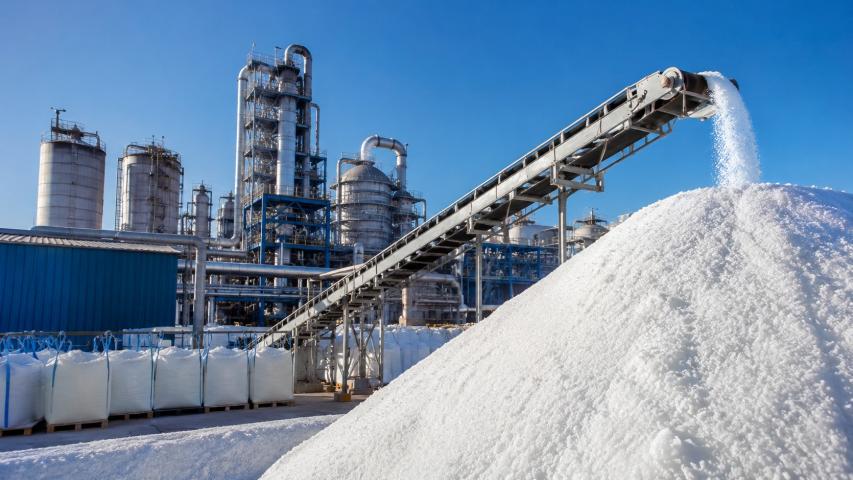
Soda ash, also known as sodium carbonate, is a white, odorless, water-soluble alkaline compound widely used across numerous industrial applications. It is one of the most important inorganic chemicals, serving as a key raw material in the production of glass, detergents, soaps, and various chemicals. Soda ash is also extensively used in water treatment, textile processing, paper manufacturing, and pH regulation. In glass production, it acts as a flux, reducing the melting temperature of silica and improving manufacturing efficiency. Additionally, it is incorporated into cleaning formulations and several industrial processes, making it an essential component in a broad range of large-scale manufacturing operations.
Establishing a soda ash production plant requires careful planning, including selecting an appropriate manufacturing process such as the Solvay process or natural trona processing, securing reliable raw material supplies, installing advanced processing equipment, and developing efficient utility and environmental management systems. A successful plant also depends on skilled manpower, effective logistics, regulatory compliance, and proper waste management practices. Careful capital planning and operational optimization are essential to ensure cost-effective production, consistent product quality, environmental sustainability, and long-term profitability.
IMARC’s latest report, “Soda Ash Production Cost Analysis: Industry Trends, Plant Setup, Machinery, Raw Materials, Investment Opportunities, Cost and Revenue,” provides a comprehensive roadmap for establishing a soda ash production plant cost. The study covers every critical aspect of the project, including capital investment, operating expenses, raw material requirements, manufacturing processes, machinery selection, profit projections, and overall economic feasibility. The report serves as a valuable resource for entrepreneurs, investors, consultants, researchers, and business strategists seeking to evaluate opportunities and make informed investment decisions in the soda ash industry.
Key Factors for Setting Up a Soda Ash Production Plant
1. Market Research
The soda ash market continues to expand, primarily driven by rising demand from the global glass manufacturing industry. It is extensively used in the production of flat glass and container glass for the construction, automotive, and packaging sectors. Rapid urbanization, infrastructure development, and increasing vehicle production continue to strengthen glass consumption worldwide. Additional growth is supported by the expanding detergent and household cleaning products industry, increasing awareness of hygiene, and steady population growth.
The market is also benefiting from the growing adoption of renewable energy technologies, particularly solar panels, which require high-quality specialty glass manufactured using soda ash. At the same time, manufacturers are investing in energy-efficient production methods, emission reduction technologies, and recycling initiatives to improve sustainability and operational efficiency. Advances in extraction and processing technologies, particularly through the utilization of natural soda ash deposits, have further enhanced production economics by reducing manufacturing costs. Moreover, expanding industrialization, supportive regulatory frameworks, and increasing investments in chemical manufacturing infrastructure across emerging economies, especially in the Asia-Pacific and Middle East regions, are expected to create significant opportunities for sustained market growth.
The report offers an exhaustive overview of the global soda ash industry, including a detailed breakdown by segments and regions within the sector. It also includes in-depth analyses of prices involved, market trends and historical data and forecast.
- Market Forecast
- Price Analysis
- Market Breakup by Region
- Market Breakup by Segment
- Market Trends
2. Planning and Designing
A detailed and up-to-date business plan is indispensable for mapping out the steps to establish and operate a soda ash production facility. This report offers in-depth details about the process flow and the various unit operations involved in a soda ash production plant.
- Technical Tests
- Quality Assurance Criteria
- Mass Balance and Raw Material Requirements
- Unit Operations Involved
- Product Overview
Request for a Sample Report: https://www.imarcgroup.com/soda-ash-manufacturing-plant-project-report/requestsample
3. Legal and Regulatory Compliance
Understanding and complying with the intricate framework of business laws and regulations is a vital aspect of establishing a soda ash production facility. This requires a detailed knowledge of legal obligations, such as labor laws, environmental standards, tax policies, and industry-specific regulations.
4. Plant Requirements and Costs
The report offers a detailed location analysis, including insights into land selection, key criteria, location importance, environmental considerations, and associated costs for establishing a soda ash production facility. It also provides information on plant layout and the factors that impact its design.
- Human Resource Requirements and Costs
- Utility Requirements and Costs
- Transportation Requirements and Costs
- Packaging Requirements and Costs
- Raw Material Requirements and Costs
- Machinery Requirements and Costs
- Plant Layout
- Land, Location and Site Development
5. Hiring and Training
Effective workforce planning and recruitment strategies are critical for assembling a skilled and efficient team to manage a soda ash production plant. This process includes identifying the specific skills and qualifications needed for different roles and anticipating future staffing requirements based on production goals and business expansion.
- Developing Health and Safety Protocols
- Implementing Training Programs for Employees
- Complying with Labor Laws and Regulations
Ask Analyst for Customization: https://www.imarcgroup.com/request?type=report&id=23092&flag=C
6. Supply Chain Management
Building strong partnerships with suppliers and vendors is crucial to maintaining a dependable and cost-efficient supply chain. This requires choosing partners who can reliably deliver high-quality raw materials and components at competitive rates.
- Planning Logistics and Transportation Networks
- Implementing Efficient Inventory Management Systems
7. Project Economics
This entails a thorough analysis of the costs associated with a soda ash production plant, covering capital expenditure (CapEx), operating expenditure (OpEx), income forecasts, taxation, depreciation, liquidity, profitability, payback period, net present value (NPV), uncertainty, sensitivity assessments, etc. In addition to this, it includes an in-depth review of financial assistance options and a comprehensive list of certifications necessary for establishing the plant.
- Financial Analysis
- Profit Projections
- Taxation and Depreciation
- Revenue Projections
- Expenditure Projections
- Operating Costs
- Capital Investments
8. Marketing and Distribution Strategies:
Creating a robust marketing strategy and establishing strong brand positioning are vital for building a production plant’s market presence. This process includes conducting thorough market research to identify customer needs, preferences, and competitive trends.
- Identifying Distribution Channels and Sales Networks
- Leveraging Digital Marketing and E-Commerce Platforms
- Participating in Trade Shows and Industry Events
About Us:
IMARC Group is a global management consulting firm that helps the world’s most ambitious changemakers to create a lasting impact. The company excel in understanding its client’s business priorities and delivering tailored solutions that drive meaningful outcomes. We provide a comprehensive suite of market entry and expansion services. Our offerings include thorough market assessment, feasibility studies, company incorporation assistance, factory setup support, regulatory approvals and licensing navigation, branding, marketing and sales strategies, competitive landscape, and benchmarking analyses, pricing and cost research, and procurement research.
Contact Us:
IMARC Group
134 N 4th St. Brooklyn, NY 11249, USA
Email: sales@imarcgroup.com
Tel No:(D) +91 120 433 0800
United States: (+1–201971–6302)