Every patient is unique, so why should every orthopedic implant be the same?
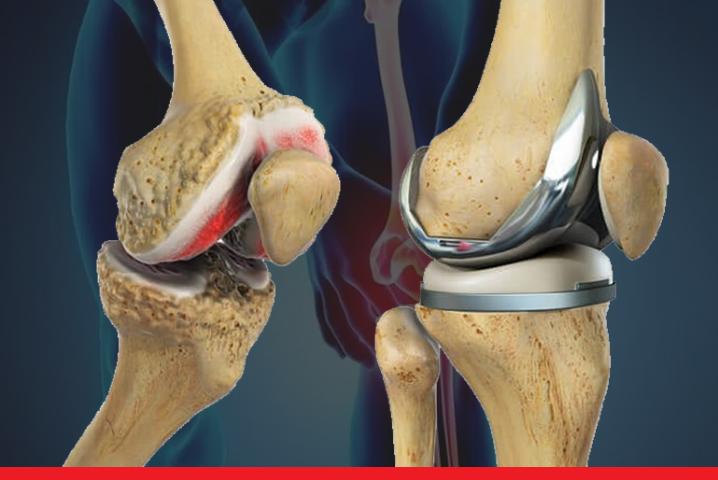
Traditional orthopedic implants have helped millions of people regain mobility. However, they are designed to fit a broad range of patients rather than an individual's exact anatomy. This limitation can become challenging in complex trauma, bone deformities, tumor reconstruction, and revision surgeries.
This is where customized orthopedic implants are changing the future of orthopedic care.
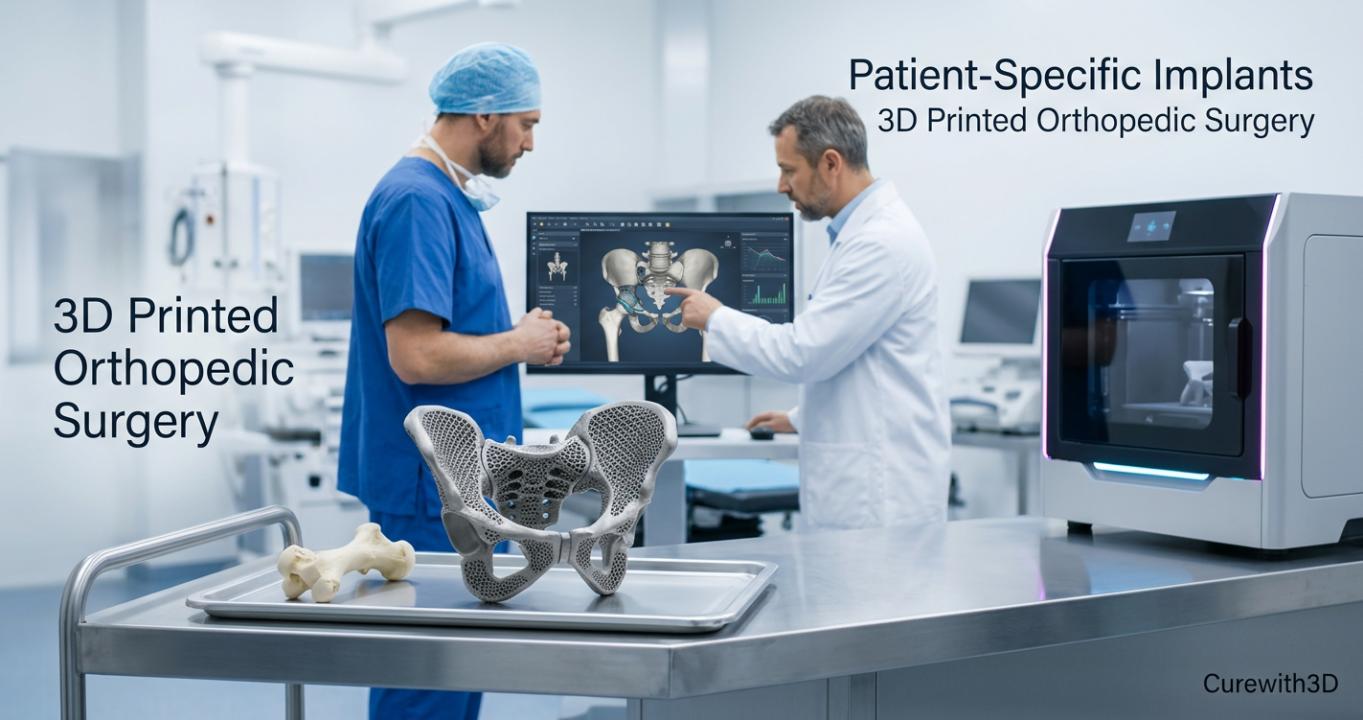
Using advanced medical imaging, 3D modeling, computer-aided design (CAD), and precision manufacturing, customized orthopedic implants are designed specifically for each patient. The result is improved anatomical fit, better surgical planning, and enhanced precision during complex procedures.
In this guide, you'll learn how customized orthopedic implants work, their benefits, applications, design process, frequently asked questions, and why personalized orthopedic solutions are becoming the preferred choice for complex surgeries.
What Are Customized Orthopedic Implants?
Customized orthopedic implants are patient-specific medical implants designed to match an individual's unique bone anatomy. Unlike conventional implants that come in standard sizes, these implants are developed using detailed CT or MRI scans.
The design process combines:
- Medical imaging
- 3D reconstruction
- Computer-aided design (CAD)
- Virtual Surgical Planning (VSP)
- Precision manufacturing
- Quality validation
Because every implant is created specifically for one patient, surgeons can achieve a more accurate anatomical fit during surgery.
Why Are Customized Orthopedic Implants Becoming Popular?
Modern orthopedic surgery demands greater precision than ever before.
According to industry research, the global market for patient-specific implants and 3D-printed medical devices continues to grow rapidly due to increasing demand for personalized healthcare solutions.
Several factors are driving this trend:
- Rising number of complex trauma cases
- Increasing orthopedic revision surgeries
- Growth of 3D printing technologies
- Better digital imaging
- Improved surgical planning
- Demand for personalized treatment
As technology advances, customized orthopedic implants are becoming more accessible for hospitals and surgeons worldwide.
How Are Customized Orthopedic Implants Designed?
Creating a customized implant involves several carefully planned steps.
Step 1: Medical Imaging
The patient's CT or MRI scan captures detailed anatomical information.
Step 2: 3D Reconstruction
Specialized software converts imaging data into an accurate three-dimensional bone model.
Step 3: Virtual Surgical Planning
Surgeons and biomedical engineers collaborate to simulate the surgery digitally before the actual procedure.
Step 4: Implant Design
Using CAD software, engineers design an implant that matches the patient's anatomy.
Step 5: Manufacturing
The implant is manufactured using advanced machining or metal 3D printing technologies with biocompatible materials.
Step 6: Quality Inspection
Each implant undergoes strict dimensional and quality verification before surgical use.
10 Major Benefits of Customized Orthopedic Implants
1. Superior Anatomical Fit
The implant matches the patient's natural bone structure instead of forcing the anatomy to adapt to a standard implant.
2. Greater Surgical Precision
Patient-specific implants reduce guesswork during surgery by providing a customized solution designed before the operation.
3. Better Preoperative Planning
Virtual Surgical Planning allows surgeons to evaluate different surgical approaches before entering the operating room.
4. Reduced Intraoperative Adjustments
Customized implants often minimize the need for bending, trimming, or modifying implants during surgery.
5. Improved Implant Positioning
A precise fit supports accurate placement and alignment throughout the procedure.
6. Better Management of Complex Cases
Customized implants are particularly useful for:
- Complex fractures
- Bone deformities
- Bone tumors
- Revision surgeries
- Bone loss reconstruction
7. Personalized Patient Care
Each implant is developed specifically for one individual, supporting a more personalized treatment strategy.
8. Increased Surgical Confidence
Detailed digital planning provides surgeons with greater confidence when treating difficult anatomical cases.
9. Enhanced Collaboration
Orthopedic surgeons work closely with biomedical engineers throughout the planning and design process.
10. Continuous Innovation
Advances in artificial intelligence, 3D printing, and digital healthcare continue to improve customized implant technology.
Common Applications of Customized Orthopedic Implants
Customized orthopedic implants are widely used across multiple specialties.
Trauma Reconstruction
Complex fractures often involve irregular bone anatomy that standard implants cannot easily accommodate.
Bone Tumor Reconstruction
After tumor removal, customized implants can restore missing bone while matching the patient's anatomy.
Revision Surgery
Patients requiring replacement of previous implants often have altered bone structures that benefit from patient-specific solutions.
Bone Deformity Correction
Customized implants support accurate correction of congenital or acquired deformities.
Pelvic Reconstruction
The pelvis has one of the body's most complex anatomical structures, making personalized implants particularly valuable.
Upper and Lower Limb Reconstruction
Customized implants can assist in the reconstruction of:
- Femur
- Tibia
- Humerus
- Radius
- Ulna
- Clavicle
Customized Orthopedic Implants vs Standard Implants
| Feature | Customized Implant | Standard Implant |
|---|---|---|
| Design | Patient-specific | Standard sizes |
| Anatomical Fit | Excellent | General fit |
| Surgical Planning | Highly personalized | Standard planning |
| Complex Cases | Excellent | Limited |
| Implant Modification | Minimal | Sometimes required |
| Precision | High | Moderate |
FAQ.
Are customized orthopedic implants safe?
Yes. They are manufactured using medical-grade biocompatible materials and undergo strict quality control before clinical use, in accordance with applicable regulatory standards.
Who needs customized orthopedic implants?
They are commonly recommended for patients with:
- Complex fractures
- Bone tumors
- Revision surgeries
- Congenital deformities
- Significant bone loss
- Challenging reconstructive procedures
Are customized implants better than traditional implants?
For many complex orthopedic cases, customized implants provide a more precise anatomical fit and support individualized surgical planning. The most appropriate implant choice depends on the patient's condition and the surgeon's clinical assessment.
How long does it take to manufacture a customized implant?
The timeline depends on imaging quality, design complexity, regulatory processes, and manufacturing methods. In planned surgeries, the entire workflow is coordinated in advance to align with the surgical schedule.
What materials are used?
Common materials include:
- Titanium alloys
- Stainless steel
- Cobalt-chromium alloys
The choice depends on the clinical application and the surgeon's preference.
Does 3D printing improve implant quality?
3D printing enables the production of highly complex geometries and patient-specific designs. When combined with robust engineering and quality assurance, it supports precise customization for complex orthopedic procedures.
The Future of Customized Orthopedic Implants
The next generation of orthopedic care will be driven by digital technologies.
Emerging innovations include:
- Artificial Intelligence-assisted implant design
- Robotic-assisted surgery
- Digital surgical simulation
- Advanced biomaterials
- Smart implants
- Improved additive manufacturing
- Automated surgical planning
As these technologies mature, customized orthopedic implants are expected to become increasingly integrated into routine orthopedic practice, particularly for complex reconstructions.
Conclusion
Customized orthopedic implants represent a significant advancement in personalized orthopedic surgery. By combining advanced imaging, virtual surgical planning, CAD design, and precision manufacturing, these implants enable solutions tailored to an individual patient's anatomy.
For complex trauma, deformity correction, bone tumor reconstruction, and revision procedures, patient-specific implants can enhance surgical planning, improve anatomical fit, and support more precise treatment strategies.
As healthcare continues to embrace personalization and digital innovation, customized orthopedic implants are poised to play an increasingly important role in delivering advanced orthopedic care and improving patient outcomes.