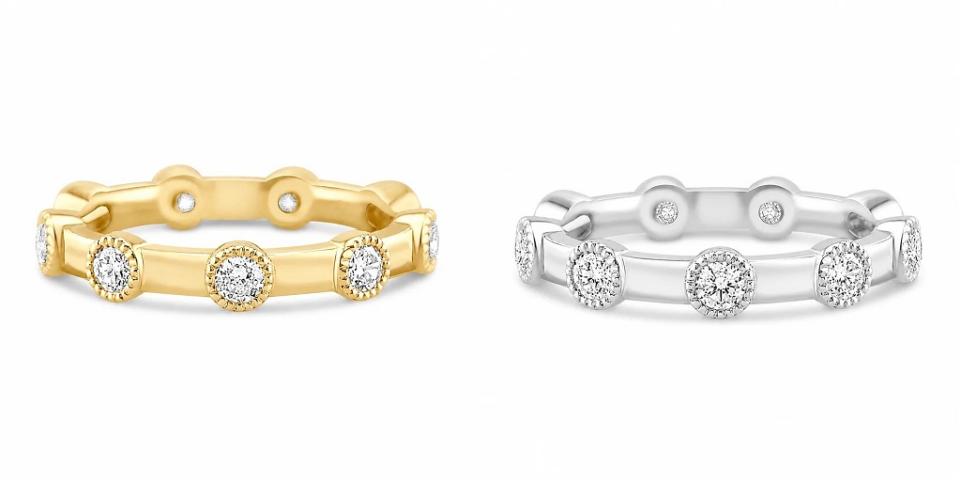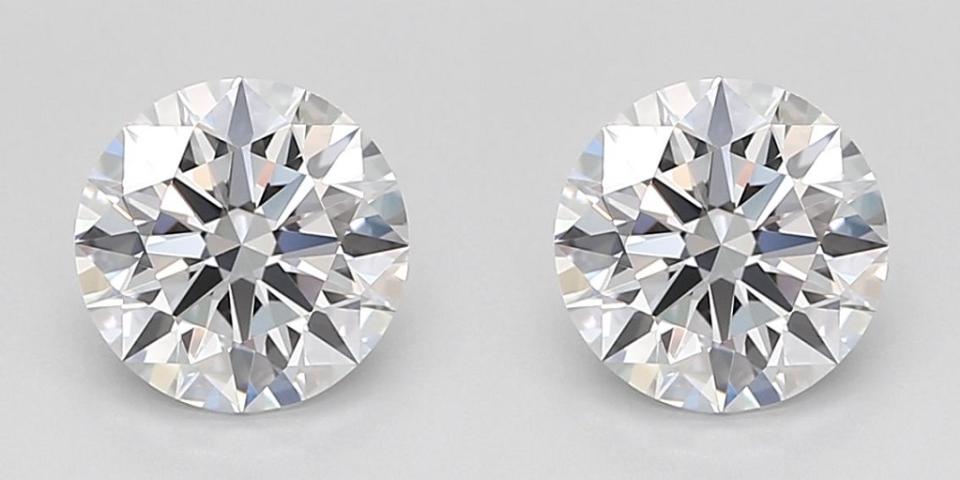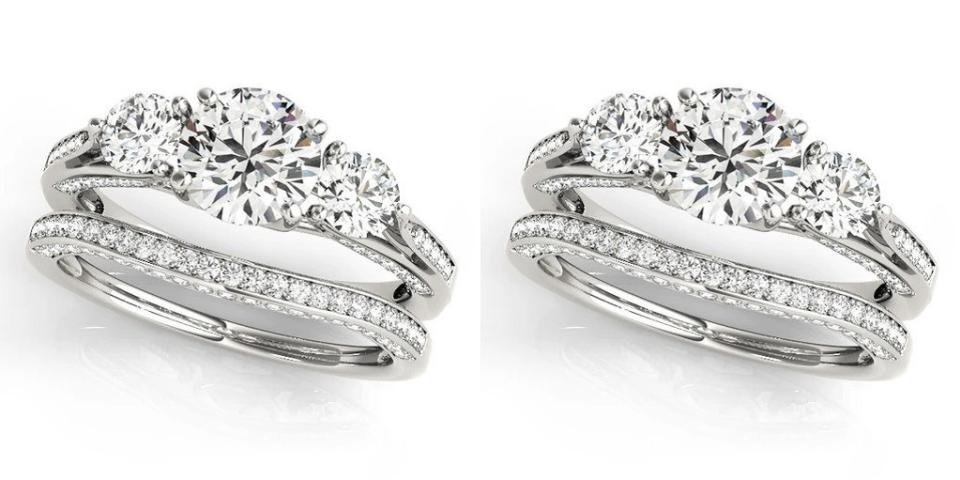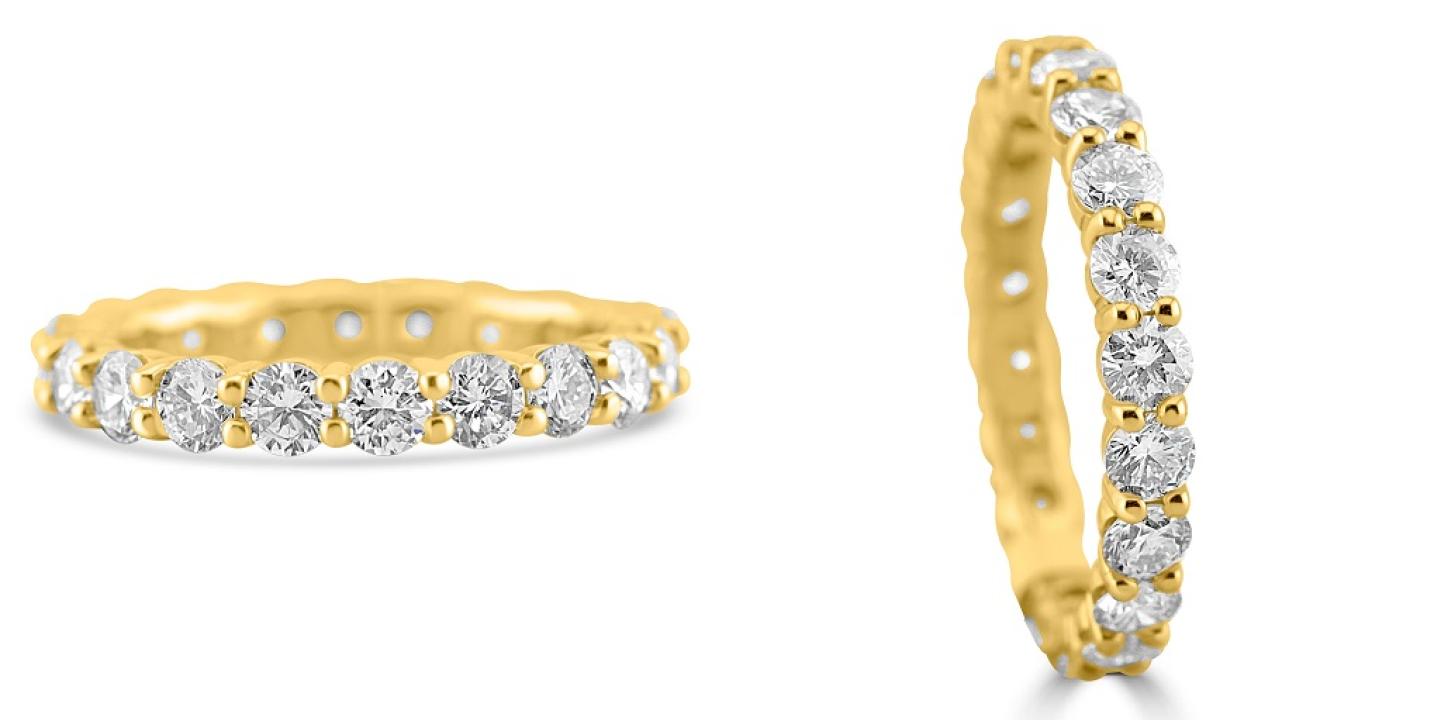
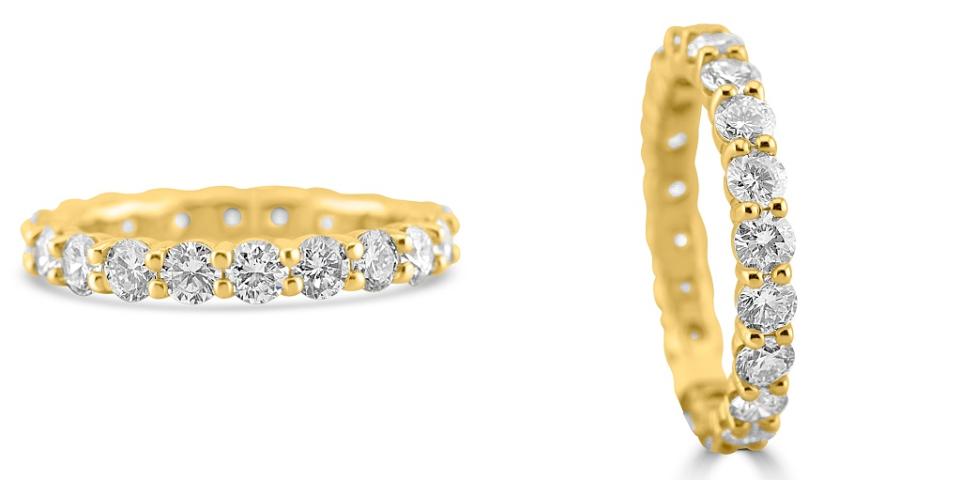
Lab grown eternity bands have become one of the most sought-after options for anniversaries, upgrades, and wedding bands. The appeal makes sense. You get the same optical and physical properties as mined diamonds at a fraction of the cost, and the ethical eternity bands category keeps growing because more buyers want sourcing they can feel good about. But there's a practical detail that tends to get buried under all that excitement, and it catches people off guard every single day: a full eternity band cannot be resized.
Why Lab Grown Eternity Bands Create a Unique Sizing Problem
With a standard solitaire or three-stone ring, resizing is routine. A jeweler cuts the shank, removes or adds metal, and then welds the band back together, so the ring fits again. Full eternity bands don't work that way. The stones run completely around the band, leaving no plain section of metal to cut into. Lab-grown eternity bands face this same structural limit regardless of where the diamonds came from. Resizing would require removing stones, adjusting the metal, and then sourcing matching stones to fill any gaps. Most jewelers won't take on that job. The ones who will charge enough that buyers often wish they'd asked about sizing before they fell in love with the ring.
Fingers don't stay the same size. They swell in heat, shrink in cold, and often shift during pregnancy or with age. A ring that fits perfectly in October can feel genuinely stuck by the following July, and for a full eternity band, that's not a minor inconvenience. It can mean the ring sits in a drawer.
Sizing Down on Lab Grown Eternity Bands Is Even Harder Than Going Up
Going smaller is more complicated than going bigger. If a ring is slightly loose, there are workarounds: ring guards, sizing beads, and small adjustments to the inner band can all help without disturbing the stone setting. Sizing down lab-grown eternity bands means working directly with the band's structure, and that's where things get difficult. Lab-created diamond bands and man-made diamond bands share this limitation at every price point. A $900 band and a $9,000 band hit the same wall. Synthetic eternity rings don't offer more flexibility just because the stones were grown in a lab rather than pulled from the ground.
A half eternity band avoids the problem entirely. The stones cover only the front-facing section of the ring, leaving the back plain metal that can be cut and adjusted like any standard band. Sustainable diamond rings and eco-friendly wedding bands come in both full and half >
Getting the Size Right Before You Buy Lab Grown Eternity Bands
Professional sizing matters more for eternity bands than for almost any other ring >
For gift purchases where the recipient's size isn't known, a half eternity >
Jean Pierre Jewelers works with clients on exactly this kind of decision, helping them find the right >
For More Information About Lab Grown Engagement Rings and Lab Engagement Rings Please Visit: Jean Pierre Jewelers.