Email is still one of the most important tools for work, sales, customer support, school, networking, and daily communication. But writing a good email is not always easy. A short message can take longer than expected because you need to choose the right tone, explain your point clearly, and make sure the recipient knows what to do next.
This is why AI email generators are becoming useful for many people. Instead of starting from a blank page, users can describe what they want to say and let AI create a clear first draft. The result is not meant to replace your judgment. It gives you a better starting point so you can edit, personalize, and send the message with more confidence.
A good email usually has four important parts: a clear purpose, a suitable tone, enough context, and a simple call to action. For example, a follow-up email should be short and polite. A sales outreach email should be concise and value-focused. A customer support reply should be helpful and easy to understand. A professional request should sound respectful while still being direct.
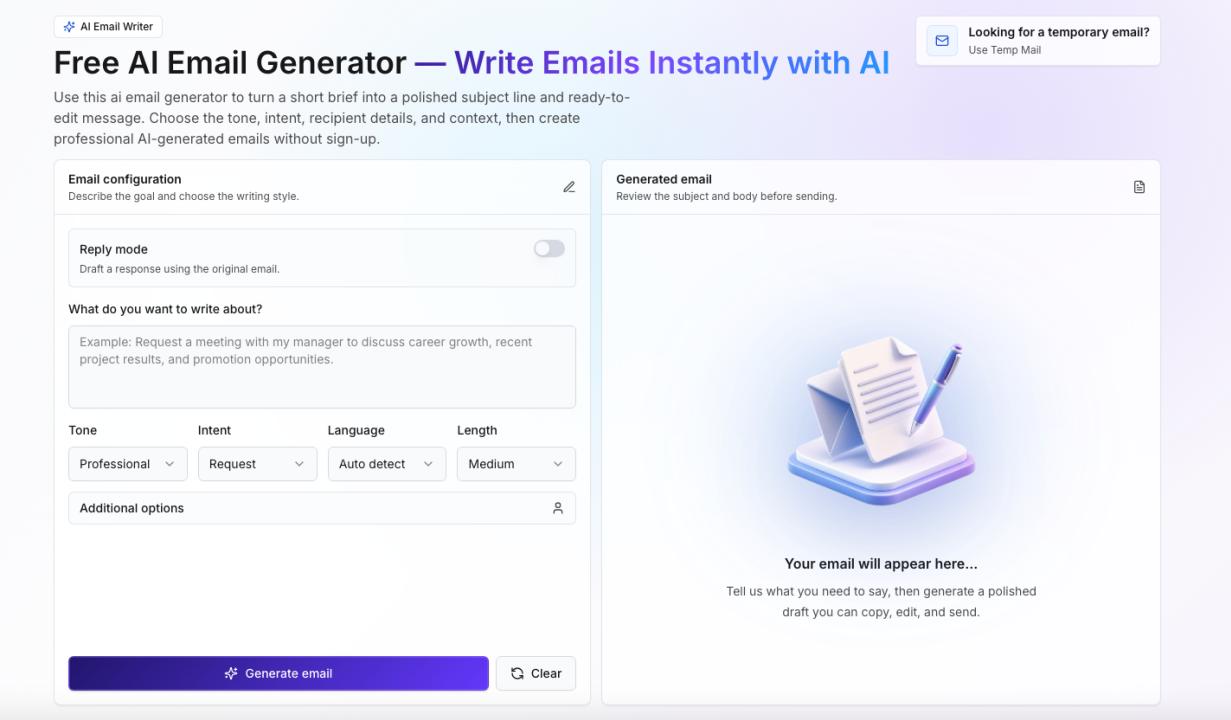
An AI email generator can help organize these details into a complete message. Instead of manually thinking through every sentence, you can enter a short brief such as who the email is for, what you need, what background information matters, and what action you want the reader to take. The tool can then create a subject line and body that are easier to review and improve.
AI Generator Email is an example of this kind of practical writing tool. It lets users generate polished email drafts from a short brief and adjust details such as tone, intent, language, length, recipient name, sender name, and additional context. It can also help with reply writing, which is useful when you already have an email and need to respond quickly.
This type of tool is especially helpful for people who send many similar emails every week. Founders may need to write partnership requests, investor updates, or customer follow-ups. Freelancers may need to send proposals, project updates, and payment reminders. Job seekers may need to write application emails, interview follow-ups, or networking messages. Students may need to contact teachers or classmates in a clear and polite way.
The biggest benefit is not just speed. It is also structure. Many people know what they want to say, but their first draft may be too long, too vague, too casual, or too direct. AI can turn rough thoughts into a more organized message. Then the user can adjust the wording so it still sounds personal and accurate.
However, AI-generated emails should always be reviewed before sending. Names, dates, promises, prices, deadlines, and personal details should be checked carefully. The best workflow is simple: describe the message, generate a draft, review the subject and body, edit anything that needs a human touch, and then send it from your own inbox.
AI email tools are also becoming part of a broader email productivity workflow. In addition to writing drafts, users may need temporary email addresses for signups, clean email signatures for professional communication, or quick replies for daily inbox management. Combining these tools in one place can make email tasks faster and less repetitive.
In the end, an AI email generator is most useful when it helps people communicate more clearly with less friction. It does not need to produce a perfect final message every time. It simply needs to remove the blank page, suggest a strong structure, and help users move from idea to finished email faster.
For anyone who writes frequent work emails, support replies, sales messages, follow-ups, or personal notes, using an AI email generator can be a practical way to save time while keeping messages clear, polite, and easy to act on.