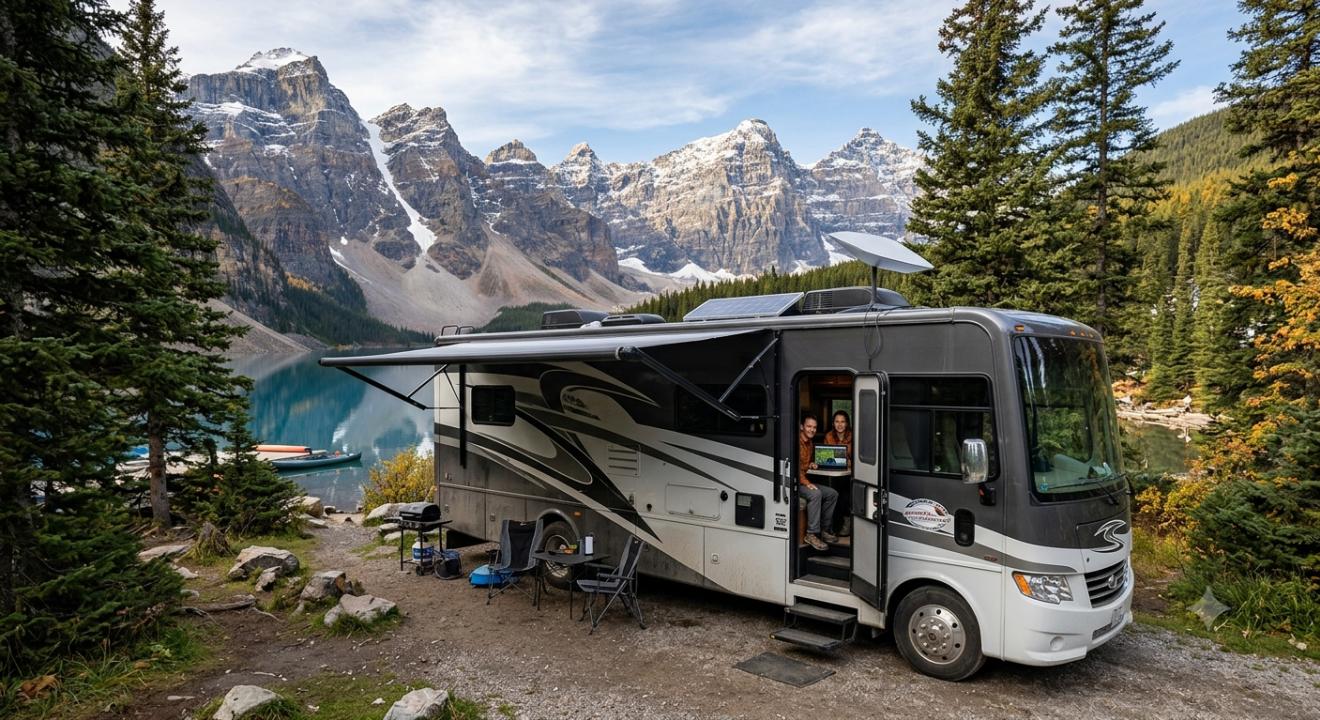
You're parked at a gorgeous campsite, the kind you drove six hours to reach, and your satellite dish just won't lock a signal because of the tree cover overhead. Sound familiar? If you've ever tried to join a work call, stream a show, or just check the weather from a wooded campground and watched that little "searching for signal" icon spin forever, you already know satellite internet has some real limits for full-time or weekend RVers. The good news is you're not stuck with it. There are several options that work faster, cost less to start, and don't depend on a clear line of sight to the sky.
Why Satellite Isn't Always the Best Fit for RV Life
Satellite internet, whether it's a traditional geostationary system or a low Earth orbit setup, was built to solve a real problem: providing connectivity to places with no cell towers at all. That's genuinely useful for remote boondocking. But most RVers aren't parked in true dead zones every single night. They're moving between campgrounds, national forests, and the occasional Walmart parking lot, and in most of those places, cellular coverage already exists.
The catch with a satellite is the setup itself. You often need a dish with a clear view of the sky, which means trees, canyon walls, or a covered site can knock you offline instantly. Setup and teardown take a few extra minutes every time you move. And equipment costs, plus monthly plans, tend to sit higher than a comparable cellular plan for the amount of data you actually get to use.
None of that makes satellites bad. It makes it situational. For the RVer comparing options and asking whether cellular is better than satellite internet for day-to-day RV use, the honest answer is usually yes. For anyone who wants something dependable, more affordable, and less fussy on setup, cellular-based options make more sense.
Cellular Hotspots: The Most Popular Alternative
For the vast majority of RVers, a cellular hotspot or dedicated mobile router is the first upgrade worth making. These devices pull from the same networks your phone uses, so wherever there's a cell signal, you generally have internet.
A few things make this option shine:
No dish, no aiming. You turn it on, it connects, and you're online in under a minute.
Coverage follows the roads. Since most campgrounds sit near towns or highways, cellular coverage tends to be stronger than people expect.
Plans have gotten more generous. Several carriers now offer high-data plans built specifically for mobile and RV use, rather than capping you at a few gigabytes.
The tradeoff is that cellular still depends on nearby towers. Head deep into a national forest with no service, and a hotspot won't help you any more than a phone would. That's where a multi-carrier setup comes in.
Multi-Carrier Routers: Covering the Gaps
A single-carrier hotspot is only as good as that one carrier's coverage in a given area. A multi-carrier router (sometimes bundled with an external antenna) lets you switch between two or three networks depending on which one has the strongest signal where you're parked. This single upgrade solves the biggest complaint people have about cellular data: dead zones from one carrier that another carrier doesn't have.
Pairing this kind of router with a roof-mounted or window-mounted antenna can pull in a signal from towers much farther away than a phone alone ever could, which matters a lot when you're at the edge of coverage rather than dead center of it.
Newer Satellite Options: A Middle Ground Worth Knowing
It's worth mentioning that satellite technology itself has changed. Newer low Earth orbit satellite internet plans designed specifically for RV travel operate very differently from older satellite systems. Many don't need the same precise aiming, work reasonably well through some tree cover, and can be paused month to month, which suits a travel schedule.
This is genuinely one of the better ways to fill in gaps where cellular doesn't reach, and many RVers now run it alongside a cellular setup rather than choosing one exclusively. Used this way, it's less a replacement for cellular and more a backup for the handful of nights you're truly off-grid.
Combining Networks for Reliability
The RVers who almost never lose connection typically aren't relying on one single source. They're combining:
A primary cellular plan (often the carrier with the best regional map for where they travel)
A secondary carrier as backup, either through a second SIM or a multi-carrier router
An LEO satellite plan for the rare spot with no towers at all
This layered approach costs more than picking just one, but it also means you're never fully offline unless you're genuinely in the middle of nowhere. For anyone chasing what amounts to the best unlimited internet for RV travel, this blended setup is usually the answer, rather than any single product on its own.
Campground and Public Wi-Fi: A Useful Extra, Not a Main Plan
Campground Wi-Fi has improved over the years, and some resorts now offer genuinely solid connections. But relying on it as a main source is risky. Bandwidth gets split across every guest on the property, speeds crater during peak evening hours, and security is often weaker than a personal connection. Think of it as a nice bonus for a quick browser check, not something to build your remote work day around.
What Actually Works Better Than Satellite Internet for RV Travel
Pulling this together, most RVers find that a cellular hotspot paired with a multi-carrier router covers the vast majority of their trips, with an LEO satellite plan held in reserve for the true off-grid nights. This combination tends to be more affordable overall, sets up in seconds rather than minutes, and doesn't leave you stranded because of a few tree branches overhead. It's a setup that grows with your travel >
Final Thoughts
There's no single perfect answer for every RVer, because everyone's routes, budgets, and tolerance for downtime look a little different. But if satellite alone has left you frustrated with setup hassles or patchy service under tree cover, cellular-first setups, especially ones layered with a second carrier and a satellite backup for true remote spots, tend to solve the problem for most travelers. The best move is usually to start with what covers your most common routes, then add a backup for the trips that take you further off the map.
Frequently Asked Questions
Are newer LEO satellite plans better than traditional satellite internet for RVs?
For most RVers, yes. These RV-specific plans don't require the same precision as older satellite systems and can often work through partial tree cover, though a fully open sky still yields the best results.
Do I need a multi-carrier router if I already have a phone hotspot?
Not always, but it helps a lot in areas where your phone's carrier has weak coverage. A multi-carrier setup lets you switch to whichever network is strongest at that specific campsite.
Can I use campground Wi-Fi as my only internet source?
You can, but it's unreliable for anything important like video calls or uploading large files, since speeds often drop when many guests are connected at once.
What internet setup works best for full-time RV work?
A cellular plan from a carrier with strong coverage in your travel region, paired with a second carrier or satellite backup, gives the most consistent uptime for remote work.
Does bad weather affect cellular internet the way it affects satellite?
Cellular connections are generally more resistant to weather interference than satellite dishes, which can lose signal during heavy rain or storms, especially with older satellite systems.