
Prediction Market
Clone Script Development: The Complete 2026 Guide for Startups &
Enterprises
The prediction market industry isn't just growing in 2026 —
it's compounding. Political forecasting, crypto speculation, sports analytics,
and financial event trading have pulled millions of users toward decentralized
platforms that let them stake a view on real-world outcomes and get paid when
they're right. We've tracked this shift closely across the Web3 development
space, and one pattern is unmistakable: businesses no longer want to build
prediction infrastructure from zero. They want to launch fast, launch secure,
and launch with room to scale.
That's exactly the
gap a prediction market clone script fills.
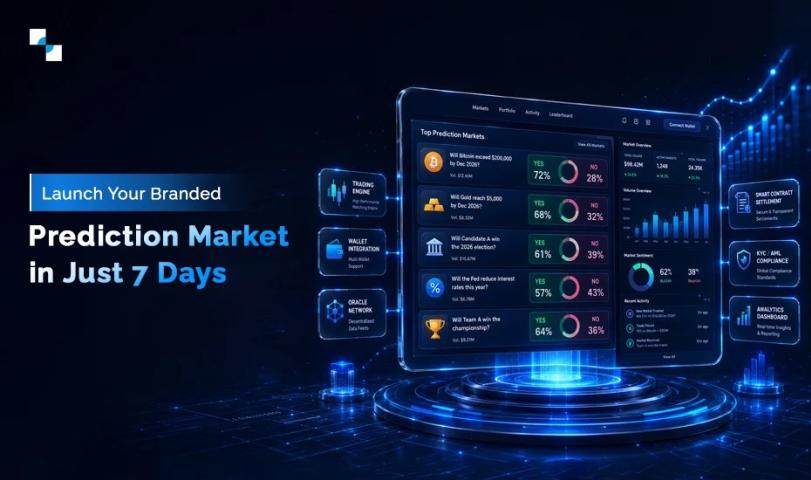
A prediction market clone script is
ready-made, deployment-tested software that lets startups, entrepreneurs, and
enterprises launch a decentralized prediction marketplace — modeled on proven
platforms like Polymarket, Kalshi, and Augur — without the 6-12 month build
cycle a custom platform normally demands. With smart contracts, liquidity
infrastructure, oracle connectivity, and wallet integration already engineered
and battle-tested, a business can go from concept to live marketplace in days,
not months.
This guide breaks down what these scripts are, how they
actually work under the hood, the features that separate a serious product from
a shallow copy, monetization paths, and why prediction market platforms have
become one of the fastest-growing blockchain business categories heading into
2026.
What Is a Prediction
Market Clone Script?
Quick answer: A prediction market clone script is a
pre-built, blockchain-based software framework that replicates the core
mechanics of leading prediction market platforms — allowing users to forecast
event outcomes and trade prediction shares using cryptocurrency, all within a
decentralized, transparent system.
In practice, these platforms typically support:
Yes/No prediction markets
Multiple-outcome event forecasting
Real-time trading systems
Automated liquidity management
Blockchain-based settlements
Smart contract execution
Crypto wallet connectivity
Users engage with
these markets across a wide range of categories:
·
Elections
·
Sports matches
·
Cryptocurrency price movements
·
Financial market trends
·
Entertainment events
·
AI and emerging technology milestones
·
Economic indicators
The core value proposition is trust without a middleman.
Rather than depending on a centralized operator to hold funds and resolve outcomes
fairly, these platforms run on blockchain rails — meaning transparency,
automated execution, and tamper-proof settlement are built into the system
itself, not promised by a company's terms of service.
A well-engineered clone script hands businesses this entire
framework already tested and ready for deployment, removing the guesswork of
building consensus mechanisms and settlement logic from scratch.
How Does a Prediction
Market Clone Script Work? (Step-by-Step)
Understanding the mechanics matters — not just for technical
due diligence, but because it directly affects how trustworthy and
disputes-free your platform will be in production. Here's the breakdown:
1. Market Creation
An admin or user defines a real-world event — for example,
"Will Bitcoin exceed $150,000 by Q3 2026?" — along with clear
resolution rules, a deadline, and the specific data source that will confirm
the final outcome. Precision here matters: vague resolution criteria are the
single biggest source of user disputes on prediction platforms.
2. Trading Shares
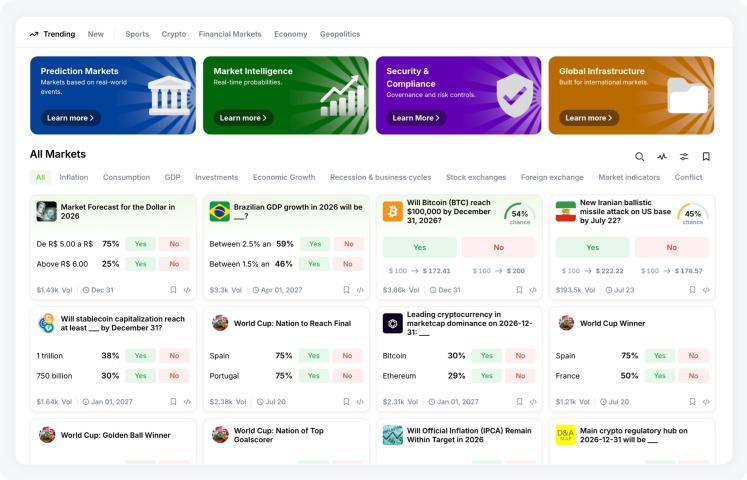
Participants buy outcome shares, typically labeled
"Yes" or "No." Prices move dynamically, reflecting the
crowd's real-time collective probability estimate. If 70% of traders believe
Bitcoin will hit that target, the "Yes" share price adjusts to
reflect that consensus.
3. Liquidity Pools
Instead of relying on a traditional order book (which needs
a matching buyer and seller), AMM-based prediction markets use liquidity pools.
Users deposit funds into these pools and earn a share of trading fees in return
— this is what keeps markets liquid and tradeable even during low-volume
periods.
4. Event Resolution
Once the event concludes, an oracle feeds the verified
real-world result on-chain. Smart contracts then calculate payouts and distribute
winnings automatically — no manual claims processing, no dispute committee, no
waiting period.
5. Instant Settlement
Winning traders receive funds directly into their connected
wallets. The entire payout trail is transparent and traceable on-chain, with no
intermediary able to delay, alter, or withhold funds.
White-Label vs.
Standard Prediction Market Clone Scripts: What's the Difference?
This distinction trips up a lot of first-time buyers, so
it's worth being direct about it.
A standard clone script gets you a working platform. A
white-label prediction market clone script gets you a working platform that
looks, feels, and functions as entirely your own brand.
With genuine white-label software, you should expect:
Full source code ownership
·
Complete branding control (logo, color scheme,
domain, UI/UX)
·
The full advanced infrastructure of a mature
prediction platform
·
Ongoing support, security updates, and technical
assistance post-launch
For businesses aiming to build long-term brand equity —
rather than launching a generic, easily-forgotten product — white-label is the
stronger path. Reputable development partners back this with deployment
support, lifetime updates, and the kind of hands-on post-launch guidance that
actually matters during your first few months of live operation, when
unexpected issues tend to surface.
Why Businesses Are
Choosing Prediction Market Clone Scripts in 2026:
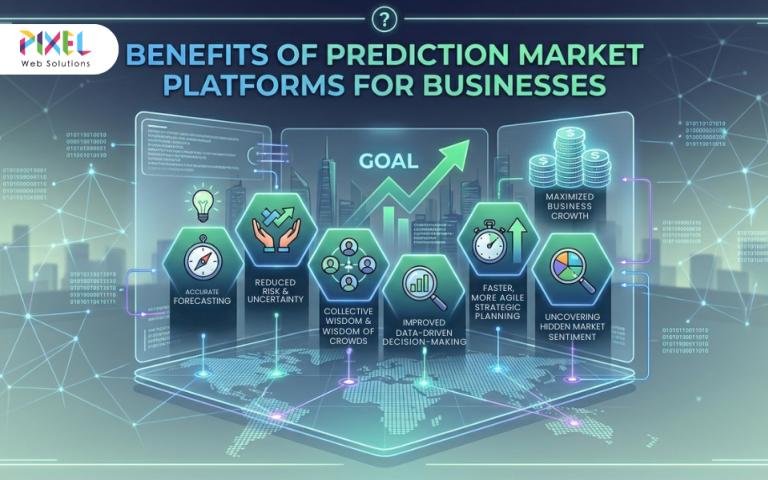
The prediction economy's growth is being driven by rising
interest in decentralized finance, crowd intelligence, and blockchain-based
forecasting. Here's what's pulling businesses toward clone scripts
specifically:
Lower development
investment — Custom prediction platform development can run into hundreds
of thousands of dollars. Clone scripts cut infrastructure and development costs
dramatically.
Faster launch
timeline — Businesses enter the market in weeks, not the 6-12+ months a
ground-up build typically requires.
Proven technology
stack — Most reputable clone scripts run on tested blockchain frameworks
with independently audited smart contracts, reducing the security risk that
comes with unproven code.
Multiple revenue
opportunities — Platform owners can monetize through:
·
Trading fees
·
Liquidity fees
·
Premium subscriptions
·
Sponsored markets
·
NFT sales
·
Staking mechanisms
Global accessibility
— Users anywhere can access the platform through a crypto wallet, sidestepping
traditional banking restrictions and geographic limitations.
Scalable business
model — Platforms can start in a single niche and expand gradually into
sports, crypto, finance, entertainment, and AI forecasting verticals as the
user base grows.
Popular Prediction
Market Clone Scripts in 2026
Several prediction market business models are seeing strong
global traction:
·
Probo Clone Script
·
PredictIt Clone Script
·
Zeitgeist Clone Script
·
Azuro Clone Script
·
Gnosis Conditional Tokens Clone Script
·
Manifold Markets Clone Script
·
Limitless Clone Script
·
MemeMarket Clone Script
·
Projection Finance Clone Script
Each of these reflects a distinct market structure,
governance model, and trading experience — which is why the right choice
depends heavily on your target audience and the type of events you plan to
host.
Key Technical
Features to Look for in a Clone Script
Not all clone scripts are built to the same standard. Here's
what actually separates a serious, production-ready product from a
surface-level imitation — the details a technical buyer should be asking
vendors about directly:
Decentralized Smart
Contracts — All market logic (creation, trading, settlement, payouts) should
execute entirely on-chain, with no manual override capability. Contracts
audited by a recognized security firm are non-negotiable, not a nice-to-have.
AMM Liquidity Engine
— An Automated Market Maker keeps pricing and trading continuous without
requiring a matched counterparty for every trade. Look for configurable
liquidity pool parameters that let you tune the system to your market's needs.
Verified Oracle
Integration — Chainlink, UMA, and comparable decentralized oracle networks
provide tamper-resistant event data. Without reliable oracle infrastructure,
resolution disputes become a recurring, reputation-damaging problem.
Multi-Chain
Architecture — Ethereum, Polygon, BNB Chain, and newer Layer-2 networks
each attract different user bases and fee expectations. A script that locks you
into a single chain caps your addressable market from day one.
Real-Time Backend
— WebSocket-driven price feeds, live order matching, and instant probability
updates are baseline expectations for any trading interface in 2026, not a
premium feature.
AI Prediction Layer
— Integrated analytical bots that process historical data, news sentiment, and
on-chain signals give users a genuine analytical edge and meaningfully
differentiate your platform from bare-bones alternatives.
Revenue Models for
Prediction Market Platforms:
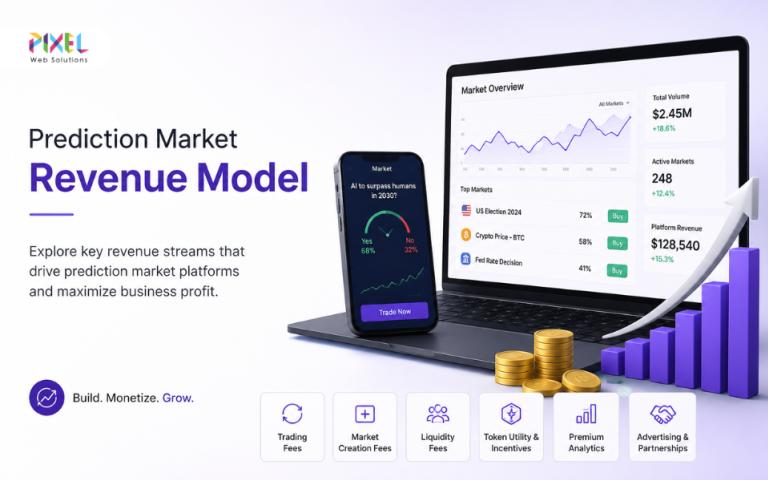
One of the more compelling aspects of running a prediction
market is just how many monetization paths are available simultaneously:
Trading Fees — A
percentage of every trade (typically 0.5%–2%) flows to the platform. As volume
scales, this becomes the primary and most dependable revenue stream.
Market Creation Fees
— A small fee for opening new markets filters out low-quality or spam events
while generating steady, predictable income.
Liquidity Incentive
Structures — Premium liquidity tools or performance fees on managed pools
add revenue without disrupting the core trading experience.
Native Token Staking
— A governance token lets engaged users stake for platform rewards, boosting
both retention and token utility at the same time.
Sponsored Markets
— Brands, crypto projects, and media companies will pay for co-branded or
sponsored markets tied to their own events and launches.
Subscription Tiers
— Advanced analytics, AI assistant access, priority market listings, and an
ad-free experience give power users a reason to pay for a premium tier.
Why Choose Hivelance
for Prediction Market Clone Script Development?
Hivelance builds advanced prediction market clone script
solutions for startups, enterprises, and Web3 businesses looking to
launch scalable, decentralized forecasting platforms without the risk of
unproven code or inexperienced vendors.
Our solutions include smart contract-powered prediction
systems, multi-chain deployment support, and full Automated Market Maker (AMM)
integration for a seamless trading experience out of the box. We also build in
AI-based prediction modules that give end users real data-driven forecasting
support, not just a raw trading interface.
With secure, audited architecture and fully customizable
white-label solutions, Hivelance helps businesses launch branded prediction
marketplaces quickly — backed by a team with direct, hands-on experience
deploying blockchain trading infrastructure across multiple chains.