f you build or manage a web application, security is something you simply cannot ignore. Every new feature, API, login system, or dashboard introduces another potential entry point for attackers. The challenge is that many traditional website security scanners only examine pages that are publicly accessible. They often miss the authenticated parts of an application where the most sensitive data and business logic exist.
This is exactly the problem that Buggy.run aims to solve.
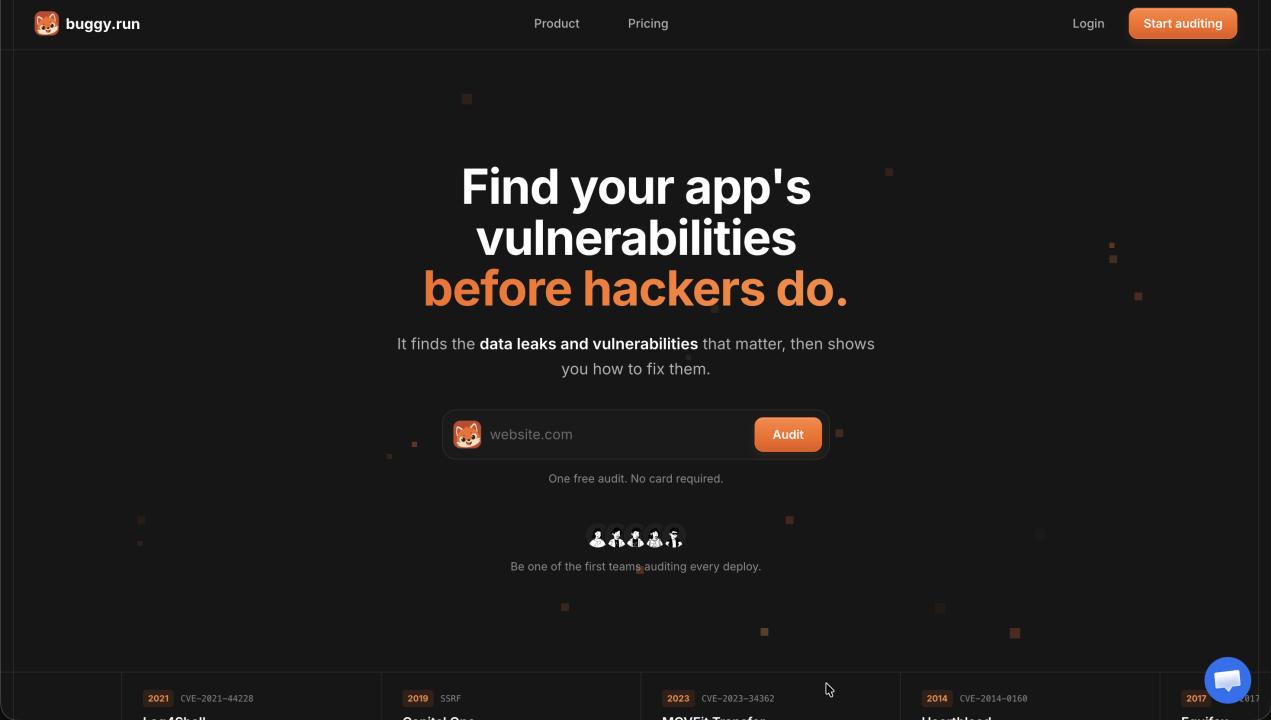
Buggy.run is an AI-powered authenticated website security scanner designed to help developers, startups, agencies, and businesses identify vulnerabilities inside modern web applications. Instead of stopping at the login page, it uses a real browser session to access protected areas of your application and performs automated security testing where it matters most.
You can learn more about the platform by visiting https://buggy.run/.
Why Traditional Website Scanners Are No Longer Enough
Modern applications are very different from the websites we built ten years ago. Today, most applications include customer dashboards, payment systems, admin panels, APIs, user profiles, and complex authentication flows.
Unfortunately, these are also the places where attackers spend most of their time looking for weaknesses.
A scanner that only checks public pages can miss critical issues hidden behind login screens. That means vulnerabilities may remain undiscovered until someone with malicious intent finds them first.
Buggy.run takes a different approach by performing authenticated security testing, allowing it to inspect the parts of your application that many automated scanners cannot reach.
What Is Buggy.run?
Buggy.run is an automated web application security platform that combines browser automation with AI-powered vulnerability analysis.
Once you provide testing credentials, the platform securely logs into your application and begins scanning authenticated pages, APIs, forms, and user workflows. Instead of generating confusing technical reports, it organizes findings based on severity and provides guidance that developers can understand and act on quickly.
Its goal is simple: help development teams discover security issues early so they can fix them before deployment.
Key Features
One of the biggest strengths of Buggy.run is its focus on authenticated application testing.
Some of its notable capabilities include:
- Authenticated website security scanning
- AI-powered vulnerability detection
- API security testing
- SQL injection detection
- Cross-site scripting (XSS) detection
- Session and cookie security analysis
- Security header validation
- Sensitive data exposure detection
- API key and secret leak detection
- OWASP security checks
- Automated vulnerability reporting
- AI-generated remediation suggestions
These features work together to provide a broader view of your application's security than many traditional scanners.
Who Should Use Buggy.run?
Buggy.run is designed for anyone responsible for building or maintaining secure web applications.
It can be especially useful for:
- SaaS startups launching new products
- Software development companies
- Web development agencies
- Full stack developers
- Backend developers
- Frontend developers
- DevOps engineers
- QA teams
- Security engineers
- Product teams
- Enterprise development teams
- Businesses handling customer data
Whether your application is built with React, Next.js, Vue, Angular, Laravel, Django, Ruby on Rails, or another framework, authenticated scanning can help uncover issues that would otherwise remain hidden.
Common Use Cases
Many teams integrate Buggy.run into their regular development workflow instead of treating security as a one-time task.
Some common use cases include:
Testing applications before production releases.
Running automated website security audits.
Scanning authenticated dashboards.
Checking customer portals for vulnerabilities.
Finding exposed APIs.
Detecting sensitive information leaks.
Monitoring applications after new feature releases.
Supporting DevSecOps workflows.
Reviewing client websites for security issues.
Improving overall application security before customers encounter problems.
Why AI Makes a Difference
Security reports can sometimes contain hundreds of findings, making it difficult to know where to begin.
AI helps simplify this process by identifying important issues, reducing unnecessary noise, and presenting recommendations in a way that developers can quickly understand.
Instead of spending hours reviewing technical output, teams can focus on fixing the vulnerabilities that matter most.
This can improve development speed while helping maintain a stronger security posture.
Benefits of Using Buggy.run
Using an automated authenticated scanner offers several practical advantages.
It allows development teams to detect vulnerabilities earlier in the software development lifecycle.
It reduces the amount of manual security testing required for every release.
It helps identify risks inside authenticated pages that traditional scanners often overlook.
It provides clear reports that are easier for developers to understand.
It supports continuous security monitoring as applications evolve.
Most importantly, it encourages security to become part of everyday development rather than something that only happens before a major release.
Final Thoughts
Modern web applications are becoming more complex every year, and so are the security challenges that come with them.
If your application includes login systems, dashboards, APIs, or customer portals, relying only on traditional vulnerability scanners may leave important areas untested.
Buggy.run offers a practical approach by combining authenticated browser testing with AI-powered vulnerability analysis. For teams looking to strengthen application security without adding significant manual effort, it provides an efficient way to discover potential issues before they become real problems.
To explore its features, pricing, and documentation, visit https://buggy.run/.
Frequently Asked Questions
What is Buggy.run?
Buggy.run is an AI-powered website security scanner that performs authenticated vulnerability testing to identify security issues in both public and protected areas of web applications.
Who is Buggy.run designed for?
It is designed for developers, startups, SaaS companies, agencies, DevOps teams, QA engineers, and organizations that want to improve the security of their web applications.
Does Buggy.run scan authenticated pages?
Yes. One of its primary features is authenticated scanning. It securely logs into your application using test credentials and analyzes protected pages, APIs, and user workflows.
Can Buggy.run detect common web vulnerabilities?
According to its website, Buggy.run is designed to help identify common web application security issues, including SQL injection, cross-site scripting (XSS), exposed sensitive data, API security risks, session management issues, and security misconfigurations.
Why is authenticated security scanning important?
Many of the most sensitive parts of modern applications exist behind login pages. Authenticated scanning allows security tools to inspect these protected areas, increasing the likelihood of identifying vulnerabilities that public-only scanners may miss.
Is Buggy.run suitable for startups?
Yes. Startups can use Buggy.run to automate website security testing during development and before releasing new features, helping them identify vulnerabilities without requiring a large in-house security team.
Can Buggy.run be used as part of a DevSecOps workflow?
Yes. Automated security testing can be incorporated into regular development and deployment processes, allowing teams to perform continuous security checks as applications evolve.
Where can I learn more about Buggy.run?
You can find additional information, product details, and documentation by visiting https://buggy.run/.