Selling to a Fortune 500 company sounds like a huge win, and it is, but getting there is a different problem than selling to a small business. These companies have layers of departments, multiple regional offices, and gatekeepers whose entire job is to filter out cold pitches before they ever reach a decision-maker. If you sell enterprise software, consulting services, or high-value B2B solutions, you've probably felt this firsthand: you know exactly which company you want to reach, but you can't find the right person inside it, let alone their direct email.
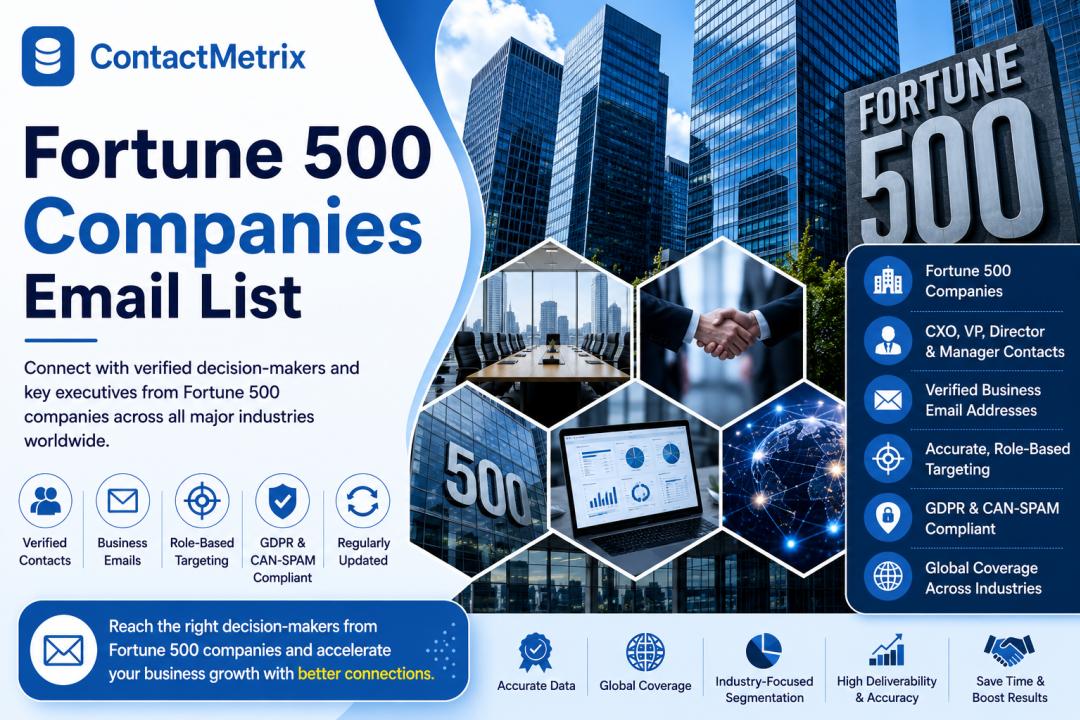
That's the problem a Fortune 500 companies email list is built to solve. It's a database focused specifically on the executives, VPs, and procurement leaders who actually drive buying decisions at these organizations. Providers like ContactMetrix build these lists so you're not guessing which of ten thousand employees to contact. You're going straight to the person whose job includes evaluating what you sell.
What's Actually in One of These Lists
A useful Fortune 500 contact list goes well beyond a name and a generic company email. A solid one includes 20 or more data fields, and each one helps you figure out who's worth reaching and how to approach them. Expect things like:
- Full name and job title
- Business email and direct phone number, plus company phone
- Company name, website, and LinkedIn URL
- Physical mailing address, down to city and postcode
- Fortune 500 rank, from 1 to 500
- Industry sector, such as technology, healthcare, finance, or energy
- Company size, including employee count and annual revenue
- Corporate headquarters location
- Technology stack or ERP and software platforms in use, where available
That last field matters more than people expect. Knowing what software or systems a company already runs tells you a lot about whether your product is a fit, or whether you'd be walking into a conversation about replacing an existing vendor.
Who Gets the Most Out of This Data
Not every business needs enterprise-level contacts, but if your ideal customer is a large public company, this kind of list can save months of prospecting. A few examples:
Enterprise software and SaaS providers can go straight to CIOs, IT directors, and procurement heads evaluating CRM, ERP, cybersecurity, or cloud infrastructure platforms, instead of hoping a demo request form gets noticed.
Management consulting firms can reach COOs and VPs of Strategy who are actively looking at digital transformation or operational improvement work, rather than cold-emailing a general contact page.
Professional services providers can connect with the legal, accounting, marketing, or HR buyers at Fortune 500 headquarters, filtered by the department that actually owns the budget.
Financial services and investment firms can target CFOs, treasurers, and corporate development executives directly, which matters a lot when the sales cycle depends on reaching someone with real authority.
Executive education and leadership training providers can reach CHROs and learning and development directors who are already investing in this kind of program.
Recruitment and executive search firms can access HR VPs and talent acquisition directors filling senior roles, instead of relying on job postings alone.
The database also breaks down by sector, covering technology, healthcare, financial services, energy, retail, manufacturing, transportation, and telecom, each with its own relevant titles. A CTO in telecom and a Plant Manager in manufacturing need very different pitches, and a well-built list should let you filter down to the exact role and industry instead of buying one massive, unsorted file.
Why Data Quality Matters More Than Data Quantity
It's easy to assume more contacts means more opportunity, but a list of 200,000 names is only as good as how current it is. Executives move roles constantly, especially at large companies where reorganizations happen every year or two. A contact list that hasn't been refreshed in a while will send you chasing people who left their role months ago, or worse, left the company entirely.
Before buying any Fortune 500 contact database, whether it's from ContactMetrix or another provider, it's worth asking a few questions:
- How often is the data verified and refreshed?
- Are the contacts opt-in and sourced from legitimate channels, like SEC filings, press releases, or professional networking platforms, rather than scraped data?
- What happens with a hard bounce? Some providers replace bad contacts at no extra cost, which is worth confirming before you commit.
- Can the list be filtered by Fortune rank, seniority level, or department, instead of just company name?
A provider that refreshes its data every month or so and backs it with a replacement policy is a much safer bet than a static list someone compiled once and never touched again.
Getting Started Without Wasting Budget
The smartest way to test any contact list is to request a sample first. A handful of real (even if partially masked) records will show you how the data is structured and whether it actually reaches the titles and industries you care about. If you're selling to healthcare procurement teams, you want to see VP of Supply Chain and Procurement Head in that sample, not a random mix of unrelated executives.
From there, most providers, ContactMetrix included, let you build a custom list around your ideal customer profile: Fortune rank range, industry sector, job title, seniority, and geography. That's a far better use of a sales budget than sending a generic pitch to a general company inbox and hoping it gets forwarded to the right desk.
Closing a deal with a Fortune 500 company takes time no matter what, but it starts with reaching someone who actually has the authority to say yes. A well-built, regularly updated contact list won't shorten the sales cycle by itself, but it does mean your outreach starts with the right person instead of getting lost somewhere in a massive organization.