
For many startup founders, building the product is the exciting part. New features, cleaner interfaces, faster performance, and customer requests all compete for attention. Development roadmaps grow longer, product backlogs become more ambitious, and every sprint promises to make the product even better.
Yet many startups encounter the same frustrating reality.
Despite shipping feature after feature, growth remains slow.
The problem often isn't the product.
It's that the business has invested heavily in building while investing very little in acquiring customers.
One of the most common mistakes early-stage startups make is assuming that product development and business growth naturally go hand in hand. In reality, they are two separate challenges that require equal attention.
A better product can improve retention, increase customer satisfaction, and strengthen referrals. But it cannot generate growth if potential customers never discover it in the first place.
Building Is Comfortable. Selling Is Uncomfortable.
Most founders naturally gravitate toward improving what they know best.
Technical founders build.
Designers refine user experiences.
Engineers optimise performance.
Product managers expand functionality.
Customer acquisition, on the other hand, often feels uncertain. It involves experimentation, messaging, advertising, positioning, content creation, and customer psychology—areas that many founders have never formally studied.
As a result, marketing often becomes something to tackle "after the next release."
Then after the next one.
And the one after that.
Months pass, dozens of features are launched, yet customer growth barely changes.
More Features Rarely Solve a Visibility Problem
When growth slows, the instinct is often to improve the product again.
"If we just add this one feature..."
"If we redesign the dashboard..."
"If onboarding becomes easier..."
Sometimes those improvements help existing users.
They rarely solve the underlying problem if the startup simply isn't attracting enough new people.
Imagine opening a beautiful café on a street nobody walks down.
Adding better furniture, expanding the menu, or repainting the walls won't dramatically increase sales if very few people know the café exists.
The same principle applies to digital products.
Customer acquisition and product development solve different problems.
One improves the experience.
The other creates opportunities for people to experience it.
Customer Acquisition Should Start Before Launch
Many startups think of marketing as something that begins once the product is complete.
The most successful startups often take the opposite approach.
They begin building an audience long before launch.
This allows founders to:
validate demand
understand customer language
test positioning
gather feedback
build anticipation
establish credibility
Instead of asking, "How do we find customers after launch?"
They ask, "How do we build relationships with future customers while we're still building?"
This approach dramatically reduces uncertainty because customer feedback influences product decisions from the very beginning.
Growth Is a System, Not a Campaign
One misconception among early-stage founders is that customer acquisition consists of isolated marketing activities.
Run a few ads.
Publish a few blog posts.
Post regularly on LinkedIn.
Growth rarely works that way.
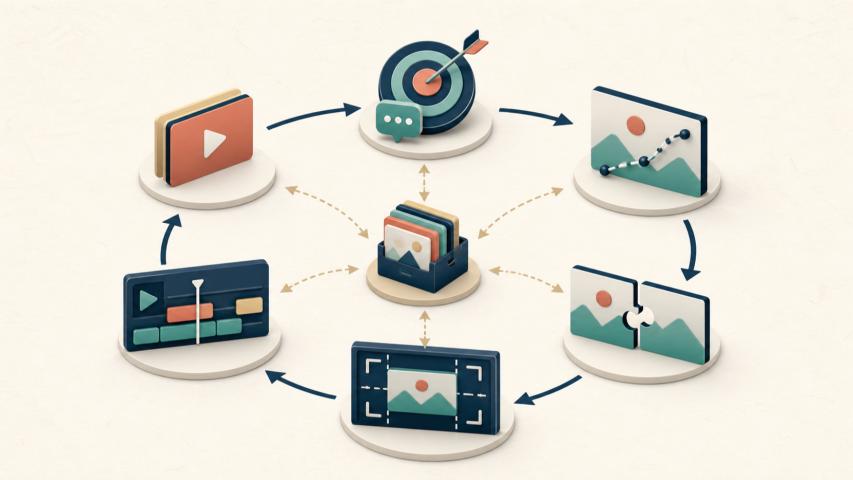
Instead, successful startups build systems.
These systems often include:
search engine visibility
educational content
paid advertising
email nurturing
partnerships
community building
referral programs
customer retention
Each channel supports the others.
Content improves organic visibility.
Paid advertising accelerates learning.
Email strengthens customer relationships.
Satisfied users generate referrals.
Over time, these activities create a repeatable growth engine rather than relying on occasional spikes in traffic.
Product-Market Fit Includes Distribution
Product-market fit receives enormous attention in startup circles.
But many founders overlook another equally important concept:
Distribution.
You may have built something people genuinely want.
Can you consistently reach those people?
Can you communicate why your solution matters?
Can you acquire customers at a sustainable cost?
If the answer is no, product-market fit alone isn't enough.
Distribution determines whether a great product becomes a successful business.
The strongest startups don't simply build products customers love.
They build reliable systems that introduce those products to new customers every day.
Every Feature Has an Opportunity Cost
Development resources are limited.
Every sprint spent building another feature is a sprint not spent improving customer acquisition.
That doesn't mean founders should stop improving their products.
It means they should ask better questions before prioritising new development.
For example:
Will this feature significantly improve customer retention?
Is this solving a widespread customer problem or a request from a small minority?
Would investing the same resources into customer acquisition generate greater business growth?
Sometimes the biggest opportunity isn't another feature.
It's helping more people discover the features already available.
Founders Don't Need to Become Marketing Experts
One reason customer acquisition receives less attention is that many founders feel overwhelmed by marketing.
There are countless platforms, advertising channels, AI tools, and opinions about what works.
The good news is that founders don't need to become full-time marketers.
They simply need to understand the fundamentals.
Knowing how customer acquisition works helps founders:
make better strategic decisions
hire stronger marketing talent
evaluate agencies more effectively
allocate budgets with confidence
recognise opportunities earlier
Marketing literacy has become an essential founder skill—not because founders should do everything themselves, but because they need to understand how growth happens.
Learning Growth Before Spending Growth Budgets
Startups often spend thousands on advertising before fully understanding customer acquisition.
This can lead to expensive experimentation with little return.
Investing time in learning the principles behind digital marketing usually produces much better long-term results than immediately increasing advertising budgets.
Many founders now use structured learning platforms like Define Digital Academy to understand customer acquisition, digital advertising, and growth strategy before committing significant resources to marketing.
Having a solid understanding of marketing fundamentals allows founders to make smarter decisions, avoid common mistakes, and build sustainable growth systems rather than relying on guesswork.
The Best Startups Balance Product and Growth
Some founders become obsessed with growth before they've built enough value.
Others become obsessed with product while neglecting customer acquisition.
Neither approach works particularly well.
The most successful startups treat product development and growth as parallel priorities.
Product teams ask:
"How do we build something customers love?"
Growth teams ask:
"How do we help more customers discover it?"
Together, those questions create sustainable businesses.