The global real estate sector has traditionally been characterized by high capital requirements, lengthy transaction cycles, and limited liquidity. Tokenization is changing this landscape by converting ownership rights in physical properties into blockchain-based digital tokens that can be securely transferred, managed, and tracked. While the concept has gained considerable attention, the effectiveness of any tokenized real estate ecosystem depends largely on the capabilities of the platform supporting it.
A real estate tokenization platform is more than a marketplace for digital assets. It combines blockchain infrastructure, compliance mechanisms, investor management, asset administration, and transaction automation into a unified environment. Understanding the essential features of these platforms helps investors, property owners, and technology professionals evaluate how tokenized property investments operate in real-world scenarios.
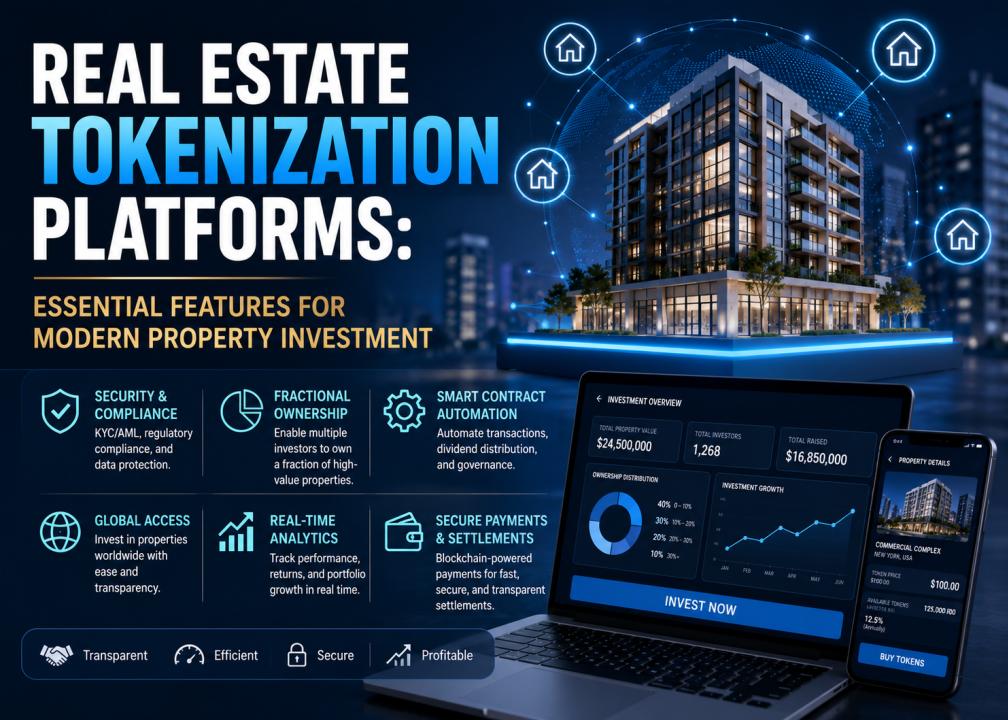
Secure Asset Tokenization Framework
The foundation of every real estate tokenization platform is its ability to transform property ownership into legally recognized digital representations. This process involves creating blockchain-based tokens that correspond to ownership interests while maintaining a transparent record of transactions.
An effective platform begins with comprehensive asset verification before token issuance. Property documentation, ownership records, valuation reports, and legal approvals must be validated before digital tokens are created. This structured approach minimizes inconsistencies between physical assets and their digital counterparts.
The tokenization engine should also support different ownership structures depending on the investment model. Some assets represent full ownership, while others distribute fractional interests among multiple investors. Smart contracts automate token issuance, ownership transfers, dividend distributions, and other predefined activities, reducing manual intervention throughout the investment lifecycle.
Organizations researching real estate tokenization development services often focus on understanding how these technical frameworks integrate blockchain architecture with property management processes rather than viewing tokenization solely as a fundraising mechanism.
Integrated Compliance and Investor Verification
Real estate investments operate within highly regulated financial and property markets. Consequently, compliance is not an optional feature but a core component of every tokenization platform.
Key compliance capabilities typically include:
- Digital Know Your Customer (KYC) verification for investor onboarding.
- Anti-Money Laundering (AML) screening before investment approval.
- Jurisdiction-based investment restrictions for regulatory alignment.
- Secure digital document management for legal records.
- Automated audit trails that simplify regulatory reporting.
These capabilities reduce administrative complexity while helping maintain transparency throughout the investment process. Since regulations vary across countries, configurable compliance workflows allow platforms to adapt without requiring extensive redevelopment.
Equally important is identity management. Strong authentication methods, encrypted user credentials, and permission-based access ensure that only verified participants can buy, sell, or manage tokenized property assets.
Efficient Secondary Market and Liquidity Management
One of the longstanding challenges in traditional real estate investment has been limited liquidity. Property transactions often require months of negotiation, legal verification, financing approval, and settlement. Tokenization platforms attempt to improve this process by enabling regulated secondary trading environments.
Instead of waiting for an entire property to be sold, investors may transfer eligible ownership tokens according to platform rules and applicable regulations. While liquidity still depends on market demand and legal frameworks, digital trading infrastructure generally improves accessibility compared to conventional property transfers.
Modern platforms also maintain transparent ownership records through distributed ledger technology. Every transfer is permanently recorded, reducing disputes regarding ownership history and improving confidence among market participants.
Settlement efficiency is another important advantage. Blockchain-enabled transfers can significantly reduce reconciliation delays because ownership updates occur automatically after predefined smart contract conditions are satisfied. This automation reduces operational overhead while improving transaction accuracy.
Investor Dashboard and Asset Management Tools
Beyond token issuance, successful platforms provide comprehensive management capabilities that simplify both investor participation and administrative operations.
Common platform functionalities include:
- Real-time portfolio monitoring.
- Digital document repositories for contracts and ownership certificates.
- Automated dividend or rental income distribution tracking.
- Performance analytics for individual property assets.
- Notification systems for governance decisions or corporate actions.
These tools improve transparency by allowing investors to monitor portfolio performance without relying solely on periodic reports. Historical transaction records, investment summaries, and financial distributions remain accessible through centralized dashboards backed by blockchain verification.
From the administrator's perspective, integrated management systems streamline cap table administration, investor communications, compliance documentation, and property updates. This centralized operational model reduces repetitive manual tasks while improving reporting consistency.
Scalability, Security, and Future Interoperability
As digital asset markets continue to mature, scalability has become a defining characteristic of modern tokenization platforms. A platform designed for a small pilot project should also accommodate future expansion across multiple property classes, jurisdictions, and investor groups.
Cloud-native infrastructure, modular architecture, and API-based integrations enable platforms to connect with payment gateways, banking systems, valuation providers, digital identity services, and property management software. These integrations reduce operational silos while improving workflow efficiency.
Cybersecurity remains equally critical. Since tokenized assets represent real financial value, platforms require multiple protective layers, including encryption, multi-factor authentication, secure key management, penetration testing, and continuous security monitoring. Smart contract auditing also plays an essential role in identifying vulnerabilities before deployment.
Interoperability is another emerging consideration. As blockchain ecosystems evolve, platforms capable of supporting multiple blockchain networks or cross-chain asset movement may provide greater flexibility for institutional adoption. Rather than locking digital assets into isolated environments, interoperable architectures encourage broader participation across different financial ecosystems.
Ultimately, the long-term success of real estate tokenization platforms depends on balancing innovation with governance. Advanced blockchain functionality alone cannot replace legal compliance, transparent asset management, or investor protection. Instead, the most capable platforms integrate secure infrastructure, regulatory controls, automation, and operational transparency into a cohesive digital investment environment. As property markets continue exploring digital transformation, these essential platform features will play a central role in improving efficiency, expanding accessibility, and supporting the responsible evolution of modern real estate investment.