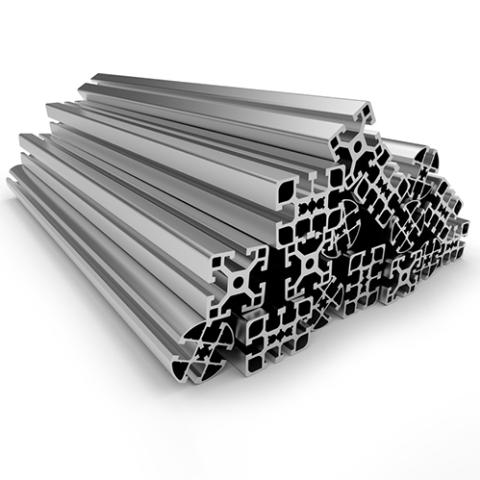
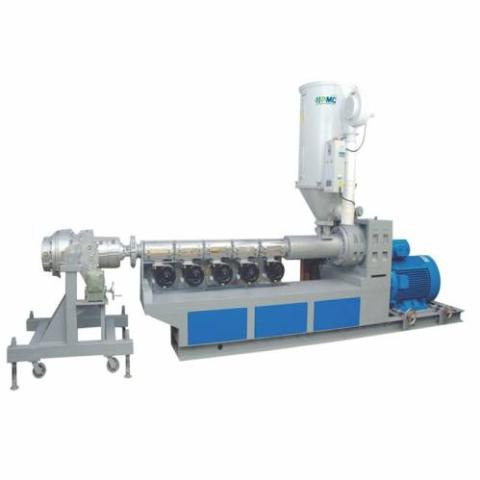
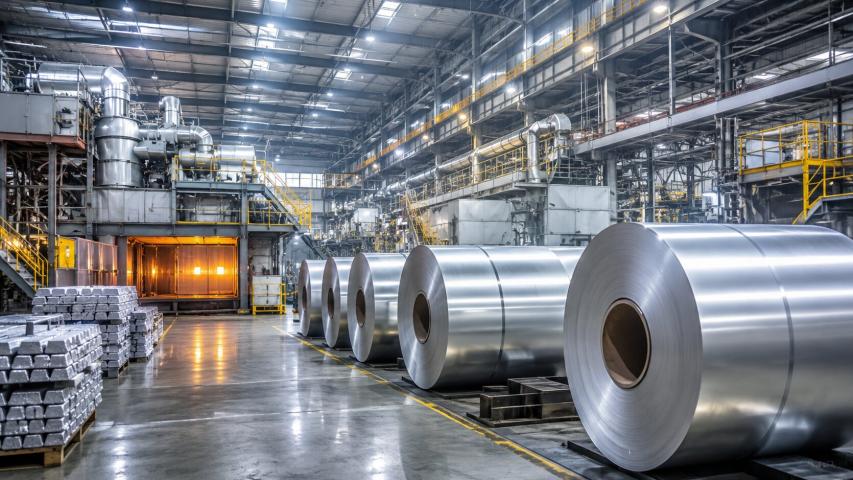
6061 aluminum extrusion is a practical choice for structural profiles that require strength, low weight, corrosion resistance, weldability, and secondary machining. However, choosing the alloy alone is not enough. Engineers must also consider temper, profile geometry, load requirements, machining tolerances, joining methods, surface finishing, and inspection standards.
This guide explains the key considerations when developing 6061 aluminum extrusion components for industrial equipment, structural brackets, machine frames, transport systems, fixtures, and other applications.
Why Is 6061 Aluminum Used for Structural Extrusions?
The heat-treatable 6061 aluminum alloy belongs to the 6xxx series and contains magnesium and silicon as its primary alloying elements. It provides a useful balance of strength, corrosion resistance, toughness, machinability, and weldability.
These characteristics make it suitable for applications where an extruded profile must carry loads and later receive drilling, threading, milling, cutting, or other fabrication processes.
6061 is particularly useful when engineers need a constant structural cross-section combined with localized precision features.
Which 6061 Aluminum Properties Matter?
The most important 6061 aluminum properties should always be considered in relation to the final application.
| Property | Engineering Benefit |
|---|---|
| Strength-to-weight ratio | Supports lightweight structural designs |
| Machinability | Allows holes, threads, slots, and precision faces |
| Weldability | Supports fabricated frames and assemblies |
| Corrosion resistance | Suitable for many outdoor and industrial environments |
| Toughness | Helps components withstand service and handling loads |
| Heat-treatability | Allows performance to be adjusted through temper selection |
Published material values should match the correct alloy, temper, thickness, and product form. Load-bearing designs should also account for stiffness, safety factors, temperature, joining methods, and environmental conditions.
6061-T6 vs 6061-T6511
Temper selection can influence strength, residual stress, straightness, and machining performance.
6061-T6 aluminum extrusion is solution heat-treated and artificially aged. 6061-T6511 aluminum receives stress relief through stretching and may subsequently be straightened.
| Temper | Typical Advantage |
| 6061-T6 | General structural strength |
| 6061-T6511 | Improved dimensional stability during machining |
| 6061-T4 | Better formability before further aging |
T6511 may be useful when a long extrusion will receive substantial or uneven machining. T6 can be appropriate where strength is the primary concern. Engineers should specify the complete temper designation rather than simply writing “6061” on a production drawing.
How Does Profile Design Affect Performance?
A successful structural aluminum extrusion begins with the expected load path. Engineers should determine where tension, compression, bending, torsion, vibration, and impact loads enter and leave the component.
Material should be positioned where it provides the greatest structural benefit. Increasing section depth or placing ribs away from the neutral axis can improve bending stiffness without unnecessarily increasing wall thickness.
Closed or semi-closed cavities can improve torsional rigidity, while webs can transfer loads between structural faces.
The profile must also remain practical to extrude. Extremely thin walls, deep channels, narrow openings, abrupt transitions, and uneven material distribution can increase die complexity and affect dimensional consistency.
Choosing the Manufacturing Process
Manufacturing requirements should be considered before finalizing the profile.
| Manufacturing Route | Suitable For | Limitation |
| Standard extrusion | Simple, available profiles | Limited customization |
| Custom extrusion + CNC | Repeated custom components | Requires tooling |
| CNC from billet or plate | Prototypes and changing designs | More material waste |
For early prototypes, machining from billet may reduce tooling commitment. Once the profile is finalized and production quantities increase, custom extrusion can reduce material waste and machining time.
A hybrid process is often effective: extrusion creates the near-net structural shape while CNC machining produces the critical functional features.
A supplier offering custom 6061 aluminum extrusion manufacturing services can coordinate profile design, tooling, temper selection, machining allowances, finishing, and inspection.
CNC Machining 6061 Extrusions
CNC machining 6061 aluminum allows manufacturers to add features that cannot be produced through the constant extrusion profile.
Common secondary operations include:
- Drilling and cross-holes
- Threads and counterbores
- Slots and pockets
- Precision end faces
- Bearing seats
- Mounting surfaces
- Connector openings
Functional datums should be selected carefully. A stable mounting surface or machined reference is usually preferable to a flexible or uncontrolled extrusion wall.
Designers should also distinguish 6061 aluminum extrusion tolerances from CNC-controlled dimensions. This prevents extruded surfaces from being treated as precision-machined features.
Long and thin profiles can move during clamping or material removal. Proper fixturing, balanced machining, and controlled finishing operations can help reduce distortion.
Using precision CNC machining for 6061 aluminum extrusions allows manufacturers to create localized precision features after extrusion.
Welding 6061 Extrusions
The weldability of 6061 makes it useful for structural frames, brackets, supports, and fabricated assemblies.
However, welding 6061 aluminum extrusion changes the local thermal condition of the material. The heat-affected zone may have different mechanical properties from the original heat-treated extrusion.
Joint design, heat input, filler selection, welding sequence, and restraint can affect distortion and final performance.
Critical mounting faces may require machining after welding. Load-bearing assemblies should be evaluated according to the applicable engineering and welding requirements.
Surface Finishing Options
6061 aluminum can receive several surface treatments depending on the application's requirements.
| Finish | Common Purpose |
| Anodizing | Corrosion protection and appearance |
| Chemical conversion coating | Protection and paint preparation |
| Powder coating | Color and environmental protection |
| Bead blasting | Surface preparation and matte appearance |
| Machined finish | Functional mounting and contact surfaces |
Anodized 6061 aluminum can provide corrosion protection and an attractive finish. However, when premium decorative consistency is the primary objective, 6063 may sometimes be preferred.
6061 vs 6063 Aluminum
The 6061 vs 6063 aluminum decision should be based on the application's requirements rather than simply choosing the most common alloy.
| Factor | 6061 | 6063 |
| Structural performance | Generally higher | Moderate |
| Machining | Excellent | Good |
| Complex extrusion | More demanding | Generally easier |
| Welding | Commonly used | Application dependent |
| Decorative anodizing | Suitable | Often preferred |
| Typical focus | Structural applications | Architectural and decorative profiles |
An engineering comparison of 6061 and 6063 aluminum strength can help engineers select the appropriate alloy based on strength, profile complexity, machining, finishing, and operating conditions.
Quality Inspection
Quality planning should begin before production. Drawings and purchase specifications should clearly define alloy, temper, dimensions, tolerances, finish, and inspection requirements.
| Requirement | Inspection Method |
| Alloy and temper | Material certificate |
| Profile dimensions | Calipers, gauges, optical measurement |
| Straightness | Surface plate or defined measurement setup |
| Machined dimensions | CMM or precision gauges |
| Surface condition | Visual inspection |
| Coating thickness | Coating thickness gauge |
| Assembly fit | Functional inspection |
Critical dimensions should receive tighter control than general profile dimensions. Prototype inspection can also help establish appropriate datums and measurement procedures before repeat production.
Common Applications
Typical 6061 aluminum applications include:
- Industrial machine frames
- Automation equipment
- Robotic components
- Structural brackets
- Mounting rails
- Transport equipment
- Marine support components
- Jigs and fixtures
- Equipment bases
- Welded frames
- Modular structures
The application itself should not determine the alloy. Engineers should still evaluate loads, fatigue, corrosion, joining, machining, finishing, and dimensional requirements.
Sourcing 6061 Aluminum Extrusions
When requesting a quotation, buyers should provide a 2D drawing, 3D model, alloy and temper, quantity, critical tolerances, surface finish, inspection requirements, and information about mating components.
A complete manufacturing review can identify potential problems with profile geometry, machining access, tolerances, tooling, finishing, and inspection before production begins.
Conclusion
6061 aluminum extrusion offers an effective combination of structural strength, low weight, machinability, corrosion resistance, and weldability. Its performance depends not only on the alloy but also on temper, profile geometry, manufacturing process, machining strategy, joining method, surface finish, and inspection.
For best results, engineers should evaluate these factors together from the prototype stage through final production. A well-planned extrusion and machining process can provide reliable, accurate, and cost-effective components for a wide range of industrial applications.
Frequently Asked Questions
Is 6061 Aluminum Good for Extrusion?
Yes. 6061 aluminum extrusion is widely used for structural profiles requiring strength, machinability, corrosion resistance, and fabrication capability. It is generally more difficult to extrude than 6063, so profile geometry should be reviewed carefully.
Is 6061-T6 Stronger Than 6063-T6?
Generally, yes. 6061-T6 typically offers higher mechanical strength than 6063-T6, making it suitable for many structural applications. However, engineers should compare material data for the exact product form and thickness.
Can 6061 Aluminum Be CNC Machined?
Yes. CNC machining 6061 aluminum is commonly used for drilling, threading, milling, pockets, slots, bearing seats, and precision mounting surfaces.
Can 6061 Extrusions Be Welded?
Yes. 6061 is commonly welded for fabricated structures. However, welding can affect local mechanical properties and create distortion, so the complete assembly should be evaluated.
Can 6061 Aluminum Be Anodized?
Yes. Anodized 6061 aluminum can provide corrosion protection and an improved surface appearance. The final result depends on alloy condition, surface preparation, and the anodizing process.
What Information Is Needed for a Prototype?
A manufacturer should receive the 2D drawing, 3D model, alloy, temper, quantity, critical tolerances, surface finish, inspection requirements, and relevant assembly information. This allows the production team to assess extrusion, machining, finishing, and inspection requirements before manufacturing begins.