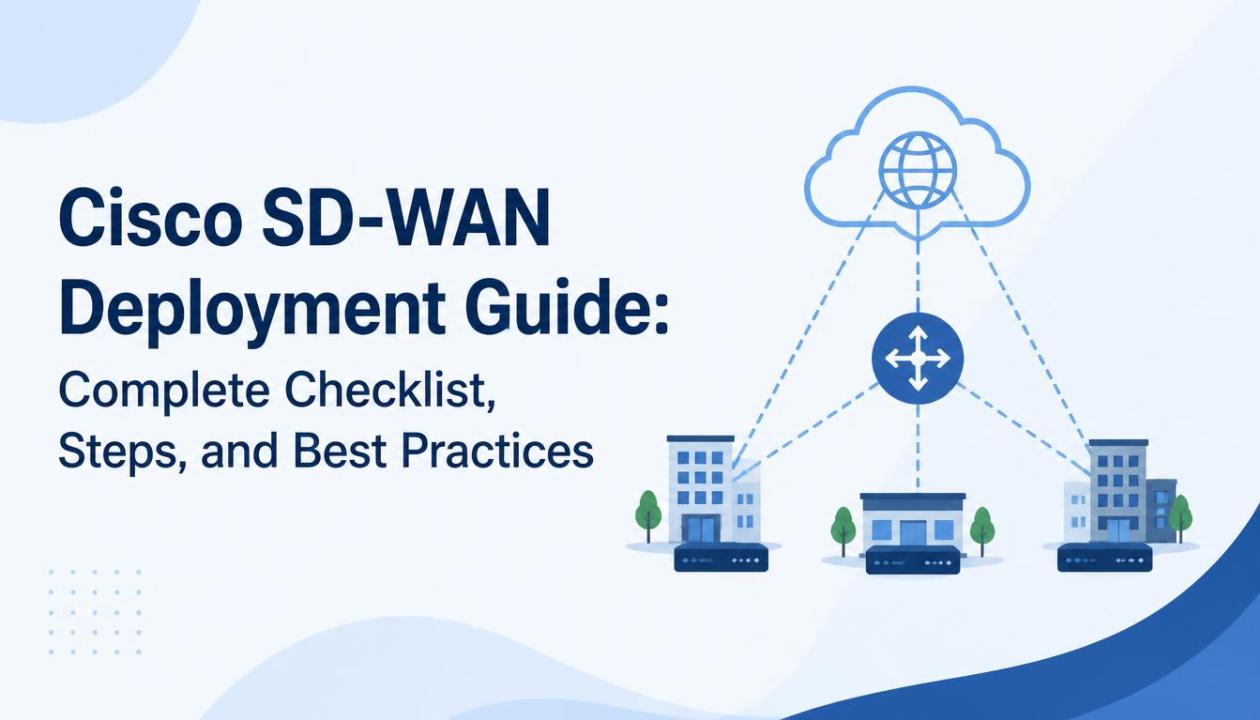
Cisco SD-WAN helps organizations improve network performance, simplify management, and securely connect branch offices, data centers, and cloud environments. As businesses adopt cloud applications and remote work, SD-WAN offers a more flexible and scalable alternative to traditional WANs.
Professionals can strengthen their deployment knowledge through SDWAN Training, which covers architecture, implementation, and best practices.
What Is Cisco SD-WAN Deployment?
Cisco SD-WAN deployment is the process of implementing a software-defined network that connects enterprise locations using centralized management, intelligent routing, and secure connectivity.
Key deployment stages include:
- Network assessment and planning
- Configuring controllers and WAN Edge devices
- Establishing secure connections
- Applying routing and security policies
- Testing and monitoring performance
Benefits of Cisco SD-WAN
- Improved Performance: Optimizes application traffic based on network conditions.
- Centralized Management: Simplifies configuration and monitoring through Cisco vManage.
- Scalability: Makes it easier to add new branches and locations.
- Enhanced Security: Supports encryption, segmentation, and policy-based access control.
Deployment Prerequisites
Before deployment, organizations should:
- Assess the existing network and application requirements.
- Define business goals, such as improving performance or reducing WAN costs.
-
Prepare Cisco SD-WAN components:
- Cisco vManage – Centralized management
- Cisco vSmart – Policy and control plane management
- Cisco vBond – Device authentication and orchestration
- WAN Edge Devices – Secure branch connectivity
Cisco SD-WAN Deployment Process
- Plan the Architecture – Design topology, security, and cloud integration.
- Configure Controllers – Deploy vManage, vSmart, and vBond.
- Install WAN Edge Devices – Configure interfaces, routing, and authentication.
- Establish Secure Connectivity – Create encrypted tunnels and apply security policies.
- Configure Routing Policies – Enable application-aware routing, QoS, and failover.
- Test the Deployment – Verify connectivity, performance, and security before production.
Best Practices
- Start with a pilot deployment.
- Prioritize critical business applications.
- Maintain strong security policies.
- Continuously monitor latency, bandwidth, and application performance.
Common Challenges
- Migrating from traditional WAN infrastructure
- Configuration and policy errors
- Limited SD-WAN expertise within IT teams
FAQs
How long does deployment take?
It depends on the network size and implementation complexity.
Can small businesses use Cisco SD-WAN?
Yes, it supports organizations of all sizes with multiple locations.
Can Cisco SD-WAN replace MPLS?
It can reduce reliance on MPLS by using broadband and internet-based connectivity.
What skills are needed?
Knowledge of networking, routing, security, and SD-WAN technologies is recommended.
Conclusion
Cisco SD-WAN enables organizations to build secure, scalable, and high-performing networks with centralized management and intelligent traffic routing. A structured deployment approach helps minimize complexity and maximize performance. Professionals seeking practical expertise can benefit from SDWAN Certification to develop the skills required to deploy and manage Cisco SD-WAN solutions effectively.