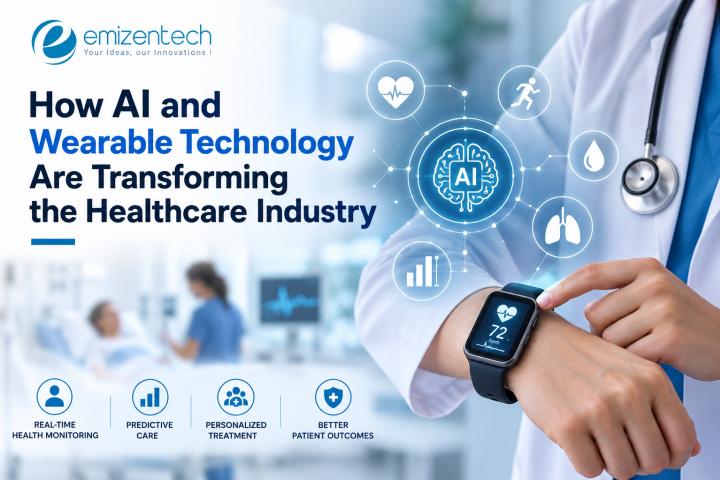

Artificial intelligence is rapidly reshaping healthcare across the United States. Hospitals, clinics, telehealth providers, insurance companies, and healthcare startups are adopting AI to improve patient outcomes, reduce administrative burdens, and enhance clinical decision-making. From intelligent diagnostics to automated patient support, AI has become one of the most impactful technologies in modern medicine.
For organizations exploring software development services in USA, investing in custom AI healthcare solutions is no longer just about innovation, it's about delivering faster, safer, and more personalized care. Unlike off-the-shelf healthcare software, custom AI applications are built around an organization's unique workflows, compliance requirements, and patient care objectives.
According to McKinsey & Company, AI is expected to improve operational efficiency, reduce clinician burnout, and support better patient outcomes through intelligent automation and predictive analytics. As healthcare organizations continue modernizing their digital infrastructure, demand for software development solutions in USA is increasing, particularly for AI-powered platforms that integrate seamlessly with existing healthcare systems.
Why Healthcare Needs Custom AI Software
Healthcare organizations generate enormous volumes of data every day.
This includes:
- Electronic Health Records (EHRs)
- Medical imaging
- Laboratory reports
- Prescriptions
- Insurance claims
- Appointment schedules
- Wearable device data
Traditional software often struggles to process and analyze this information efficiently.
Custom AI software helps healthcare providers transform this data into actionable insights while automating repetitive tasks.
Key Benefits of AI in Healthcare
Faster Clinical Decision Making
AI systems analyze patient information in seconds, helping physicians identify potential risks earlier.
Rather than replacing medical professionals, AI acts as a decision-support tool by highlighting relevant patterns that may otherwise be overlooked.
Reduced Administrative Work
Administrative tasks consume a significant portion of healthcare professionals' time.
AI automates processes such as:
- Appointment scheduling
- Medical documentation
- Billing assistance
- Insurance verification
- Patient follow-ups
This allows healthcare staff to spend more time focusing on patient care.
Improved Patient Experience
Patients increasingly expect healthcare to be as convenient as other digital services.
Custom AI platforms provide:
- Faster appointment booking
- Instant answers to common questions
- Medication reminders
- Personalized health recommendations
- Continuous communication
These improvements increase patient satisfaction while reducing call center workloads.
AI Use Cases in Healthcare
Intelligent Medical Imaging
AI assists radiologists by analyzing:
- X-rays
- CT scans
- MRI images
- Mammograms
It helps identify abnormalities faster while supporting more accurate diagnoses.
Predictive Healthcare Analytics
Machine learning models analyze historical patient data to predict:
- Disease progression
- Hospital readmission risks
- Chronic condition deterioration
- Treatment effectiveness
Predictive insights enable earlier interventions and better patient outcomes.
AI Chatbots for Patient Support
Healthcare providers increasingly invest in AI chatbot development to improve patient communication.
AI-powered assistants help patients:
- Schedule appointments
- Receive medication reminders
- Check symptoms
- Access lab results
- Find nearby healthcare facilities
- Answer insurance-related questions
Unlike traditional customer support, AI chatbots remain available 24/7.
Partnering with an experienced AI chatbot development company allows healthcare organizations to build secure conversational assistants that integrate directly with patient portals and mobile applications.
Virtual Health Assistants
AI-powered virtual assistants support patients beyond the clinic.
They can:
- Monitor chronic conditions
- Encourage medication adherence
- Track daily symptoms
- Recommend healthy life>
This continuous engagement improves long-term patient care.
Automated Medical Documentation
Physicians spend considerable time documenting patient visits.
AI-powered transcription and documentation systems automatically summarize consultations and generate structured medical records, reducing paperwork and clinician burnout.
Essential Features of Custom AI Healthcare Software
Successful healthcare platforms often include:
Electronic Health Record Integration
AI applications should integrate securely with existing EHR systems to provide clinicians with unified patient information.
Intelligent Appointment Management
AI optimizes scheduling by reducing missed appointments and improving resource allocation.
Secure Patient Portal
Patients should be able to:
- View medical records
- Download reports
- Communicate with providers
- Manage appointments
- Receive personalized health insights
AI Chatbot Integration
Modern healthcare platforms increasingly incorporate AI chatbot development services to deliver instant patient assistance while reducing operational costs.
Predictive Analytics Dashboard
Healthcare administrators gain valuable insights into:
- Patient trends
- Resource utilization
- Staffing requirements
- Clinical outcomes
- Operational performance
Security and Compliance
Healthcare software must prioritize security.
Custom AI solutions should include:
- End-to-end encryption
- Multi-factor authentication
- Secure APIs
- Role-based permissions
- Audit trails
- Continuous monitoring
In the United States, compliance with HIPAA remains essential when handling protected health information.
Building compliance into the software architecture from the beginning minimizes future legal and operational risks.
Why Custom AI Software Outperforms Generic Solutions
Off-the-shelf healthcare platforms often force organizations to adapt their workflows.
Custom solutions provide greater flexibility by supporting:
- Organization-specific workflows
- Specialty medical practices
- Existing technology infrastructure
- Custom reporting requirements
- Future scalability
Businesses seeking a bespoke software development service in USA often achieve stronger long-term ROI because the software evolves alongside organizational growth.
Choosing the Right Development Partner
Selecting the right technology partner is critical.
Look for experience in:
- Healthcare software
- AI and machine learning
- HIPAA compliance
- Cloud architecture
- Healthcare APIs
- Cybersecurity
An experienced development partner understands both medical workflows and regulatory requirements while delivering scalable AI-powered applications.
Final Thoughts
Artificial intelligence is transforming healthcare by improving diagnostics, streamlining operations, enhancing patient engagement, and supporting clinical decision-making. As healthcare organizations across the United States continue embracing digital transformation, custom AI software provides a practical path toward more efficient and personalized care.
Businesses investing in software development services in USA should focus on solutions tailored to their unique operational needs rather than relying solely on generic healthcare platforms. Combining intelligent automation, secure infrastructure, and user-centered design enables providers to improve both patient outcomes and operational performance in an increasingly data-driven healthcare landscape.
Frequently Asked Questions
Q1. What is custom AI healthcare software?
Custom AI healthcare software is built specifically for a healthcare organization's workflows and uses artificial intelligence to automate tasks, analyze data, and improve patient care.
Q2. How do AI chatbots help healthcare providers?
AI chatbots assist with appointment scheduling, patient support, symptom guidance, medication reminders, and answering common healthcare questions while reducing administrative workload.
Q3. Is AI healthcare software HIPAA compliant?
Yes, provided it is designed with HIPAA compliance requirements, secure data encryption, access controls, and appropriate privacy safeguards.
Q4. Why choose custom software instead of ready-made healthcare platforms?
Custom software offers greater flexibility, better integration with existing systems, improved scalability, and workflows tailored to specific healthcare organizations.
Q5. Which healthcare organizations benefit most from AI software?
Hospitals, clinics, telemedicine providers, diagnostic centers, insurance companies, specialty practices, and healthcare startups all benefit from AI-powered healthcare solutions.