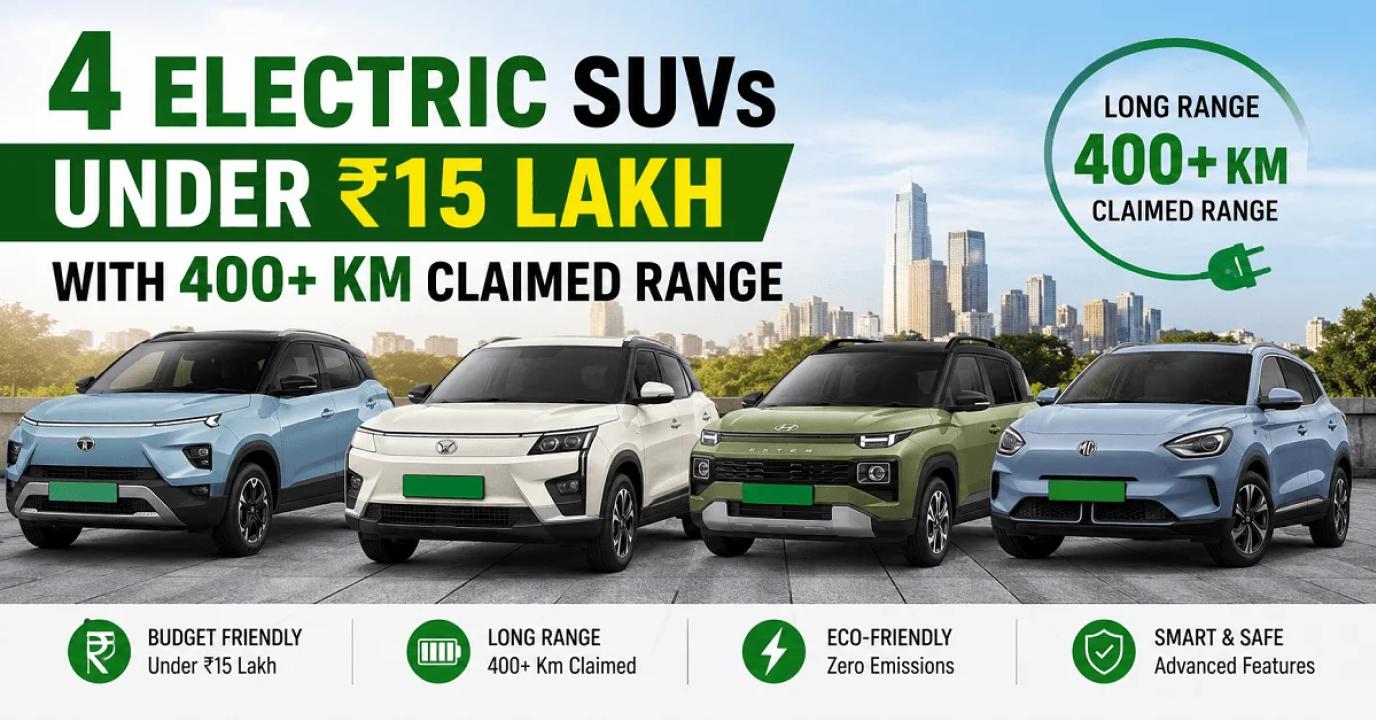
Are you looking for a budget-friendly electric SUV that can handle family trips without constant range worries? In 2026, you can find feature-packed electric SUV under ₹15 lakh with a claimed range of more than 400 km. Here is a closer look at the top options, their key features, performance, and real-world range expectations.
What Are the Best Electric SUVs Under ₹15 Lakh Right Now?
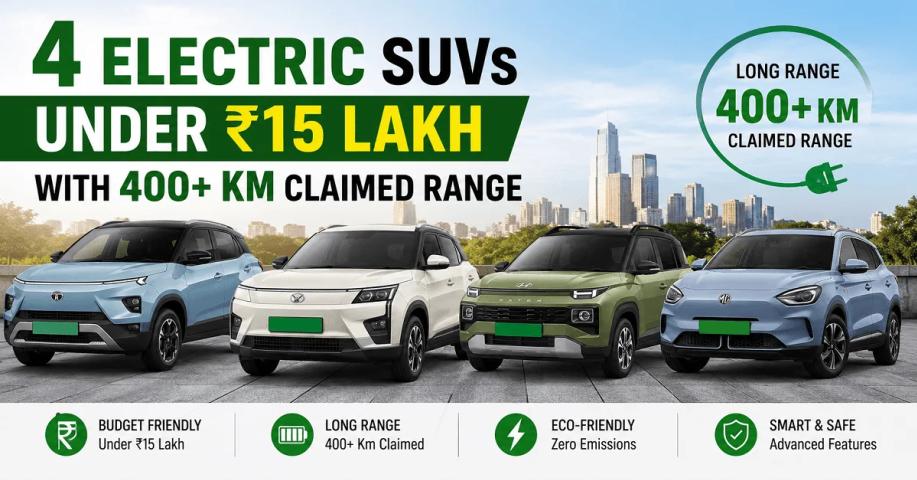
As of August 2026, four electric SUV stand out with a claimed range above 400 km while staying within the ₹15 lakh ex-showroom price range: the Tata Punch EV, Mahindra XUV 3XO EV, Tata Nexon EV, and Kia Syros EV. Each model takes a different approach. Tata focuses on battery efficiency and warranty coverage, Mahindra offers strong performance and cabin space, while Kia brings modern technology, power, and a larger battery option. For buyers following Neu Auto News, the choices are becoming more interesting.
Top Electric SUVs Under ₹15 Lakh With Balanced Performance
1. Tata Nexon EV (45 kWh Variant)
The Tata Nexon EV continues to be a popular choice among electric car buyers in India. The Creative 45 variant uses a 45 kWh battery and offers an ARAI-claimed range of 489 km, which is the highest figure among these options. Real-world range can be around 330 km, depending on driving conditions. It produces 143 bhp and 215 Nm of torque, giving it enough performance for everyday driving and highway overtakes.
Features include a 12.3-inch touchscreen, digital driver display, Vehicle-to-Load (V2L), Vehicle-to-Vehicle charging support, six airbags, ESP, and Level 2 ADAS on higher variants. The 350-litre boot is practical for family use. With its established presence and wide service network, the Nexon EV is a well-rounded choice for buyers who want a familiar electric SUV.
2. Mahindra XUV 3XO EV
Mahindra has taken the popular XUV 3XO and given it an electric powertrain. The XUV 3XO EV uses a 39.4 kWh battery with a front-mounted motor producing 150 PS and 310 Nm of torque. This strong torque output makes it an attractive option for buyers who enjoy quick acceleration and confident overtaking.
Mahindra claims an ARAI range of up to 456 km, while real-world range can vary based on traffic, speed, weather, and driving >
3. Tata Punch EV (Long Range 40 kWh)
The Tata Punch EV offers a compact SUV design with an electric powertrain and low running costs. The 2026 facelift makes the package even more appealing. Buyers can choose between 30 kWh and 40 kWh battery options. The larger 40 kWh version has an ARAI-claimed range of 468 km, while real-world range can be around 335 to 355 km.
The 40 kWh version produces 95 kW of power and 154 Nm of torque. It can accelerate from 0 to 100 km/h in around nine seconds. Equipment includes a 10.25-inch touchscreen, wireless Apple CarPlay and Android Auto, six airbags, and a 360-degree camera on higher variants. A battery warranty is also available for the first owner. For city-focused buyers looking for a practical and affordable electric SUV, the Punch EV is worth considering.
4. Kia Syros EV
The Kia Syros EV is one of the newest electric SUVs in this segment. Launched in July 2026, it brings a strong combination of range, performance, and technology. The base 42 kWh battery offers an ARAI-claimed range of 443 km, while the larger 51.4 kWh battery can deliver up to 526 km on the claimed cycle.
The entry version gets a 171 PS motor with 255 Nm of torque. It also offers a triple-screen dashboard, Level 2 ADAS with 16 safety functions, a 360-degree camera, and six airbags. Kia also provides a high-voltage battery warranty and access to its charging network. DC fast charging can take around 39 minutes from 10 to 80 percent. If you want modern features and a long claimed range, the Syros EV should be on your test-drive list.
Final Thoughts
Buying an electric SUV under ₹15 lakh no longer means accepting a short claimed range. The Tata Punch EV, Mahindra XUV 3XO EV, Tata Nexon EV, and Kia Syros EV each offer something different. Choose the Punch EV if affordability and city driving are your priorities. Pick the XUV 3XO EV for strong torque and cabin space. The Nexon EV suits buyers who want an established model and broad service support. The Syros EV is worth considering if modern technology and long claimed range matter most. Before making a decision, take your preferred model for a real-world test drive because certified range figures do not always match everyday driving conditions. Follow Neu Auto for more Car News, EV updates, comparisons, and buying guides.
Frequently Asked Questions
Which EV car gives 400 km range?
Several EVs in India now offer a certified range above 400 km. The Tata Punch EV 40 claims 468 km, the Tata Nexon EV 45 claims 489 km, and the Kia Syros EV offers up to 526 km. These are certified figures, not guaranteed real-world ranges. Actual range depends on traffic, speed, weather, air-conditioning, road conditions, and driving habits.
Which is the cheapest EV SUV in India?
Among the models covered here, the Tata Punch EV has the lowest standard starting price at around ₹9.69 lakh ex-showroom. The 40 kWh version starts at around ₹10.89 lakh. Tata also offers battery rental options in some markets, which can reduce the initial vehicle price. However, buyers should consider the ongoing battery cost when comparing the total ownership expense.
Which SUV to buy under 15 lakhs?
For an EV buyer, the Tata Punch EV 40 is a strong option for city driving and a lower purchase price. The Mahindra XUV 3XO EV may suit buyers who want stronger performance and more cabin space. The Tata Nexon EV is another practical family option. Always check the latest variant prices in your city because ex-showroom and on-road costs can vary.
Which is the most affordable EV SUV?
The Tata Punch EV is among the most affordable electric SUVs in this group. Its standard range starts at around ₹9.69 lakh ex-showroom, while the 40 kWh versions start at around ₹10.89 lakh. The 40 kWh model is particularly appealing because it combines a relatively accessible price with a claimed range of 468 km.
Is 400 km real range possible from an EV under ₹15 lakh?
A consistent 400 km real-world range is more difficult to achieve than a 400+ km certified figure. Real-world figures can be lower because of traffic, speed, temperature, air-conditioning, road conditions, and driving >
Is an electric SUV cheaper to run than a petrol SUV?
An electric SUV can cost less to run, especially if you charge mainly at home and drive regularly. Electricity can cost less per kilometre than petrol, while EVs also have fewer traditional powertrain components requiring routine maintenance. However, your actual savings depend on electricity rates, charging costs, annual driving distance, insurance, and purchase price. Compare total ownership costs over at least three years before buying.