Operating electric vehicles and industrial machinery in sub-zero climates presents a real engineering hurdle, and it's rarely the motor or the drivetrain that gives out first. Conventional lithium batteries suffer from severe internal resistance growth, sluggish charging, and drastic capacity loss the moment temperatures drop well below freezing — and unlike a mechanical failure, this kind of degradation doesn't announce itself with a warning light. It just shows up as a machine that won't start, or a vehicle that runs out of range far sooner than its rated capacity suggests.
Why Cold Attacks the Chemistry, Not Just the Output
In a standard lithium cell, cold temperatures slow the movement of ions through the electrolyte. That shows up as rising internal resistance — the battery has to work harder to push the same current, which wastes energy as heat instead of usable power, and drags both discharge capability and charge acceptance down at the same time. Push a cold cell to charge too aggressively, and the risk compounds further, since sluggish ion transport at low temperatures raises the chance of uneven current distribution across the electrode.
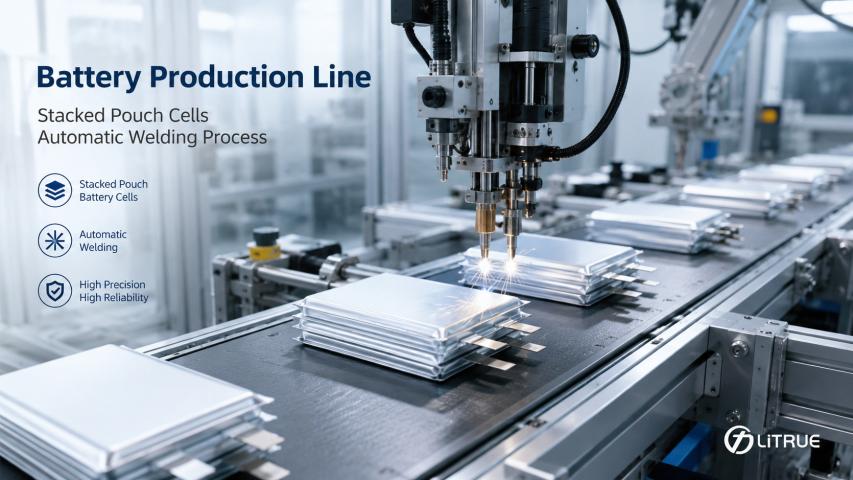
LiTrue Power Technologies Co., Ltd. built its Low Temperature LFP Pouch Battery Cell Series specifically to conquer these freezing environments. The cells use a proprietary low-temperature electrolyte system and highly optimized electrode material formulations to actively suppress internal resistance growth, which meaningfully improves both charge/discharge capability and overall energy utilization efficiency in extreme cold — the design goal being straightforward: equipment that doesn't stall in the snow.
Validated Across the Full Range, Not Just at Room Temperature
Available in 30Ah (Model PM30F-L) and 33Ah (Model PP33F-L) capacities, the series is validated to operate across a temperature range of -43°C to 55°C — meaning the same cell has to hold up in a Siberian winter and a summer supply run without a chemistry compromise in either direction. LiTrue's engineering team also offers fully customized dimensions, rate performance tuning, and system-level integration tailored to specific vehicle platforms, since a cold-weather cell that doesn't physically fit the equipment it's meant to power solves nothing.
Where This Actually Gets Deployed
This series is built as the energy solution for specialized electric platforms operating in genuinely cold regions — Northern Europe, Russia, Canada, and high-altitude areas — across several distinct categories:
- Cold-region specialized vehicles: winter inspection fleets, border security patrol vehicles, and emergency response trucks.
- Winter agricultural machinery: tractors and farming equipment operating in low-temperature regions.
- Cold-climate engineering vehicles: snowplows, cold-storage forklifts, and outdoor construction equipment.
- Industrial mobile equipment: AGVs and outdoor electric platforms that can't afford unplanned downtime when temperatures drop.
LiTrue's broader wide-temperature lineup, including cells rated for the opposite extreme, is covered in the company's product catalog.