Operational expansion creates a different set of challenges than simply growing revenue. As businesses enter new markets, increase production capacity, add locations, or serve more customers, existing processes often become harder to manage. Manual workflows multiply, operational data becomes fragmented, and teams may struggle to maintain the same level of speed and consistency.
Choosing the right AI solutions for operational expansion can help organizations scale without increasing operational complexity at the same rate.
Start With the Operational Bottleneck, Not the AI Technology
The first question should not be, “Which AI solution should we buy?” Instead, identify what is preventing the operation from scaling efficiently.
For a manufacturer, the constraint might be production scheduling, equipment downtime, quality inspection, inventory planning, or procurement. A financial institution may struggle with growing volumes of loan applications, KYC reviews, servicing requests, or compliance work.
Once the bottleneck is clear, businesses can determine whether AI is actually the appropriate solution.
A useful approach is:
Expansion Goal → Operational Constraint → AI Opportunity → Expected Business Outcome
This keeps AI investment connected to operational priorities.
Choose AI That Works With Existing Systems
Operational expansion rarely provides an opportunity to replace every existing enterprise application.
AI solutions should therefore integrate with the systems already running the business, including ERP, CRM, MES, supply chain platforms, data warehouses, document systems, and other operational applications.
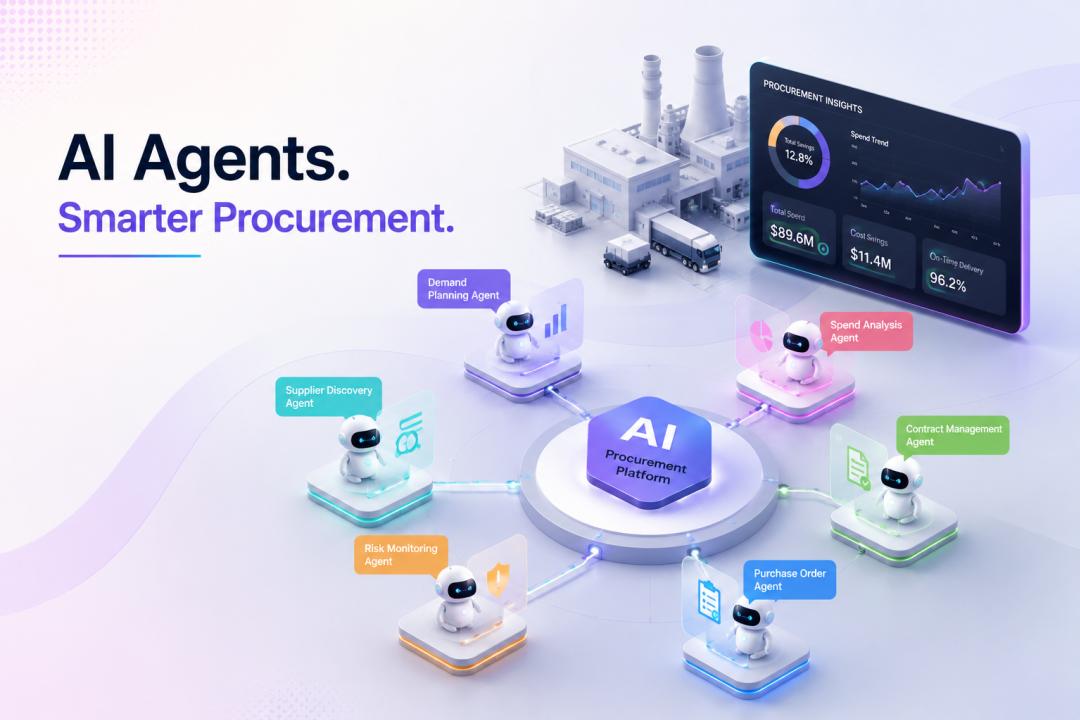
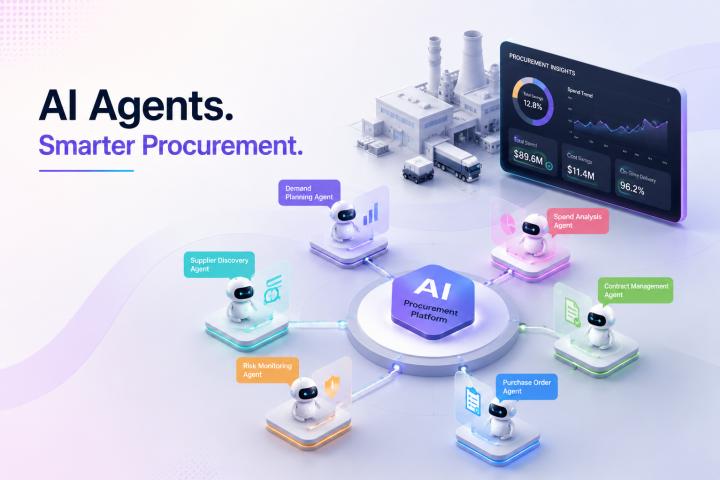
For example, an AI agent supporting procurement should be able to retrieve relevant supplier, inventory, contract, and purchase-order information. It could identify a potential shortage, evaluate alternatives, and recommend an action without requiring employees to manually gather information from several systems.
The objective is to create connected intelligence, not another isolated application.
Prioritize Solutions That Can Scale Across Operations
An AI solution that works for one department may become difficult to maintain when expanded across ten facilities, business units, or geographic markets.
Organizations should evaluate whether the solution can support increasing transaction volumes, additional data sources, new workflows, multiple locations, and changing business rules.
This is particularly important when expansion involves replicating a successful operating model across multiple facilities.
Instead of building separate AI applications for every location, businesses can create reusable AI capabilities that adapt to local data and operational requirements.
Consider AI Agents for Multi-Step Workflows
Traditional AI solutions often predict, classify, or generate information. AI agents can extend these capabilities by coordinating multiple steps within an operational workflow.
For example:
Operational Event → AI Agent → Retrieve Business Context → Analyze → Recommend Action → Approval → Execute → Monitor
A supply chain agent could detect an inventory risk, investigate available stock, evaluate suppliers, and prepare a replenishment recommendation. A service agent could understand a customer request, retrieve account information, complete an approved workflow, and update the appropriate enterprise system.
This can help organizations scale operational capacity without increasing manual coordination proportionally.
Evaluate Risk Before Increasing AI Autonomy
Expansion should not come at the cost of operational control.
AI solutions should provide appropriate permissions, auditability, escalation rules, monitoring, and human oversight. Higher-impact actions involving payments, compliance, production changes, customer eligibility, or contractual decisions may require employee approval.
Businesses can gradually increase autonomy as the AI demonstrates reliable performance.
Assist → Recommend → Approve → Automate → Optimize
This provides a more controlled path to AI-enabled operational scaling.
How Intellectyx Helps Businesses Scale Operations With AI
Intellectyx helps enterprises identify operational AI opportunities and develop custom AI solutions around existing business workflows, data, and enterprise systems.
This can include custom AI solutions, AI agents, multi-agent workflows, enterprise integrations, deployment, governance, and AgentOps. The goal is to connect AI implementation with measurable operational outcomes rather than introducing AI as a standalone technology initiative.
Conclusion
Choosing AI solutions for operational expansion starts with understanding where growth is creating operational pressure.
Businesses should prioritize solutions that address measurable bottlenecks, integrate with existing systems, scale across operations, provide appropriate governance, and demonstrate clear business value.
The right AI solution should ultimately help the organization expand capacity without expanding complexity at the same rate.