When a business starts growing, the priorities are usually obvious.
Hire more people. Find more space. Upgrade technology. Improve operations. Add equipment.
But there's another part of growth that receives far less attention:
The infrastructure keeping everything running.
A commercial space that comfortably supported a small team may not be equally suitable once the company doubles in size, adds new technology or changes how the workplace operates.
Electrical infrastructure is a good example.
Here are several things businesses should consider as they scale.
More People Usually Means More Power
Adding employees doesn't only mean finding room for more desks.
Each new workstation can bring additional computers, monitors, chargers, displays and other devices.
Shared infrastructure grows too.
Printers, meeting-room technology, kitchen equipment, communications hardware and air conditioning can all contribute to the electrical demands of a growing workplace.
Eventually, a layout designed for a smaller operation may no longer make sense.
Power Points Need to Be Where People Work
One of the easiest signs of a workspace that has evolved beyond its original electrical design is the number of power boards and extension leads.
The business may technically have enough outlets, but they aren't necessarily located where they're now needed.
This often happens when:
- Teams expand
- Desks are rearranged
- Meeting rooms are added
- New equipment is introduced
- Previously unused areas become workspaces
When planning an expansion or office redesign, power distribution should be considered alongside the new floor plan.
Data Infrastructure Has to Scale Too
Growing businesses don't just consume more electricity.
They often become more dependent on connectivity.
More employees can mean more network connections, wireless devices, communications equipment and cloud-based systems.
Meeting rooms may need video conferencing infrastructure. New sections of an office may require additional network coverage. Server and communications equipment may also expand.
Planning electrical and data infrastructure together can make scaling the workplace considerably easier.
The Switchboard Isn't Unlimited
Behind all those outlets and devices is the electrical distribution system.
As the business introduces additional equipment and circuits, it's worth considering whether the existing infrastructure remains appropriate for the new requirements.
This becomes particularly important when growth involves more substantial loads, such as commercial appliances, machinery, additional air conditioning or specialised equipment.
A professional assessment can determine whether the existing system can support proposed changes or whether upgrades should form part of the project.
New Equipment Shouldn't Be an Afterthought
Businesses often focus heavily on the cost and capabilities of new equipment while giving much less attention to what is required to operate it.
Before installing substantial electrical equipment, determine its power requirements.
Does it require a dedicated circuit?
Is three-phase power needed?
Is the intended location suitable?
Can the existing electrical infrastructure support it?
Answering those questions before purchasing or installing equipment can prevent unpleasant surprises later.
Growth Can Change the Lighting Requirements
A changing workspace can also change how effectively the property is illuminated.
An open office might be divided into smaller rooms.
A warehouse could add new shelving or work areas.
A retailer might redesign its displays.
Existing lighting that worked for the previous layout may no longer be appropriate once the space changes.
That makes lighting another infrastructure consideration worth including in expansion plans.
Don't Wait Until Infrastructure Becomes the Bottleneck
One advantage of planning electrical requirements early is that businesses can schedule work rather than reacting to problems.
Instead of waiting for recurring breaker trips, poorly positioned outlets or insufficient capacity to interfere with operations, electrical requirements can be incorporated into the wider expansion.
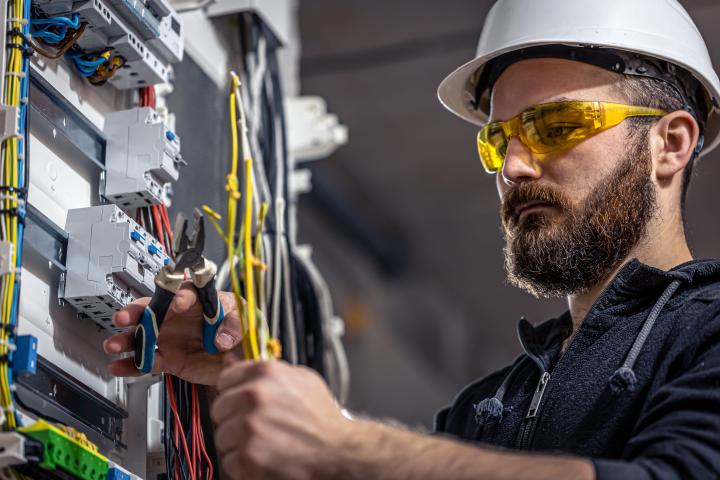
For companies expanding or upgrading commercial premises, working with an experienced Commercial Electrician Sydney can help determine whether the existing electrical infrastructure matches what the business is planning next.
Lightspeed Electrical works across Sydney commercial environments, with services covering office fit-outs, power and lighting, data cabling, switchboards, electrical installations and ongoing maintenance.
Build for Where the Business Is Going
Scaling isn't only about adding employees, customers or revenue.
The physical infrastructure behind the business needs to keep pace as well.
When planning the next stage of growth, consider the electrical system alongside the floor plan, equipment and technology.
The best infrastructure is often the infrastructure nobody notices.
It simply keeps working while the business moves forward.