Most people think luxury home decor means spending a lot of money on things that look expensive. It doesn't. It means choosing fewer pieces, but ones made from materials that actually last and that get better with time instead of looking tired after a year.
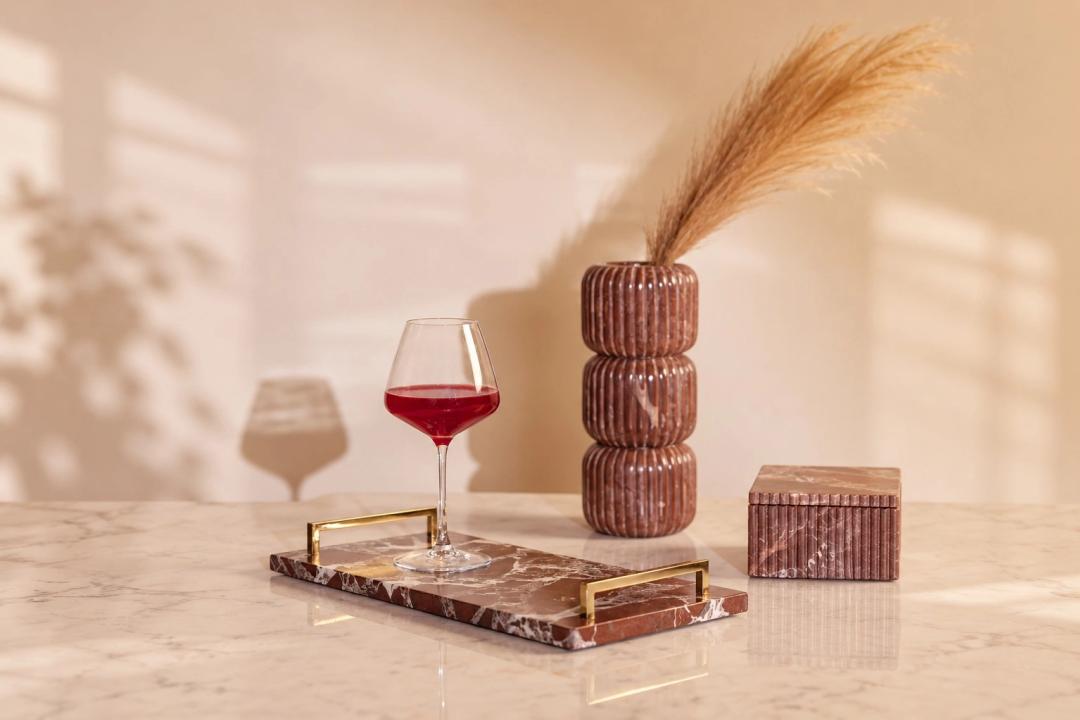
If you've ever walked into a home that felt effortlessly put-together, chances are it wasn't full of trendy home decoration items picked up on a whim. It was built around a handful of considered pieces — a stone vase here, a marble tray there — that quietly did all the work.
Here's how to think about it, room by room.
Start With What You Touch Every Day
Before you shop for home decor items, think about what you actually interact with. A candle holder you light every evening. A tray you set your keys on. A soap dispenser you reach for every morning. These small, functional objects are where luxury sustainable home decor makes the biggest difference, because you notice quality every single time you use them - not just when guests walk in.
Natural stone is particularly good at this. Marble, travertine, and alabaster don't wear out the way plastic or resin does. The surface might develop a slightly softer sheen over years of handling, but it never looks worn out — it just looks lived-in, which is a very different thing.
Decorative Items for the Living Room: Less Is More
The living room is usually where people over-decorate. It's tempting to fill every shelf and console table, but a room full of decorative items for the living room can end up looking cluttered rather than curated.
A better approach:
- One statement piece per surface. A single sculptural vase or a stone bowl on a coffee table says more than five smaller trinkets.
- Let material do the talking. A deep black marble candle holder or a soft green stone vessel doesn't need extra ornamentation — the veining and colour are the decoration.
- Mix textures, not just objects. Pair a smooth marble tray with something matte, like a wooden bowl or a brass accent, so the room doesn't feel flat.
This is also where lighting earns its place. A stone table lamp or a pendant light in alabaster filters light differently than glass or fabric shades — it glows rather than glares, which changes the whole mood of a living room in the evening.
Buying Home Accessories Online: What to Actually Check
Shopping for home accessories online can be a bit of a gamble if you're only going by product photos. A few things worth checking before you add anything to your cart:
- Material, not just colour. "Marble-look" and "marble" are not the same thing. Genuine natural stone will say so explicitly in the description.
- Weight and dimensions. Stone pieces are heavier than they look in photos — that weight is actually part of the quality, so don't be put off by it.
- Sourcing and craft. Brands that mention where and how a piece is made — hand-carved, responsibly sourced, small-batch — are usually more transparent about quality than ones that don't.
- Care instructions. Natural stone needs simple, specific care (avoiding acidic cleaners, for instance). If a site doesn't mention this at all, that's worth noting.
This is where a site like Organic Home's luxury home decor collection is a good reference point — their pieces are carved from Italian marble, travertine, and alabaster by artisans in Agra, a city with centuries of stone-carving history, and every product page is upfront about the material and its origin rather than dressing it up in vague marketing language.
Why "Sustainable" and "Luxury" Aren't Opposites
There's a common assumption that sustainable decor has to look rustic or unfinished, while luxury decor has to be polished and manufactured. Natural stone breaks that assumption completely.
Stone doesn't need to be replaced every few seasons. It's not synthetic, it doesn't off-gas, and — because each piece is carved rather than mass-moulded — production is naturally limited rather than churned out at scale. That's really what luxury sustainable home decor should mean: pieces that are made to be kept, not replaced.
Compare that to a lot of mass-market decor, which is designed around trends with a shelf life of a year or two. A marble candle holder from a decade ago still looks exactly as good as one bought last month, because the material was never chasing a trend in the first place.
A Simple Way to Build a Room Around Stone
If you're starting from scratch, don't buy piece by piece from different collections. Pick one stone — a Travertine, a black Marquina, a soft grey-veined marble — and build outward from it. A tray, a vase, and a set of candle holders in the same material will always look coordinated, even without matching them deliberately. This is a much easier way to shop than hunting for "the perfect" individual piece, because the cohesion is already built into the material family.
The Bottom Line
Luxury home decor isn't about how much you spend — it's about choosing materials that don't need replacing, and being selective about how much you put in a room. Whether you're furnishing a new living room or just swapping out a few tired decorative items, natural stone pieces are one of the few categories where "buy less, buy better" genuinely pays off over years, not months.
If you're ready to shop, it's worth browsing home decor items for the living room made from genuine natural stone before settling for the mass-produced version.