The rise of artificial intelligence (AI) has transformed many industries, leading to a surge in demand for programming languages that can effectively handle complex algorithms and data processing. Among these languages, Python has emerged as a dominant force. Despite the rapid advancements in AI technologies, Python continues to hold significant importance. Here’s why Python remains relevant even as AI evolves.
1. Simplicity and Readability
Python is renowned for its straightforward syntax and readability. This makes it an ideal choice for both beginners and experienced developers. The simplicity of Python allows developers to focus on solving problems rather than getting bogged down in complex syntax. This is particularly beneficial in AI, where the ability to prototype and iterate quickly can lead to faster development cycles.
2. Extensive Libraries and Frameworks
Python boasts a rich ecosystem of libraries and frameworks specifically designed for AI and machine learning. Some of the most popular include:
TensorFlow: A powerful library for deep learning applications.
PyTorch: Favored for its dynamic computation graph, making it easy to build and train models.
Scikit-learn: A versatile library for traditional machine learning algorithms.
Keras: A high-level neural networks API that simplifies the process of building deep learning models.
These libraries not only accelerate the development process but also provide robust tools for data manipulation and analysis.
3. Strong Community Support
The Python community is one of the largest and most active programming communities in the world. This means that developers can easily find resources, tutorials, and forums to help them troubleshoot issues or learn new techniques. The collaborative nature of the community fosters innovation and encourages the sharing of knowledge, making it easier to stay updated with the latest trends in AI.
4. Versatility Across Domains
Python is not limited to AI; it is a versatile language used in web development, data analysis, automation, and more. This versatility allows developers to work on a wide range of projects without needing to learn a new language for each domain. As AI continues to integrate into various industries, Python’s adaptability makes it a valuable skill for professionals across different fields.
5. Integration Capabilities
Python excels in its ability to integrate with other languages and technologies. Whether it’s working with C/C++, Java, or even R, Python can easily interface with different systems. This capability is crucial in AI applications, where integrating various tools and technologies is often necessary to build comprehensive solutions.
6. Educational Use and Accessibility
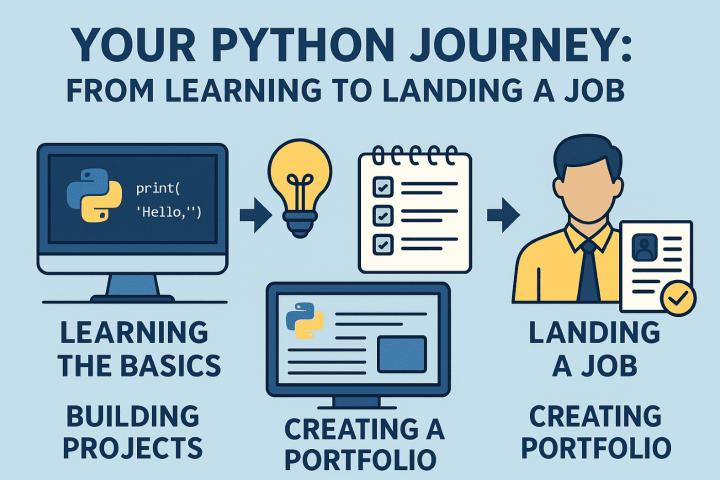
Python is widely used in educational settings for teaching programming and data science, including AI concepts. Its accessibility makes it a preferred choice in universities and online courses, ensuring that new generations of developers are well-versed in Python. This educational focus helps maintain Python’s relevance in the AI landscape.
Conclusion
As AI continues to advance and reshape the technological landscape, Python remains a critical tool for developers. Its simplicity, extensive libraries, strong community support, versatility, integration capabilities, and educational use all contribute to its enduring importance. Whether you are a seasoned professional or a newcomer to the field, mastering Python will undoubtedly provide you with valuable skills that are applicable in the ever-evolving world of artificial intelligence.