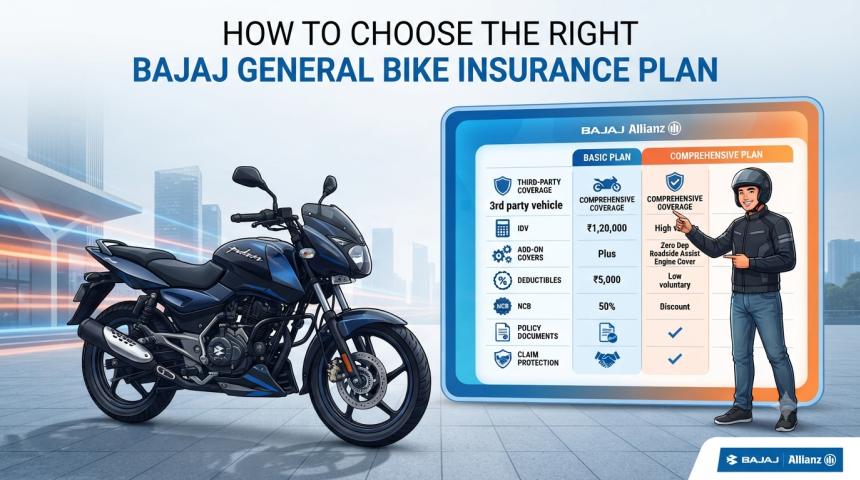
Choosing suitable bike insurance is
an important part of responsible two-wheeler ownership. A policy should not be
selected only by looking at the premium. The type of coverage, insured declared
value, deductibles, exclusions, add-on covers, claim process, and policy terms
can all influence whether the insurance meets your requirements.
If you are considering Bajaj
General bike insurance, understanding the available coverage options can
help you make a more informed choice. Different riders have different needs
depending on their bike's age, usage, value, riding frequency, and budget.
Comparing these factors before purchasing or renewing a policy can help you
select coverage that is appropriate for your circumstances.
Assess
Your Bike Insurance Requirement
The first step is to understand why
you need insurance and what type of protection you expect from the policy. In
India, third-party liability insurance is mandatory for vehicles used on public
roads. It provides protection against eligible third-party liabilities arising
from an accident involving the insured vehicle.
However, third-party coverage does
not generally protect your own bike against damage. Riders looking for broader
protection may consider a comprehensive bike insurance policy, which can combine
third-party liability protection with coverage for eligible own-damage risks.
Your choice should therefore depend
on the level of protection you want rather than simply selecting the lowest
premium.
Choose
Between Third-Party and Comprehensive Coverage
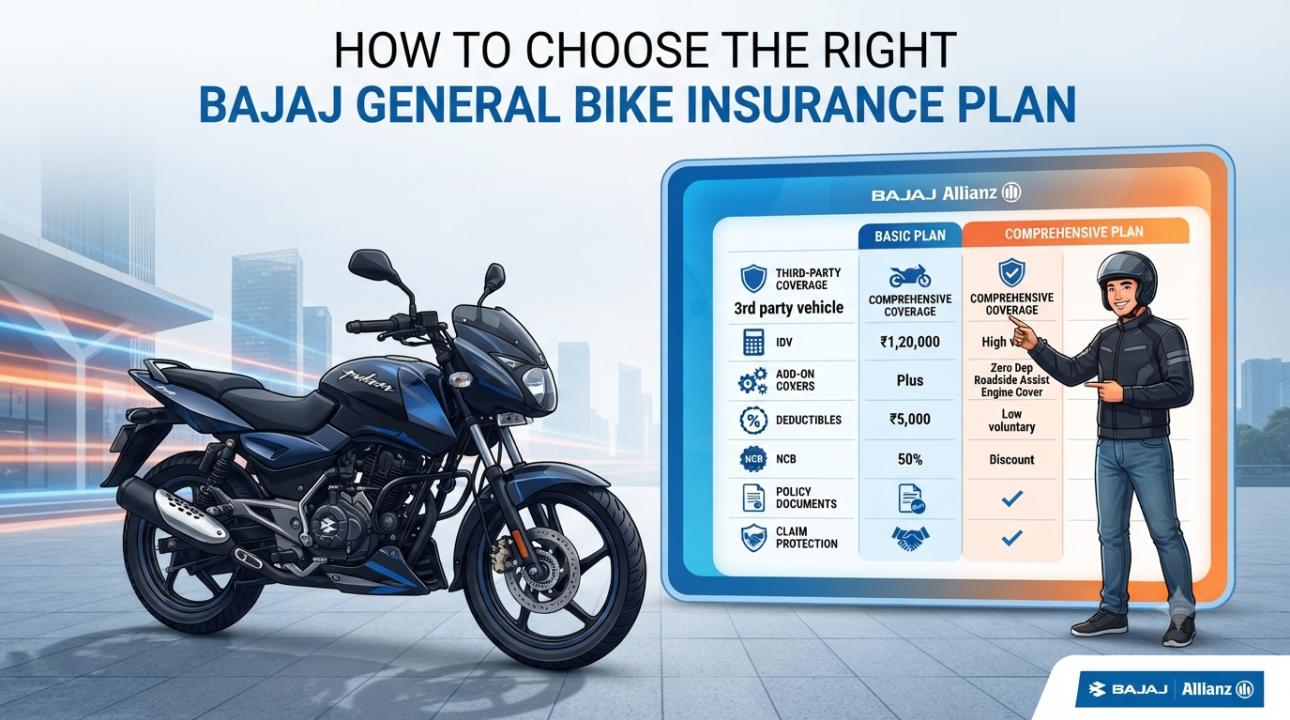
Third-party bike insurance is
generally suitable for meeting the mandatory legal requirement and protecting
against covered third-party liabilities. It does not provide the same level of
protection for damage to your own motorcycle.
Comprehensive bike insurance
generally offers wider protection by covering eligible own-damage risks along
with third-party liability. Depending on the policy terms, own-damage
protection may include risks such as accidents, theft, fire, natural
calamities, and certain other specified events.
Before selecting a plan, consider
how much financial exposure you could face if your bike is damaged or stolen. A
comprehensive policy may be relevant for riders who want broader protection for
their vehicle.
Check
the Insured Declared Value
The Insured Declared Value, commonly
called IDV, represents the approximate insured value of the bike for certain
claims, particularly total loss or theft, subject to the policy terms.
A higher IDV can influence the
premium, while a lower IDV may reduce the premium but can also affect the
amount payable in an eligible total-loss or theft claim.
When choosing Bajaj General bike
insurance, review the IDV displayed during the purchase or renewal process. It
should reasonably reflect the current value of the motorcycle according to the
applicable policy calculation.
Avoid choosing a policy solely
because it has a lower premium if the IDV and coverage do not meet your
requirements.
Review
Available Add-On Covers
Add-ons can extend the protection
provided by a base bike insurance policy. However, they usually come at an
additional premium and may have specific eligibility conditions, limits, and
exclusions.
Depending on the policy and
availability, riders may consider covers such as zero depreciation, roadside
assistance, engine protection, consumables, or other relevant extensions.
For example, zero depreciation cover
can reduce the impact of depreciation deductions on eligible parts during an
admissible claim, subject to policy conditions. Roadside assistance may be
useful for riders who frequently travel longer distances.
The right approach is to select
add-ons based on actual riding requirements rather than adding every available
option.
Consider
Your Bike's Age and Condition
The age and condition of your motorcycle
can influence the type of insurance protection that makes sense. A relatively
new bike may have a higher value and may benefit from broader protection and
suitable add-ons.
For an older motorcycle, the cost of
additional covers should be evaluated against the bike's current value and
expected usage.
You should also make sure that the
vehicle information entered while purchasing or renewing the policy is
accurate. Incorrect registration details, model information, engine details, or
other vehicle-related information can create complications during policy
servicing or claims.
Compare
Premium With Coverage
Premium is an important factor, but
it should not be the only basis for comparison. Two bike insurance policies
with different premiums may also provide different levels of coverage,
deductibles, add-ons, IDV, and terms.
Before purchasing Bajaj General bike
insurance, compare:
- Type of insurance coverage
- Third-party liability protection
- Own-damage coverage
- IDV
- Deductibles
- Available add-ons
- Exclusions
- Policy duration
- Claim-related conditions
- Renewal terms
This approach allows you to compare
the overall value of the policy instead of focusing only on the amount payable.
Understand
Deductibles
A deductible is the portion of an
admissible claim that the policyholder may need to bear according to the policy
terms. Bike insurance can involve compulsory and, where applicable, voluntary
deductibles.
A voluntary deductible may reduce
the premium, but it also means accepting a greater share of eligible claim expenses.
Before selecting a higher deductible, consider whether you would be comfortable
paying that amount when a claim arises.
Reading the deductible section
before purchasing the policy can help prevent surprises during a claim.
Check
Policy Exclusions
Every insurance policy has
exclusions. These are situations, damages, or circumstances that may not be
covered under the policy.
Common examples can include driving
without a valid licence, certain types of unlawful use, consequential losses,
mechanical or electrical breakdowns where not covered, and other circumstances
specified in the policy wording.
Exclusions can vary depending on the
policy and add-ons. Therefore, always review the applicable terms rather than
assuming that comprehensive insurance covers every possible loss.
Consider
Your Riding Pattern
Your regular riding habits can also
influence the type of protection you need.
A person who primarily rides within
a city may have different requirements from someone who frequently travels
between cities or uses a motorcycle for long-distance journeys.
If your bike is used frequently,
broader protection and suitable assistance-related add-ons may be worth
considering. If the motorcycle is used occasionally, you may focus more closely
on essential coverage and the overall cost.
The important point is to match the
policy with your actual usage rather than selecting coverage based on someone
else's requirements.
Check
No Claim Bonus Eligibility
The No Claim Bonus, or NCB, can
provide a discount on the own-damage premium when eligible policyholders do not
make certain claims during the preceding policy period, subject to applicable
rules and conditions.
When renewing your bike insurance,
check whether you are eligible for NCB and ensure that the applicable information
is correctly reflected.
If you switch insurers, NCB-related
information may also need to be carried forward according to the applicable
process. Keeping previous policy details available can make renewal easier.
Review
the Claim Process
Before purchasing insurance,
understand how claims are handled under the policy. Check the required
notification process, documentation, survey or inspection requirements where
applicable, and other claim conditions.
It is also useful to keep essential
vehicle and policy documents safely stored. These may include the registration
certificate, insurance policy, driving licence, and other documents relevant to
the claim.
A clear understanding of the claim
process can help you respond appropriately if an insured event occurs.
Read
the Policy Before Making the Final Choice
Once you have shortlisted a Bajaj
General bike insurance plan, review the policy wording, coverage limits,
exclusions, deductibles, add-ons, IDV, and other applicable conditions.
Do not assume that a particular
feature is included simply because it appears in a policy comparison or
promotional description. The policy document and applicable terms should be
treated as the primary reference for coverage.
Taking a few minutes to review these
details can help you understand exactly what you are purchasing.
Conclusion
Choosing the right Bajaj General
bike insurance plan requires more than comparing premiums. Riders should
consider the type of coverage, bike value, IDV, deductibles, add-ons, exclusions,
NCB eligibility, riding pattern, and claim-related conditions before making a
decision.
A suitable policy should provide
protection that matches your motorcycle and your individual requirements while
remaining practical for your budget. Comparing these factors carefully can make
the insurance selection and renewal process more informed. Square Insurance can also
help vehicle owners compare insurance options and understand coverage
requirements before purchasing or renewing a bike insurance policy.
Frequently
Asked Question (FAQs)
Q1.
What should I check before choosing Bajaj General bike insurance?
Check the coverage type, IDV,
premium, deductibles, exclusions, add-ons, NCB eligibility, policy duration,
and claim-related terms before selecting a plan.
Q2.
Is comprehensive bike insurance better than third-party insurance?
The two provide different levels of
protection. Third-party insurance primarily covers eligible third-party
liabilities, while comprehensive insurance generally combines third-party
protection with eligible own-damage coverage. The suitable option depends on
your requirements.
Q3.
What is IDV in bike insurance?
IDV stands for Insured Declared
Value. It represents the approximate insured value of the bike for certain
claims, subject to the applicable policy terms and conditions.
Q4.
Should I buy add-ons with bike insurance?
Add-ons can provide additional
protection for specific risks. Select them according to your bike's age, usage,
riding pattern, and requirements rather than adding unnecessary covers.
Q5.
Can NCB reduce my bike insurance premium?
An eligible No Claim Bonus can
provide a discount on the own-damage premium, subject to applicable terms and
conditions. The benefit generally depends on the policyholder's claim history
and eligibility.
Q6.
Why should I check exclusions before buying bike insurance?
Exclusions identify situations or
losses that are not covered under the policy. Reviewing them helps you
understand the limitations of your insurance and avoid incorrect assumptions
about coverage.