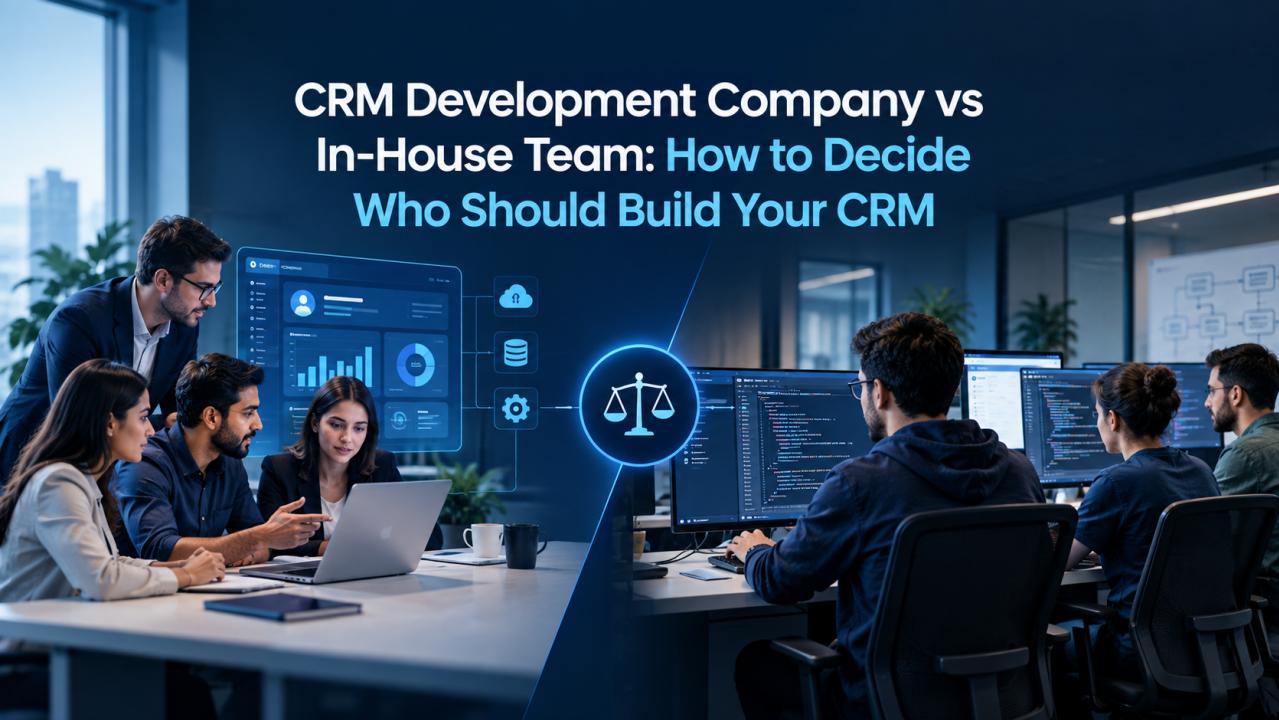
Every growing business eventually hits this fork in the road: build the CRM with people you hire, or bring in someone who's already done it. The decision affects your budget, your timeline, and how much of this becomes your problem to manage day to day.
What Changes With an In-House Team
Hiring internally means owning every part of the process yourself.
- Recruiting developers, QA, and a project lead takes weeks or months before real work starts
- Salaries and benefits continue whether the project is active or between phases
- Your team learns your business deeply, since they're embedded in it daily
- You're responsible for keeping their skills current as tools and integrations evolve
For companies with steady, long-term development needs, this can pay off. For a single CRM build, it's a heavy lift before anyone writes a line of code.
What Changes With a CRM Development Company
Working with an established crm development company shifts most of that overhead off your plate.
- Development typically starts sooner, since the team is already assembled and experienced
- You pay for the work delivered, not for idle time between projects
- Specialized skills — integrations, data migration, security — are already in-house at the vendor
- Scaling the team up or down for different project phases doesn't require a hiring cycle
The tradeoff is less daily control. You're relying on someone outside your walls to understand your process correctly.
The Real Question: Fit, Not Just Cost
Cost comparisons matter, but they're not the whole picture. The better question is whether the team — internal or external — actually understands how your sales and support staff work.
Custom crm development services should start with real discovery: how deals move through your pipeline, what your reps actually do daily, which tools you're already using. Skip that step, and it doesn't matter who's writing the code. The system won't fit.
Ask any potential partner directly:
- How do you gather requirements before development starts?
- Who owns the system's documentation once it's built?
- What happens if we want to bring maintenance in-house later?
Vague answers here are a bigger red flag than pricing.
When In-House Actually Wins
In-house development makes more sense when:
- Your CRM logic is tied to a proprietary process only internal staff fully understand
- Developers need to sit with sales or support teams daily, not just check in periodically
- You already have underused technical capacity that would otherwise go to waste
Outside of those situations, most companies find the hiring overhead outweighs the control they gain.
Building Toward the Right Fit
There's no universally correct answer — it depends on your timeline, budget, and appetite for managing development internally versus handing it off.
What matters more than the label "in-house" or "outsourced" is whether whoever builds your system actually understands your workflow before writing any code. A well-built custom crm software should feel like it was designed for your team specifically, not adjusted after the fact to fit them.
If you're weighing this decision, it's worth talking through your actual requirements with a team that's built CRM systems across different industries before committing either direction.
FAQs
Is it cheaper to build a CRM in-house long-term?
Not usually, unless you have ongoing development needs beyond just the CRM. A single project rarely justifies the fixed cost of hiring, benefits, and idle time between phases.
Can we switch from outsourced to in-house maintenance later?
Yes, if the development partner documents the system clearly and hands over clean, readable code. Confirm this is part of the agreement before the project begins.
How do we know if a CRM vendor actually understands our workflow?
They should ask detailed questions about your sales process, existing tools, and team habits before quoting a build — not just show you a template and ask you to adapt to it.