
Every business today needs a reliable way to talk to its customers, and mobile messaging remains one of the fastest ways to do that. Whether it's a bank sending a payment alert, a hospital confirming a slot, or an online store updating a shipment, these messages land directly on a device people check all day long. The debate of SMS vs RCS has become central to how companies plan their communication strategy in 2026.
For a long time, SMS was the only option available, and it did its job well — plain, dependable, and universally supported. Now RCS has entered the picture, offering a far more visual and interactive way to message customers right inside their phone's default chat app. This shift has turned SMS vs RCS into one of the most important decisions a business can make when choosing how to connect with its audience.
A Short Background on SMS and RCS
To understand SMS vs RCS, it helps to know where each one came from. SMS, short for Short Message Service, dates back to 1992 when the very first text message was sent, capped at 160 characters. It was never designed as a marketing tool, but businesses quickly adopted it for OTPs, reminders, and alerts because almost every phone could receive it.
RCS, or Rich Communication Services, began taking shape around 2008 as an industry effort led by GSMA to bring app-like chat features into standard phone messaging. Early versions were inconsistent across carriers, but a unified specification later brought consistency. With Google's push and Apple adding RCS support to iPhones through iOS 18 in 2024, the reach of RCS expanded dramatically, making the SMS vs RCS comparison even more relevant today.
What Makes SMS Different
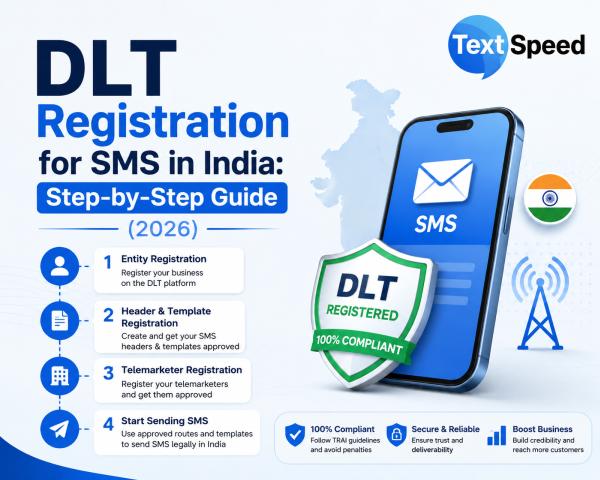
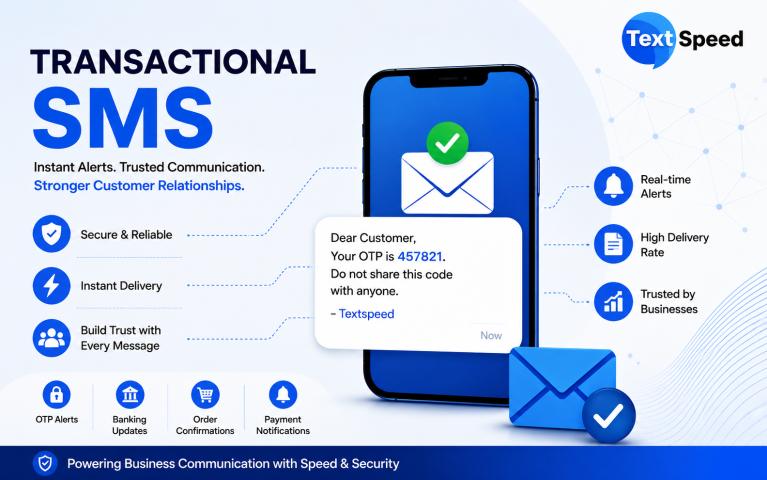
SMS works over the mobile network itself, not the internet, which means it needs no app and no data connection. It reaches nearly any phone with a signal. Messages stay plain text, limited to 160 characters per part, with no images or buttons built in. Businesses rely on it for OTPs, banking alerts, appointment reminders, delivery updates, and urgent notifications. In the SMS vs RCS discussion, this universal reach is SMS's biggest strength — no customer is left out because of their device or app.
Most companies send SMS through a dedicated provider that manages carrier connections and sender registration, while an SMS API lets websites, apps, or CRMs trigger these messages automatically.
What Makes RCS Different
RCS runs over data or Wi-Fi inside the phone's native messaging app, like Google Messages, so there's nothing extra to install. Unlike SMS, RCS supports rich images, videos, suggested replies, quick actions, and location sharing. For businesses, this means verified branding, interactive Rich Cards, carousels, and clickable buttons — turning a simple notification into something closer to a real conversation.
Businesses use RCS Business Messaging for product showcases, appointment booking, promotions, support conversations, and guided customer journeys. But one thing to remember in any SMS vs RCS evaluation is that RCS availability still depends on the customer's device, app, carrier, and country, so it shouldn't be treated as guaranteed for every single contact.
Core Differences Between the Two
In simple terms, the SMS vs RCS difference comes down to this: SMS sends a message, RCS delivers an experience. SMS is plain-text and travels over the carrier network, while RCS is internet-based and can carry visuals, buttons, and interactive elements. The trade-off is reach — SMS works on almost every phone, while RCS needs supported infrastructure on both ends.
Choosing Based on Business Needs
Thinking about SMS vs RCS from a practical business angle means matching the right channel to the right kind of message. SMS makes sense when reach is the top priority, the content is short like a login code, or you need a fallback for customers without RCS support. RCS becomes valuable when you want to show products visually, offer tappable actions, build branded experiences, or create richer conversational journeys.
For small businesses, a simple SMS setup may be enough if messages are mostly transactional, while RCS adds value for visual products like fashion or food where richer campaigns matter. Medium-sized companies often use a mix — SMS for transactional alerts and RCS for product discovery and customer engagement, tied together through automation rules. Large enterprises rarely see SMS vs RCS as an either-or choice at all; instead, they run both in parallel, using SMS for security-critical messages and RCS for enriched service and marketing journeys, backed by proper monitoring and fallback systems.
Why SMS Backup Still Matters
Even businesses that fully adopt RCS should keep SMS as a safety net. When a rich message can't be delivered — because a device or network doesn't support RCS — the system can fall back to standard SMS instead. This matters most for OTPs, security alerts, appointment confirmations, and delivery updates, where a missed message could genuinely inconvenience a customer. This is why, in most SMS vs RCS strategies, the two aren't treated as competitors but as partners.
What's Changing in 2026
Several developments are reshaping the SMS vs RCS landscape this year. Apple's iOS 18 RCS support means brands can now reach both Android and iPhone users with rich messages where carriers allow it. End-to-end encryption for personal RCS chats began rolling out in beta from May 2026, though business messages remain encrypted only in transit. GSMA's Universal Profile 4.0 has also introduced features like streaming video inside Rich Cards, and in markets like India, major telecom operators now support RCS Business Messaging with varying feature sets.
Final Thoughts
None of this makes SMS obsolete. A solid SMS setup is still essential for OTPs, alerts, and transactional communication because of how far it reaches and how reliably it works. RCS, meanwhile, is gaining ground because it lets brands add visuals, personality, and interactivity to their messages. The smartest approach to SMS vs RCS isn't picking a single winner — it's understanding your customers, your use case, and your budget, then using each channel where it fits best. Sometimes that means SMS alone, sometimes RCS, and often, a thoughtful combination of both.
Frequently Asked Questions
1: What is the main difference in the SMS vs RCS debate?
The core of the SMS vs RCS comparison is that SMS delivers plain text messages over the mobile network and works on nearly every phone, while RCS runs on data or Wi-Fi and supports images, videos, buttons, and branded interactive content inside the default messaging app.
2: In the SMS vs RCS comparison, which one offers wider reach?
SMS wins on reach in the SMS vs RCS discussion since it needs no app, no internet connection, and works on almost any handset with network coverage. RCS reach depends on the customer's device, messaging app, operator, and market support.
3: Should a small business choose SMS or RCS in 2026?
It depends on the use case. If a small business mainly sends OTPs, order confirmations, or reminders, SMS is usually enough. When SMS vs RCS is considered for visual products like fashion, food, or travel, RCS can add real value through richer, interactive campaigns.
4: Does RCS replace SMS completely?
No. Even with RCS's rich features, SMS remains essential for OTPs, security alerts, and fallback delivery. Most businesses treat SMS vs RCS not as a competition but as complementary channels, using RCS for experience and SMS as the reliable backup.
5: What changes in 2026 are affecting the SMS vs RCS decision?
Apple's iOS 18 RCS support, GSMA's Universal Profile 4.0 with streaming Rich Cards, beta rollout of end-to-end encryption for personal RCS chats, and wider operator support (like Jio, Airtel, Vi in India) are all making the SMS vs RCS choice more relevant for businesses planning their 2026 messaging strategy.