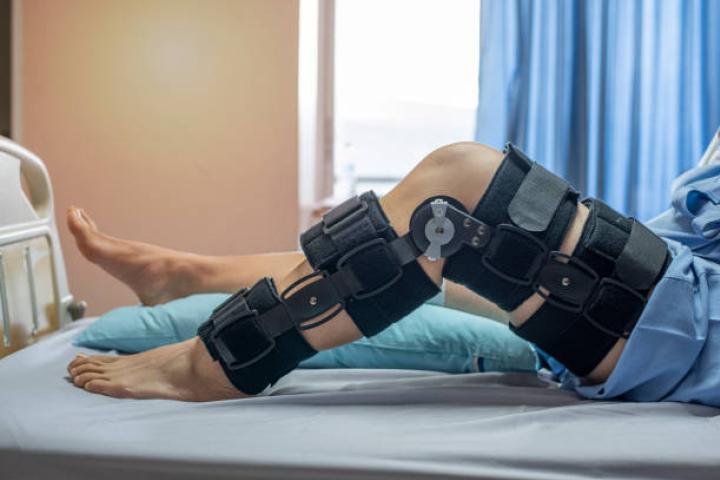
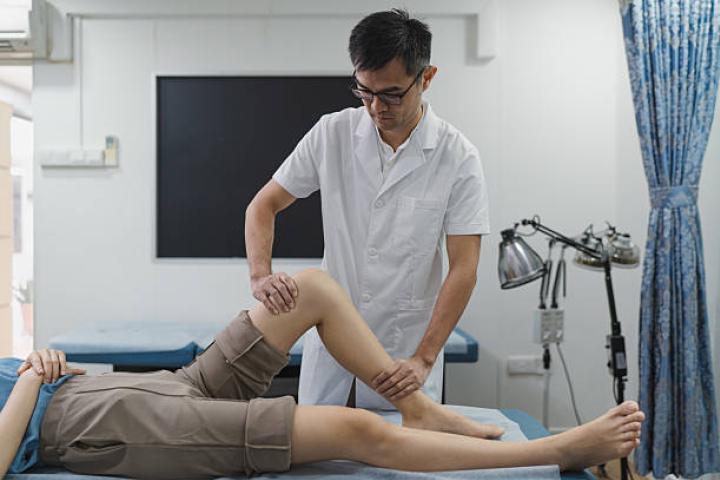
Post surgical rehabilitation after ACL reconstruction follows a structured, stage-based process designed to restore knee strength, stability, and function. Recovery typically spans 9 to 12 months and involves progressive phases — from early swelling control to sport-specific training. Physiotherapy plays a central role at every stage, guiding patients through safe movement milestones before return to sport is considered.
If you've recently undergone ACL surgery — or you're preparing for it — understanding what happens after the procedure matters just as much as the surgery itself. The outcome of your reconstruction depends heavily on how well you follow through with post surgical rehabilitation. Without guided physiotherapy, patients risk re-injury, muscle imbalances, and incomplete recovery of proprioception — the body's ability to sense joint position.
This guide breaks down the rehabilitation stages, what to expect at each milestone, and how physiotherapy supports your return to full activity.
Why ACL Rehabilitation Cannot Be Rushed
The anterior cruciate ligament (ACL) is one of the most commonly injured structures in the knee, particularly among athletes involved in sports that require sudden direction changes — football, basketball, and badminton among them. ACL reconstruction involves replacing the torn ligament with a graft, but the graft itself takes time to mature inside the knee joint — a biological process called ligamentisation that can take up to two years to complete.
This is why return-to-sport timelines are not arbitrary. A 2016 study published in the British Journal of Sports Medicine found that athletes who returned to sport before nine months post-surgery had a significantly higher re-injury rate. In Singapore, where recreational and competitive sport participation is high, managing ACL rehabilitation Singapore cases with structured, evidence-based protocols is essential for long-term outcomes.
The Stages of Post Surgical Rehabilitation: A Phase-by-Phase Breakdown
ACL physiotherapy is not a single program — it is a series of carefully sequenced phases, each building on the last. Progressing too quickly through any stage increases re-injury risk. Moving too slowly causes muscle atrophy and psychological hesitation to return to sport.
Phase 1: Acute Recovery (Weeks 1–2)
The immediate priority after surgery is managing pain, swelling, and regaining basic range of motion. Your physiotherapist will guide you through:
Cryotherapy and elevation to control post-operative swelling
Gentle quadriceps activation exercises (quad sets)
Straight leg raises to prevent muscle shutdown
Partial weight-bearing with crutches, progressing to full weight-bearing
Achieving full knee extension early in this phase is a critical goal. Lack of full extension at this stage can become a long-term problem that limits function and causes anterior knee pain.
Phase 2: Strength and Range of Motion (Weeks 3–6)
Once swelling reduces and basic movement is restored, the focus shifts to rebuilding strength around the knee — particularly the quadriceps and hamstrings, which act as dynamic stabilisers of the joint. Exercises in this phase include:
Closed kinetic chain exercises — mini squats, leg press, step-ups
Hamstring curls using a resistance band or machine
Hip abductor and gluteal strengthening to reduce valgus stress on the knee
Stationary cycling for low-impact cardiovascular conditioning
Post operative physiotherapy in Singapore at this stage also incorporates manual therapy techniques to improve joint mobility and reduce scar tissue formation around the surgical site.
Phase 3: Neuromuscular Control and Proprioception (Weeks 7–12)
Strength alone is not enough. The ACL plays a significant role in proprioceptive feedback — communicating joint position to the brain in real time. After surgery, this sensory function is disrupted and must be retrained through targeted exercises.
Single-leg balance drills on stable and unstable surfaces
Perturbation training — controlled destabilisation to improve reactive stability
Low-level plyometric introduction (small jumps, landing mechanics)
Proprioceptive deficits that go unaddressed at this stage are a leading contributor to ACL re-injury, even when strength levels appear normal.
Phase 4: Sport-Specific Conditioning (Months 4–6)
Once the knee demonstrates adequate strength symmetry and neuromuscular control, training becomes more dynamic and sport-specific. This is where knee sports rehabilitation truly accelerates.
Running progression — from jogging to straight-line sprinting
Lateral movement drills and change-of-direction work
Multi-planar plyometrics — cutting, landing, deceleration training
Sport-simulation drills in controlled environments
Your physiotherapist will use objective tests — such as the single-leg hop test and limb symmetry index — to determine whether you are ready to advance to the next phase. Passing these tests with at least 90% symmetry between both legs is a standard clinical benchmark before progressing.
Phase 5: Return to Sport Clearance (Months 9–12)
Return to sport is not a single decision point — it is a multi-criteria assessment. Criteria typically evaluated include:
Quadriceps strength symmetry ≥90% via isokinetic testing
Passing a battery of functional hop tests
Psychological readiness — assessed through tools like the ACL-RSI (ACL Return to Sport after Injury) scale
Absence of pain or effusion during sport-level loading
Fear of re-injury is a genuine and clinically recognised barrier to return to sport. Research consistently shows that psychological readiness is an independent predictor of successful return — not just physical capacity.
What ACL Physiotherapy Actually Looks Like in Practice
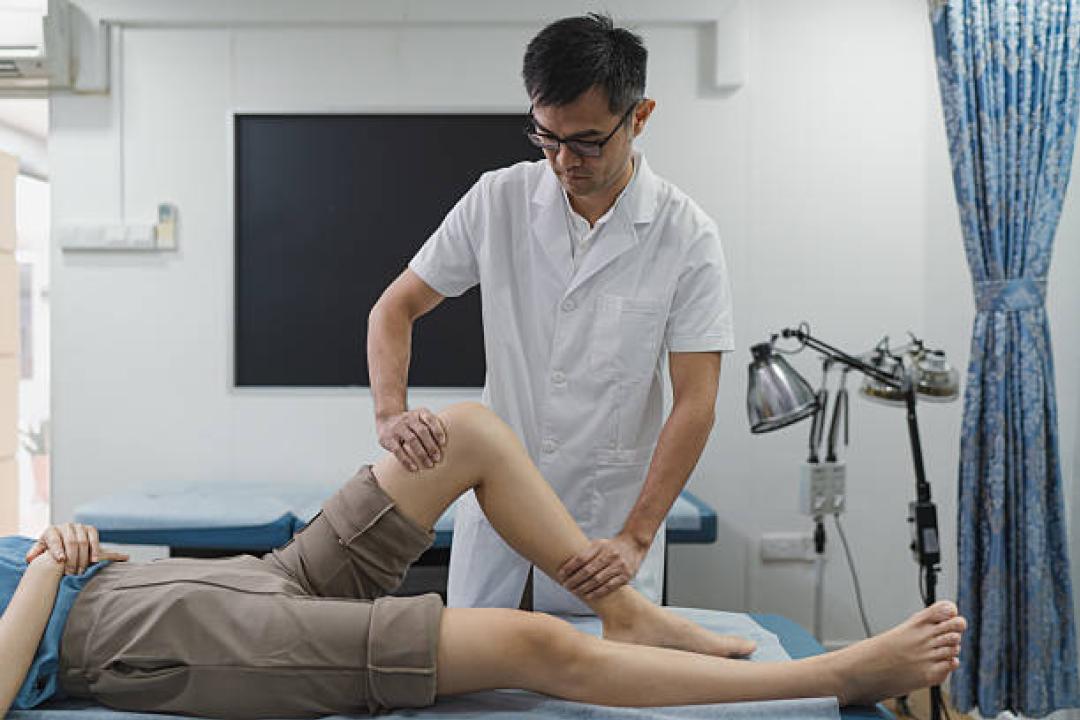
Many patients expect rehabilitation to look like a set of exercises performed independently at home. In reality, effective ACL physiotherapy involves regular hands-on sessions with a qualified physiotherapist who monitors your progress, adjusts loading parameters, and identifies any compensatory movement patterns before they become problematic.
A skilled physiotherapist will assess gait mechanics, observe how you land from jumps, and check whether the non-surgical leg is being overloaded to compensate for the recovering one. These nuances cannot be picked up by following a generic online program.
Functional Milestones: How to Know You're Progressing Well
One of the most useful things physiotherapy provides is a clear framework of objective milestones that tell you — beyond how the knee feels — whether you are recovering on track.
Milestone | Expected Timeframe | How It's Assessed
|
|---|---|---|
Full weight-bearing without crutches | Week 2–3 | Clinical observation, pain response |
Full range of motion restored | Week 6–8 | Goniometry measurement |
Jogging without pain or limp | Month 3–4 | Treadmill gait analysis |
Passing single-leg hop tests | Month 5–6 | Limb symmetry index ≥90% |
Full return to sport | Month 9–12 | Multi-criteria RTS assessment |
Tracking these milestones keeps both patient and physiotherapist accountable. It also reduces the psychological uncertainty that many patients experience during the long middle stretch of recovery, where progress can feel invisible.
Common Mistakes That Derail ACL Recovery
Understanding what not to do is just as important as following the right program. These are the most common rehabilitation errors physiotherapists encounter:
Returning to sport based on time alone. Nine months is a guideline, not a guarantee. Objective testing matters more than the calendar.
Skipping the proprioception phase. Many patients feel "fine" by month three and reduce session frequency, missing the neuromuscular retraining that protects against re-injury.
Neglecting the non-injured leg. Strength asymmetry between limbs is a key risk factor that gets overlooked when all attention goes to the surgical side.
Stopping physiotherapy once pain resolves. Pain-free does not mean fully rehabilitated. Graft maturation and functional capacity are separate processes.
The Role of Your Physiotherapist Beyond Exercise Prescription
A physiotherapist managing ACL recovery does more than hand out an exercise sheet. They act as your progress monitor, educator, and clinical decision-maker throughout a 9 to 12-month process. They coordinate with your orthopaedic surgeon, communicate when you're ready for the next phase, and flag any complications — such as persistent swelling, loss of extension, or signs of graft failure — early.
For athletes in Singapore balancing training demands with rehabilitation timelines, this guidance becomes even more valuable. Missing a competitive season is hard. Re-tearing an incompletely healed graft is harder.
Preparing for Your First Physiotherapy Session After ACL Surgery
Walking into your first post-operative session with the right expectations sets the tone for the entire recovery. Here's what to bring and prepare:
Your surgical report and any post-operative instructions from your surgeon
Information on the graft type used (hamstring, patellar tendon, or allograft) — this influences early loading protocols
A clear picture of your pre-surgery activity level and goals
Realistic expectations: the first few sessions will feel slow. That is by design.
The decisions made in the first two weeks after surgery — whether you achieve full extension, how well you control swelling, whether you activate the quadriceps properly — have an outsized impact on the rest of your recovery trajectory.
At Heartland Rehab, the physiotherapy team works closely with athletes and post-operative patients to deliver structured, evidence-based rehabilitation that addresses both physical capacity and psychological readiness for return to sport. Whether you are in the early weeks post-surgery or approaching the final stages of your recovery, the right clinical support makes a measurable difference in where you end up.
Frequently Asked Questions
How long does post surgical rehabilitation take after ACL reconstruction?
ACL rehabilitation typically takes between 9 and 12 months. The timeline depends on graft type, adherence to the rehabilitation program, and whether objective return-to-sport criteria — such as limb symmetry testing — are met before clearance is given.
When can I start physiotherapy after ACL surgery?
Physiotherapy usually begins within the first week after surgery. Early intervention focuses on controlling swelling, regaining full knee extension, and activating the quadriceps — all of which are critical for preventing complications in later recovery stages.
Is it safe to do ACL rehabilitation physiotherapy in Singapore at a private clinic?
Yes. Private physiotherapy clinics in Singapore managing ACL cases follow evidence-based rehabilitation protocols aligned with international orthopaedic guidelines. Always ensure your physiotherapist coordinates with your operating surgeon, particularly during the first eight weeks post-surgery.
What happens if I skip the neuromuscular training phase of ACL rehabilitation?
Skipping proprioceptive and neuromuscular training significantly increases re-injury risk. Strength alone does not protect a reconstructed ACL — the nervous system must also be retrained to stabilise the knee during dynamic, unpredictable movements typical in sport.
What are the signs that my ACL rehabilitation is progressing well?
Key indicators include: achieving full range of motion by week 6–8, passing single-leg hop tests with 90% limb symmetry by month 5–6, jogging without a limp by month 3–4, and feeling psychologically confident during sport-specific drills by month 9.
Can I return to football or basketball after ACL reconstruction?
Yes, most athletes return to pivoting sports after completing a full rehabilitation program. Return-to-sport decisions should be based on objective testing results, not just how the knee feels — premature return is one of the most common causes of ACL re-injury.