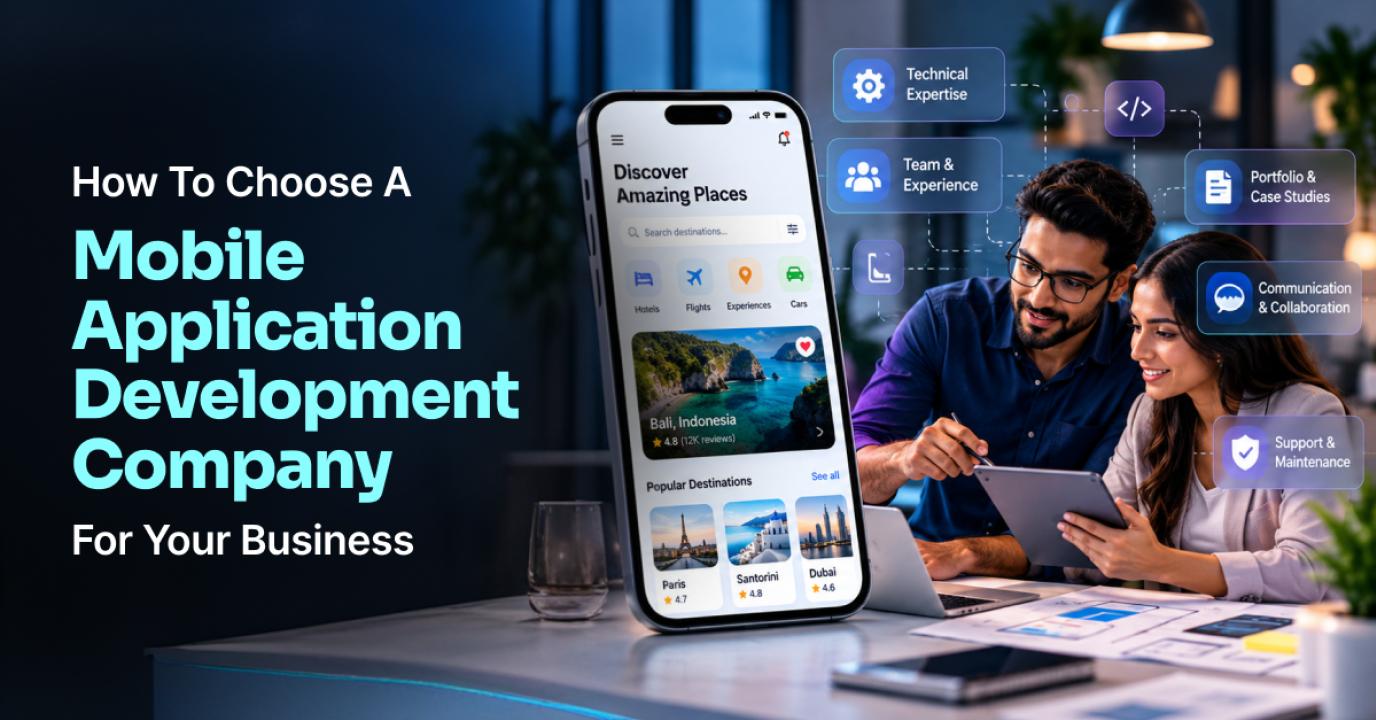

Choosing the right development partner can directly affect your product’s usability, security, scalability, and long-term maintenance. If you are evaluating vendors, reviewing their capabilities across strategy, design, development, integrations, testing, deployment, and support is essential. A reliable mobile application development company should do more than write code. It should help you validate your product idea, select the right technology, design intuitive experiences, build reliable infrastructure, and support the application after launch.
A structured evaluation process also helps you avoid choosing a provider based only on price or a visually impressive portfolio. Your goal should be to find a development partner whose technical capabilities, communication process, delivery model, and long-term support match your product requirements.
Why Choosing the Right Mobile Development Partner Matters
Mobile applications are increasingly connected to APIs, cloud platforms, analytics systems, payment services, enterprise software, and AI-powered capabilities. Modern mobile development can therefore involve considerably more than building screens for iOS or Android.
Depending on your product, you may need real-time communication, location services, payment processing, authentication, personalized experiences, data synchronization, or AI-powered functionality. Each requirement can influence the application's architecture, technology stack, development timeline, and maintenance requirements.
This makes your technology partner an important part of the product development process.
The development partner you select should understand:
Product strategy and technical feasibility
Native and cross-platform development
UI/UX and accessibility
Backend architecture and APIs
Cloud infrastructure
Data security and privacy
AI and third-party integrations
Quality assurance
App Store and Google Play deployment
Monitoring and post-launch optimization
1. Start With Your Business and Product Requirements
Before evaluating vendors, define what you actually need.
Start by documenting:
The business problem your app will solve
Your target users
Core features
Supported platforms
Required integrations
Expected user volume
Security and compliance requirements
Revenue or business model
MVP requirements
Long-term product roadmap
You do not need a complete technical specification before contacting a development partner. However, having clear business requirements makes vendor conversations more productive.
A capable provider should also challenge unclear assumptions and identify technical risks during discovery rather than simply accepting every requested feature.
For example, a business may initially request a mobile application with dozens of features when a smaller MVP could validate the core business model faster. An experienced team should be able to identify those priorities during discovery.
2. Evaluate Technical Expertise
Technical capability should be one of your first evaluation criteria.
Ask potential vendors about their experience with:
iOS and Android development
Native technologies
Cross-platform frameworks
Backend development
REST and GraphQL APIs
Cloud services
Database architecture
Third-party integrations
Authentication and authorization
Push notifications
Analytics
AI and machine learning integrations
Automated testing and CI/CD
Technology choices should follow product requirements.
For example, native development may make sense when your application requires extensive platform-specific capabilities or highly customized performance. Cross-platform development may be appropriate when you want to share substantial application logic across iOS and Android.
The important question is not simply, "Which framework do you use?" Ask why the vendor recommends a particular architecture for your product.
A capable development team should be able to explain the trade-offs between technology options instead of presenting one framework as the solution for every project.
3. Examine Their Portfolio Beyond Screenshots
A portfolio can reveal how a company approaches real product challenges.
Do not evaluate projects only by their visual appearance. Look for applications similar to yours in terms of:
Industry
User complexity
Technical requirements
Integrations
Platform requirements
Scale
Security requirements
Business model
Ask the vendor to explain the problems they solved for previous projects.
For example, if you are developing a healthcare application, ask how they handled sensitive data, authentication, integrations, permissions, and compliance requirements.
If you are building a marketplace, investigate their experience with payments, search, notifications, user roles, order management, and backend scalability.
The objective is to determine whether the company has relevant problem-solving experience rather than simply a large portfolio.
It is also useful to request references or case studies that explain the project's scope, challenges, technology decisions, and outcomes.
4. Check Mobile App UI/UX Expertise
A technically strong application can still struggle if users find it difficult to navigate.
Evaluate how the vendor handles:
User research
User journeys
Information architecture
Wireframes
Prototyping
Visual design
Accessibility
Usability testing
Platform-specific design patterns
Design systems
Developer handoff
When evaluating mobile app UI/UX design services, look for a process that connects design decisions with actual user behavior and business goals.
Ask whether designers collaborate directly with developers. Strong design-to-development collaboration can reduce inconsistencies between prototypes and the final application.
You should also check whether the vendor considers accessibility from the beginning rather than adding it after development.
A good design process should account for different screen sizes, interaction patterns, navigation structures, accessibility needs, and platform conventions.
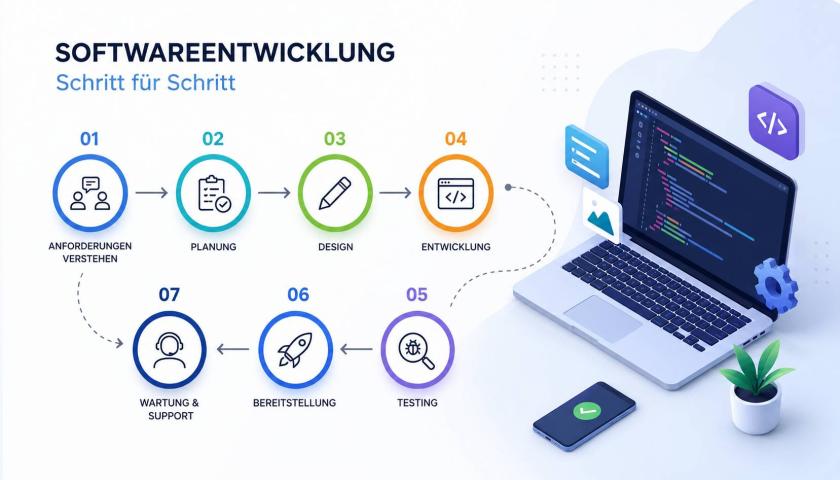
5. Understand Their Development Methodology
Ask how the company organizes development.
A mature process should provide visibility into:
Discovery
Requirements definition
Technical architecture
UI/UX design
Development
Integration
Testing
Deployment
Monitoring
Maintenance
Agile development can help teams release functionality incrementally and incorporate feedback throughout the project.
However, the methodology itself matters less than how transparently the team applies it.
Ask:
How frequently will you receive progress updates?
How will requirements change?
Who manages the product backlog?
How are technical decisions documented?
How are blockers escalated?
How will acceptance criteria be defined?
How will releases be planned?
A clear process reduces uncertainty during development and gives you greater visibility into progress.
Final Thoughts
Choosing a development partner is about finding a team that can support your product beyond the initial coding phase.
Look at the complete picture: technical expertise, relevant experience, portfolio quality, UI/UX capabilities, development methodology, communication, security, scalability, pricing, timelines, and post-launch support.