Market Overview & Summary
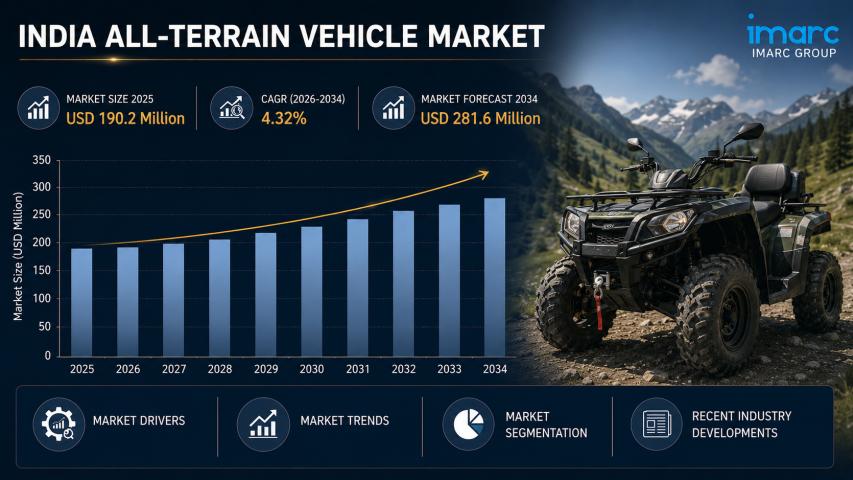
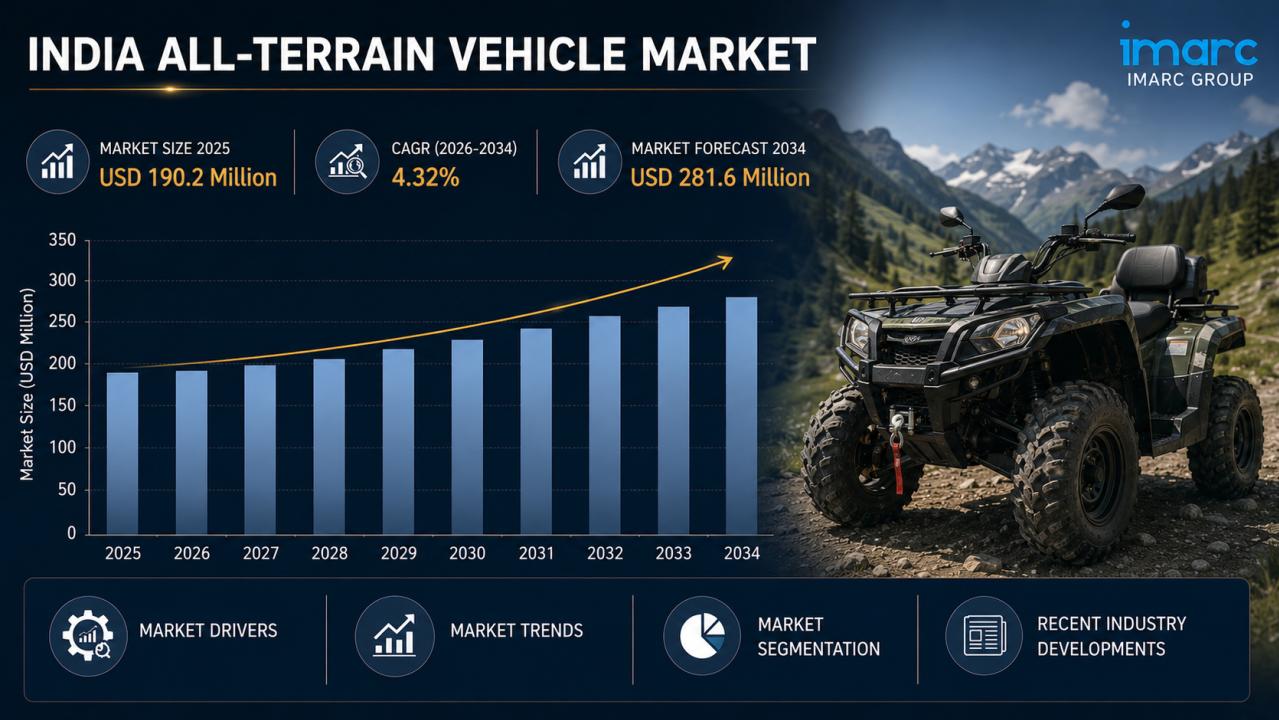
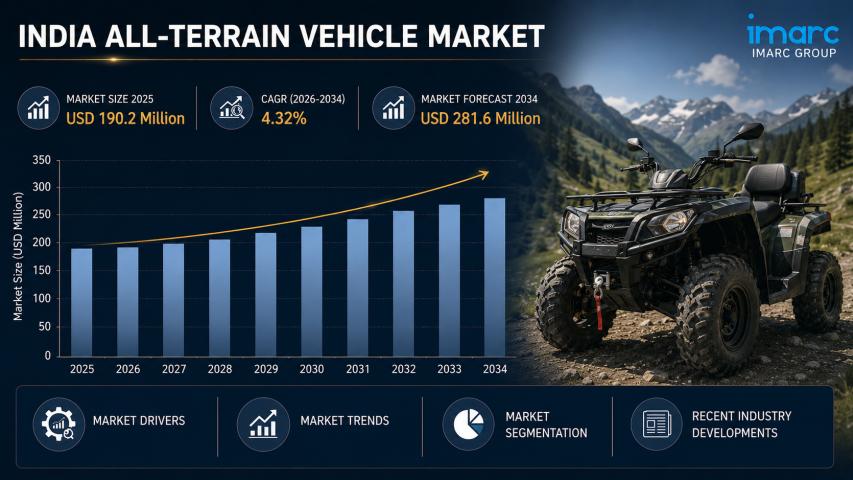
The India all-terrain vehicle market size reached USD 190.2 Million in 2025. Evaluating the current trajectory of off-road mobility and tactical vehicle procurement, the market is projected to reach USD 281.6 Million by 2034, exhibiting a steady compound annual growth rate (CAGR) of 4.32% during the 2026–2034 forecast period.
The domestic all-terrain vehicle industry is executing a structural transition, moving from a niche recreational segment into a highly diversified utility and defense mobility market. Driven by rising adventure tourism, increasing agricultural mechanization, and urgent military requirements for high-altitude border patrolling, ATVs are gaining immense traction across both commercial and government sectors. As major international manufacturers and domestic conglomerates introduce models tailored to India’s rugged topographies, the market is successfully capturing demand from young thrill-seekers, rural estate managers, and defense procurement agencies, ensuring resilient long-term volume expansion.
Market Size & Forecast
- Market Size (2025): USD 190.2 Million
- Projected Market Size (2034): USD 281.6 Million
- CAGR (2026 - 2034): 4.32%
- Leading Engine Type: 400 - 800cc
- Leading Application: Recreational (by Volume) / Military and Defense (by Value)
- Leading Region: North India
Key Market Trends
- Surge in Adventure Tourism and Off-Road Recreation:
The Indian all-terrain vehicle market is experiencing a massive demand surge driven by the rapid commercialization of adventure tourism and experiential travel. Across popular tourist destinations, organized off-road trails, desert safaris, and adventure parks are heavily deploying ATV fleets as core attractions. Young, thrill-seeking consumers with rising disposable incomes are increasingly engaging in off-road motorsports, prompting tourism operators to invest heavily in recreational models. This expanding adventure tourism infrastructure not only popularizes ATVs but also establishes a lucrative, continuous procurement cycle for commercial fleet operators catering to domestic holidaymakers.
- Aggressive Military and Defense Procurement:
The defense sector is fundamentally reshaping the domestic ATV landscape as the Indian armed forces aggressively modernize their tactical mobility across difficult border terrains. Facing operational challenges in high-altitude regions like Ladakh and dense forests in the Northeast, the military is increasingly procuring specialized, ruggedized ATVs capable of rapid troop deployment and logistical supply in snow-bound or marshy environments. Strategic contracts for specialized platforms, such as the BvS10 Sindhu articulated tracked vehicles and Polaris light tactical buggies, highlight the defense sector's transition toward highly mobile, all-terrain infantry support solutions.
- Expansion into Agricultural Mechanization and Utility Applications:
ATVs are rapidly diversifying beyond leisure into critical utility roles, particularly within the agricultural and forestry sectors. Farmers and estate managers are increasingly recognizing ATVs as cost-effective, low-maintenance alternatives to traditional heavy tractors for managing smaller or fragmented landholdings. Equipped with specialized attachments like sprayers, plows, and cargo carriers, ATVs efficiently navigate narrow plantation paths and uneven rural terrain. Furthermore, government initiatives promoting smart farm mechanization are indirectly encouraging the adoption of these versatile vehicles for crop inspection, livestock management, and light hauling tasks across rural India.
Strategic Market Dynamics
Growth Drivers
- Escalating Tactical Mobility Requirements for Border Security:
India's complex geopolitical environment and expansive, rugged borders require highly versatile mobility solutions. Standard military trucks often fail to navigate the narrow, steep, and snow-covered passes of the Himalayas. Consequently, the Indian Army and border security forces are actively injecting substantial capital into the ATV market by ordering specialized 4x4 and 6x6 platforms. These military-grade ATVs are essential for transporting ammunition, conducting rapid reconnaissance, and executing casualty evacuations in extreme environments, providing a massive, high-value revenue stream for manufacturers capable of meeting stringent defense specifications.
- Booming Commercial Adventure Tourism and Experiential Travel:
The aggressive expansion of India's domestic tourism sector is acting as a primary volumetric growth engine for the ATV market. With the rising popularity of experiential travel, businesses operating in destinations like Goa, Rajasthan, Himachal Pradesh, and the Rann of Kutch are purchasing fleets of recreational ATVs to offer guided off-road tours. This commercial procurement is highly dependable, as tour operators require constant fleet expansion and replacement due to the heavy wear-and-tear of commercial use, ensuring a continuous baseline of B2B sales for mid-displacement ATV models.
- Rising Affluence and Youth Demographic Shifts:
India's expanding GDP and the corresponding rise in disposable household incomes are directly encouraging life>
Market Restraints
- High Import Duties and Prohibitive Upfront Costs:
Because the domestic manufacturing ecosystem for high-performance ATVs is still maturing, the market relies heavily on Completely Built Units (CBUs) or Completely Knocked Down (CKD) kits imported from international brands like Polaris, Yamaha, and Can-Am. These imports attract exorbitant customs duties and high GST brackets, significantly inflating retail prices and restricting mass-market consumer adoption predominantly to high-net-worth individuals and large commercial fleet operators.
- Lack of Dedicated Off-Road Infrastructure and Safety Regulations:
Unlike conventional vehicles, ATVs are generally not street-legal in India and cannot be registered for use on public roads. This severe restriction confines their usage strictly to private lands, agricultural estates, and dedicated off-road tracks. The severe lack of accessible, organized off-roading trails near major metropolitan areas severely dampens the appeal of personal ATV ownership for the average urban consumer.
Deep-Dive Segment Insights
Engine Type Insights
- Below 400cc
- 400 - 800cc (Leading Segment)
- Above 800cc
Key Insight: The 400 - 800cc segment commands the market because it strikes the optimal balance between power, fuel efficiency, and maneuverability. This displacement range is highly preferred by both commercial tourism operators for recreational fleets and agricultural users requiring moderate towing capacity without the exorbitant costs associated with liter-class engines. The Above 800cc segment is niche, primarily reserved for heavy-duty military platforms and extreme professional motorsports.
Application Insights
- Agriculture
- Sports
- Recreational (Leading by Volume)
- Military and Defense (Leading by Value)
Key Insight: Recreational applications drive the highest physical unit volume, fueled almost entirely by the booming adventure tourism sector. Conversely, the Military and Defense segment dictates market value; military-grade ATVs require heavy armor, advanced suspension, and specialized payloads, commanding massive price premiums and generating highly lucrative, multi-year government contracts.
Regional Insights
- North India (Leading Region)
- West India
- South India
- East India
Key Insight: North India leads the domestic market, anchored by a unique convergence of demand: it hosts the country's most prominent high-altitude adventure tourism destinations (Himachal Pradesh, Uttarakhand) and serves as the primary operational theater for the Indian Army's high-altitude tactical deployments (Ladakh). West India (Rajasthan, Gujarat) follows closely, driven by extensive desert safari tourism and large-scale agricultural estates.
Recent News and Developments (2025–2026)
- Indian Army Procures BvS10 Sindhu ATVs (November 2025): Larsen & Toubro (L&T), in partnership with BAE Systems, secured a major defense contract to manufacture and supply the BvS10 Sindhu all-terrain vehicles to the Indian Army. These articulated, tracked ATVs were rigorously tested and procured specifically for extreme high-altitude and snow-bound deployments in Ladakh.
- Expanded Military Procurement Clearances (March 2026): The Defence Acquisition Council (DAC) approved comprehensive military procurement proposals valued at approximately USD 25.14 billion. This massive budgetary clearance directly bolsters funding for advanced infantry mobility, ensuring sustained procurement of specialized all-terrain tactical platforms for border security forces.
- Polaris Enhances Digital Footprint (December 2025): To further cultivate the youth sports demographic, global ATV leader Polaris expanded its digital marketing initiatives by integrating its popular Sportsman and RZR ATV models into major global video game franchises like Call of Duty, boosting aspirational brand visibility among younger Indian consumers.
Customization Note: If you require any specific information not covered within this report's scope, we will provide it as part of the customization.
Frequently Asked Questions (FAQs)
Q1. What was the India all-terrain vehicle market size in 2025?
Ans. The India all-terrain vehicle market was valued at USD 190.2 Million in 2025.
Q2. What is the projected market size and growth rate by 2034?
Ans. The market is projected to reach USD 281.6 Million by 2034, registering a steady compound annual growth rate (CAGR) of 4.32% during the 2026–2034 forecast period.
Q3. Which engine displacement segment is the most popular in India?
Ans. The 400 - 800cc segment is the most popular, as it provides the ideal balance of power and affordability required by both commercial adventure tourism operators and agricultural users.
Q4. What is driving the military and defense segment in the ATV market?
Ans. The Indian armed forces are aggressively procuring specialized ATVs to enhance tactical mobility, troop transport, and logistical supply chains across rugged, high-altitude border regions like Ladakh, where standard military trucks cannot operate effectively.
Q5. Why is personal ATV ownership limited in India?
Ans. Personal ownership is constrained by high import duties that inflate retail prices, a severe lack of dedicated off-road trails near urban centers, and strict regulations that prohibit ATVs from being driven on public roads.