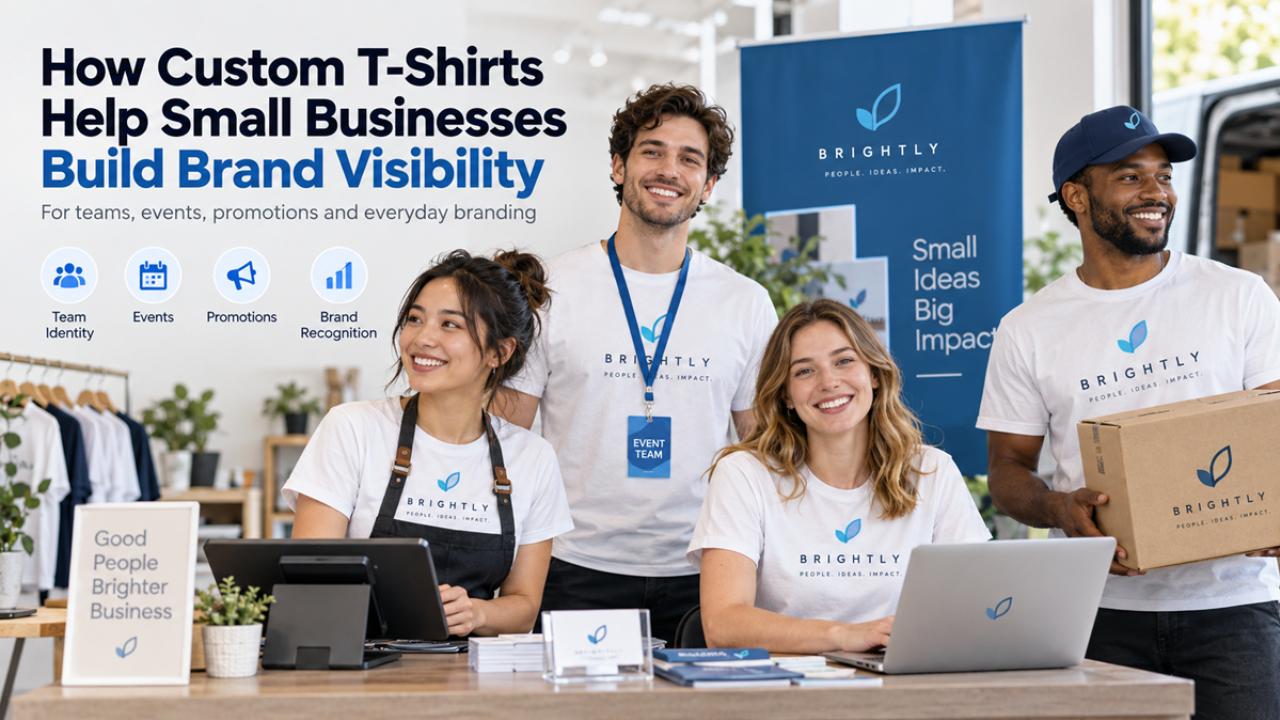
Small businesses do not always need a large advertising budget to become more recognizable. Sometimes, simple offline branding can make a noticeable difference.
A branded T-shirt can help customers identify staff, make an event team look more organized, and create a more consistent business presence at exhibitions, retail counters, product launches, and local events.
For startups and small businesses, custom apparel works best when it is planned around a clear use case.
Why Wearable Branding Still Matters
Digital marketing is important, but customers also notice what they see in real-world interactions.
When staff members wear matching T-shirts, the business becomes easier to identify. This is useful in places where many brands, teams, or visitors are present at the same time.
Custom T-shirts can be practical for:
- exhibitions and trade shows
- product launches
- retail stores
- promotional events
- delivery teams
- community activities
- college or startup events
For businesses comparing materials and >custom T-shirt printing options can help match the garment to the intended use.
Build a Consistent Team Identity
A brand is more than a logo. It is the overall way a business presents itself.
Matching T-shirts can help create a consistent team look, especially when employees are meeting customers or representing the company in public.
A small front logo can work well for staff and office use. A larger back print can be useful for event details, campaign messages, or a business slogan.
The goal is to keep the design clear rather than adding too much information.
Use Custom T-Shirts for Events and Promotions
Events are one of the most useful situations for branded clothing.
At a busy trade show or product launch, customers should be able to identify staff quickly. Matching T-shirts can make that easier while keeping the brand visible throughout the event.
For example, a 10-person startup attending its first exhibition may only need a small batch of T-shirts with a simple front logo. A larger event team may need multiple sizes, a back print, and a clearer design hierarchy.
That difference matters because the same T-shirt setup does not work for every business.
Choose the Right Fabric for the Job
Fabric should match how and where the T-shirt will be worn.
Cotton is a practical choice for everyday team wear, office use, casual business events, and gifting.
Polyester is more suitable for active or outdoor use where a lightweight fabric is preferred.
For businesses that prefer a heavier cotton option for daily wear or event teams, custom cotton T-shirts can be considered.
The best choice depends on comfort, activity level, climate, and how often the T-shirt will be used.
Keep the Branding Simple
A custom T-shirt usually works better when the design is easy to understand.
Use:
- a clear logo
- readable text
- strong colour contrast
- enough empty space
- a print size that matches the shirt
Avoid trying to place too many details on one side.
For many small businesses, a simple front logo creates a cleaner look than a large promotional graphic.
For events, a larger back print can be useful when extra information needs to be shown.
Test Before Ordering in Bulk
Small businesses can reduce mistakes by checking a sample before placing a larger order.
Before approving the final quantity, check:
- logo size
- print position
- T-shirt colour
- fabric type
- size mix
- artwork clarity
- event or delivery deadline
A sample can help identify problems that are difficult to notice on screen.
This is especially useful when ordering for a team with different sizes or when the T-shirt will be used at an important event.
Plan Quantity Based on the Campaign
Not every business needs hundreds of T-shirts.
A small startup may only need a few pieces for founders or staff. A trade-show team may need 10–30 pieces. A larger campaign may require a bigger order with multiple size combinations.
Deciding quantity early helps with:
- budgeting
- size planning
- design consistency
- delivery timing
- production planning
It also helps avoid last-minute changes.
Think Beyond the T-Shirt
Custom T-shirts work best when they support the wider brand system.
The same logo, colours, and design >
- business cards
- packaging
- stickers
- event signage
- promotional materials
- social media graphics
Consistency across these touchpoints can make a small business look more organized and easier to recognize.
Final Thoughts
Custom T-shirts can support small-business branding when they are used with a clear purpose.
The most important decisions are simple: choose the right fabric, keep the design readable, test the print setup, and match the quantity to the actual campaign.
Before ordering, compare the fabric, print placement, design size, and quantity against the real use case instead of choosing only by price.